





Definition and Purpose of "Papers on Parliament - A Light of Reason"
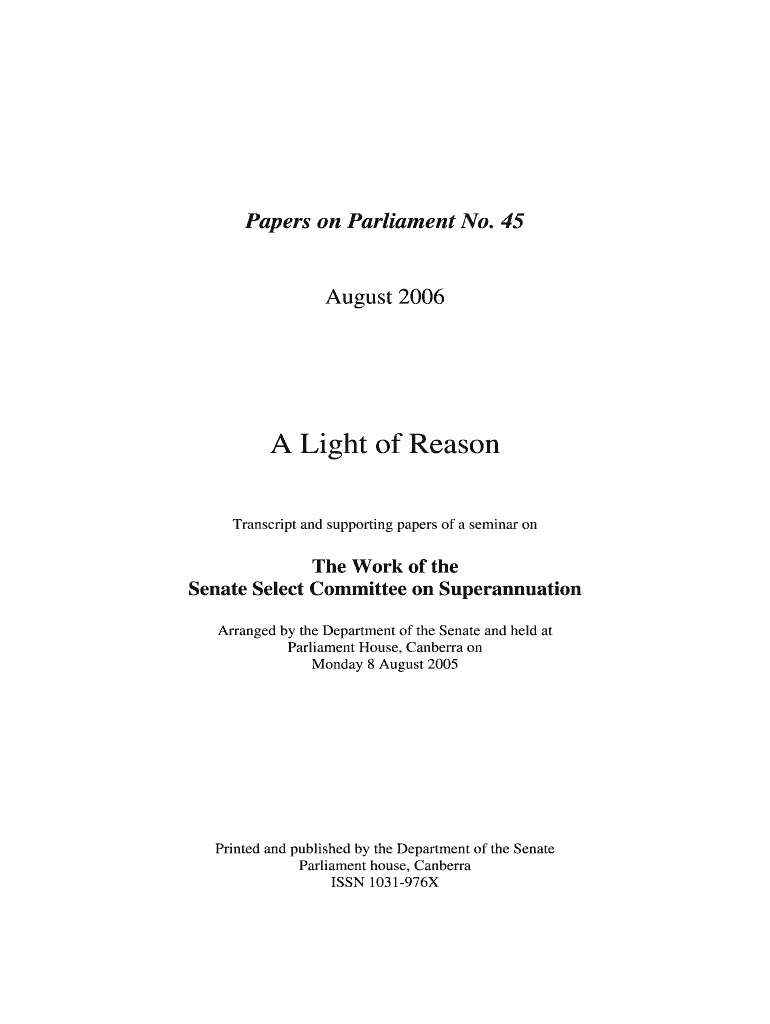
"Papers on Parliament - A Light of Reason" provides an in-depth analysis of the Senate Select Committee on Superannuation, which played a pivotal role from 1991 to 2003. It serves as a detailed recount of the committee's operations, strategies, and its influence on Australia's superannuation policies. With transcripts from a 2005 seminar, this document highlights the committee's effectiveness in shaping retirement income regulations and its influence on policy reforms crucial for an aging population and changing economic conditions in Australia.
How to Use the Document
This document is an invaluable resource for researchers, policy analysts, and students interested in understanding the legislative framework governing superannuation in Australia. Users can study the committee's strategies to appreciate how it balanced diverse stakeholder interests and contributed to legislative advancements. Academics can use the transcripts and reports as primary sources for research papers or policy evaluations, while policymakers might extract lessons applicable to current debates on retirement planning and policy-making.
Key Elements of the Document
- Committee Establishment and Operation: Detailed accounts of the committee's inception, objectives, and the methodologies it used to conduct inquiries.
- Impact on Legislation: Descriptions of significant legislative amendments influenced by the committee's findings and recommendations.
- Stakeholder Engagement: Insights into how the committee facilitated dialogue among competing interests, playing an "honest broker" role.
- Timely Reporting: Emphasis on the committee's commitment to delivering reports that were crucial for informed policy decisions.
- Superannuation Challenges: Contextual discussions on challenges facing superannuation strategies in light of demographic and economic shifts.
Accessing the Document
While specific acquisition methods for "Papers on Parliament - A Light of Reason" are not detailed, such documents are usually accessible through governmental archives, libraries affiliated with law and political science departments, and online databases hosting official records. Checking with institutions that focus on public policy or Australian legislative history could also prove fruitful.
Legal Use and Considerations
The document can be legally utilized for educational, research, and policy formulation purposes. Users should ensure that any direct quotes or data extracted from the document are properly cited to maintain academic integrity and respect intellectual property rights. It can provide historical context for debates around retirement policy, yet users should verify if any guidelines have evolved since its publication.
Important Terms and Definitions
Understanding this document involves familiarity with numerous terms related to superannuation and legislative processes:
- Superannuation: A pension program created by a company's contributions for the future benefit of its employees.
- Select Committee: A parliamentary committee appointed to deal with particular areas or issues, reporting back to the parliament.
- Retirement Income Policies: Strategies and legislative measures aimed at securing income for individuals post-retirement.
Who Typically Uses This Document
The primary users of "Papers on Parliament - A Light of Reason" include:
- Policy Makers: To gain insights for current policy formulation.
- Legal Experts: Understanding past legislative impacts within superannuation law.
- Academics and Researchers: For scholarly research and educational purposes.
- Students: Particularly those in fields such as political science, public policy, and law.
Examples of Document Use
- Academic Research: Use in thesis or journal articles examining superannuation policies.
- Policy Development: Reference for creating new superannuation frameworks.
- Educational Material: Serve as reading material in courses on public policy or political science focusing on economic and legislative history.
Versions and Alternatives
While "Papers on Parliament - A Light of Reason" is a specific publication, other related materials include earlier or subsequent publications concerning the Senate Select Committee on Superannuation. These versions may provide additional context or updated data about legislative changes and policy impacts over time. Exploring both past and newer publications can help build a comprehensive understanding of the subject.