



Definition and Meaning
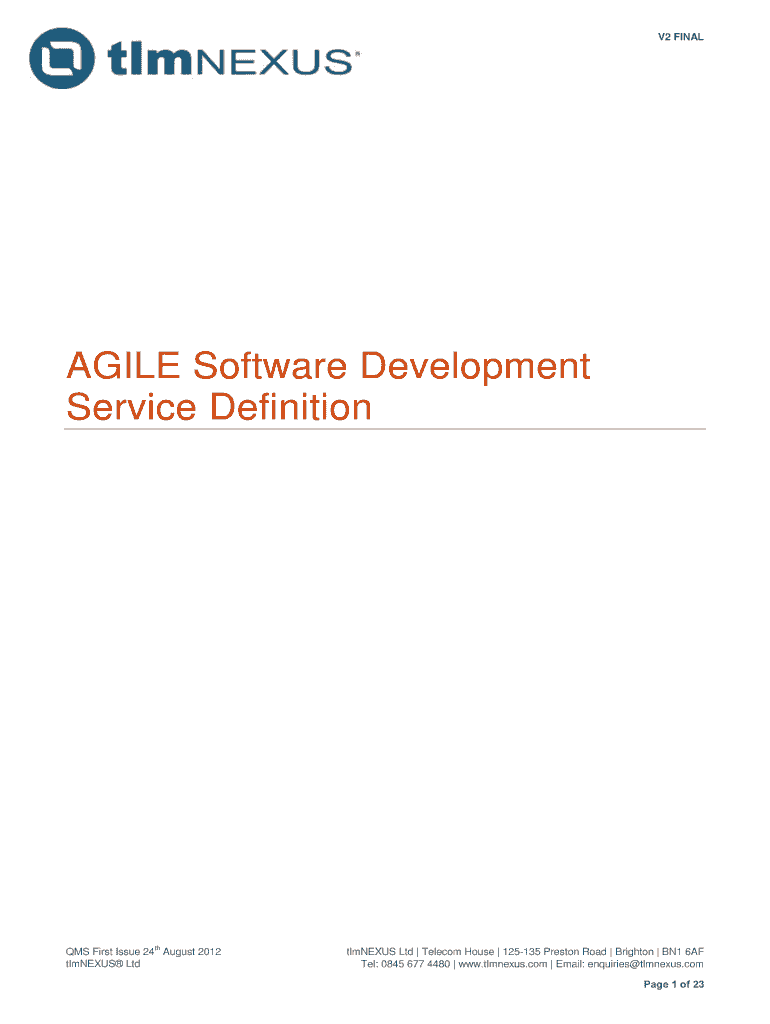
Agile Software Development Service Definition v2 is a formal document detailing the services and processes involved in the delivery of Agile software development projects. Agile methodologies focus on iterative development, where requirements and solutions evolve through collaboration between cross-functional teams. This version may specify compliance standards like those required by TLMNEXUS, indicating adherence to IL3 and IL4 standards. Agile methodologies often incorporate frameworks such as Scrum, facilitating collaborative and time-efficient solutions. Understanding this definition is crucial for stakeholders such as IT managers, project leads, and compliance officers who are responsible for implementing and managing Agile projects within their organizations.
How to Use Agile Software Development Service Definition v2
To effectively utilize the Agile Software Development Service Definition v2, organizations should integrate its principles into their software development lifecycle. Begin by assembling a cross-functional team with the necessary roles, such as Product Owners, Scrum Masters, and Development Teams. Members must understand their responsibilities and how Agile principles apply. This document serves as a guide to executing projects by establishing clear objectives, defining sprints, and ensuring compliance with necessary standards. Regular meetings, such as daily stand-ups and sprint reviews, help keep the team aligned, allowing for transparent tracking of progress and promptly addressing challenges.
How to Obtain the Agile Software Development Service Definition v2
Organizations looking to obtain the Agile Software Development Service Definition v2 document can typically acquire it through internal resources or consultations with vendors offering Agile services. TLMNEXUS or similar service providers may offer access as part of a subscription or consultancy package. It may also be made available during onboarding procedures for G-Cloud customers, as part of a comprehensive service toolkit. Consult company intranets, vendor websites, or account managers to obtain the document. In some cases, proprietary versions may require NDAs before sharing.
Steps to Complete the Agile Software Development Service Definition v2
Completing the Agile Software Development Service Definition v2 involves several key steps:
- Assemble Your Agile Team: Identify and appoint necessary roles within your team.
- Define Project Scope and Objectives: Collaborate to establish clear goals and deliverables.
- Select Agile Framework: Choose between methodologies like Scrum or Kanban based on project needs.
- Establish a Timeline: Set up sprint dates and key milestones for the project.
- Assign Tasks and Responsibilities: Distribute roles evenly to maintain balanced workloads.
- Draft a Compliance Plan: Ensure all activities meet specified standards including IL3 and IL4.
- Monitor Progress: Utilize Agile tools like JIRA or Trello for progress tracking and feedback.
By following these steps, organizations can efficiently utilize the structure provided in the Agile Software Development Service Definition v2 to enhance their project management and delivery processes.
Key Elements of the Agile Software Development Service Definition v2
The document includes several crucial components:
- Project Management Structure: Outlines roles, responsibilities, and communication frameworks.
- Compliance and Standards: Details requirements for meeting IL3 and IL4 standards for secure, compliant project delivery.
- Lifecycle Phases: Covers phases of planning, implementation, testing, and review.
- Change Management Processes: Provides guidelines for managing changes in project scope or technology use.
- Risk Management and Mitigation: Details steps for managing uncertainties throughout the project.
Attention to these elements ensures structured and compliant Agile project implementation.
Examples of Using the Agile Software Development Service Definition v2
Several scenarios illustrate effective use:
- Government Contracts: Illustrates projects that require strict compliance, making the definition essential.
- Enterprise Software Development: Examples of companies that used Agile principles to develop robust, scalable enterprise solutions.
- Cross-Border Development Teams: Provides examples of global teams adhering to U.S. standards while developing complex software solutions.
These real-world examples demonstrate the flexibility and scope of Agile methodology when guided by the comprehensive definition in the document.
Important Terms Related to Agile Software Development Service Definition v2
Understanding key terminology is pivotal:
- Sprint: A set timeframe during which specific work has to be completed.
- Scrum Master: A facilitator for an Agile development team.
- Product Backlog: A prioritized list of work for the development team.
- User Story: Agile components representing product features from an end-user perspective.
These terms provide the foundation for communicating and understanding Agile processes included in the document.
Variants or Alternatives to Agile Software Development Service Definition v2
Businesses may encounter several alternatives:
- Scrum vs. Kanban: Different frameworks under the Agile umbrella, each with unique suits for certain project types.
- DevOps Integration: When Agile processes are combined with DevOps for comprehensive development and deployment efficiency.
- Agile Coaching and Scaling: Resources available to scale Agile practices across large organizations or complex projects.
Understanding these variations can help organizations choose the best strategy for their specific project requirements.