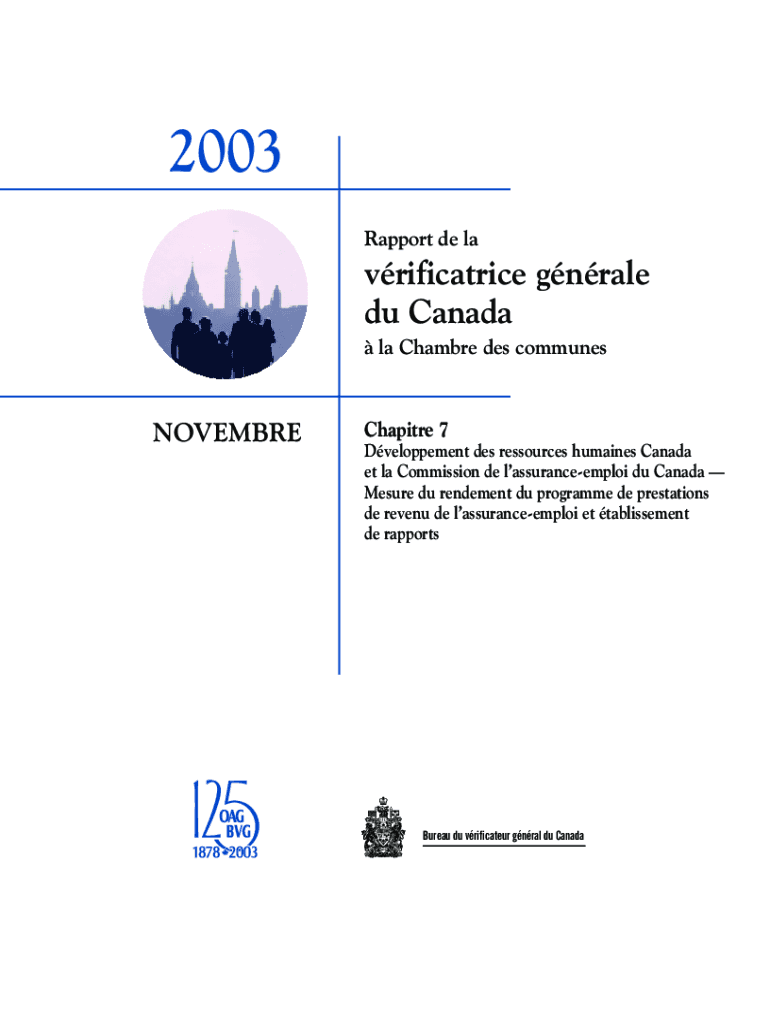







Key Elements of the PDF (519 Ko) - Bureau du Vérificateur Général du Canada
This document, originating from the Bureau du Vérificateur Général du Canada, is a structured PDF designed to communicate specific findings and analyses related to Canada's public sector programs. It covers a wide range of elements, including performance evaluations, efficiency audits, and fiscal reporting. Key elements often highlighted in such reports are transparency in governmental operations, accountability measures, and evaluations of policies and programs. Detailed sections within the document may focus on performance metrics, audit results, and recommendations for government departments, emphasizing the importance of systemic improvements.
Definition & Purpose of the PDF (519 Ko)
The PDF titled "Bureau du Vérificateur Général du Canada" serves as a formal document outlining comprehensive audits conducted by the Auditor General of Canada. It is primarily intended to provide a critical assessment of public sector programs' performance and financial stewardship. The auditor's reports are instrumental in ensuring that public funds are used efficiently, effectively, and economically. The document typically addresses stakeholders such as policymakers, regulators, and the general public, emphasizing the role of transparency and accountability in government operations.
Legal Use and Framework
In Canada, the Bureau du Vérificateur Général operates under a legal framework that mandates regular audits of government activities. The PDF fulfills a legal requirement, ensuring that the activities and financial management of governmental bodies comply with statutory regulations. Legal use of this document also involves presenting findings to the Parliament of Canada, thereby holding public officials accountable. Reports issued by the Auditor General can inform subsequent legislative actions and policy reforms, aiding in the development of more robust governance systems.
Steps to Complete the Audit PDF
Completing a document from the Bureau du Vérificateur Général typically involves a structured methodology:
- Preparation Phase: Define the scope and objectives of the audit.
- Data Collection: Gather necessary documents, financial records, and relevant data from the audited entities.
- Analysis: Perform comprehensive data analysis based on predetermined criteria and standards.
- Evaluation: Review the results to assess program effectiveness, efficiency, and compliance with legal and ethical standards.
- Reporting: Compile the findings into a coherent PDF report, clearly outlining recommendations and areas for improvement.
This procedural guideline ensures that the PDF reflects a thorough and accurate examination of public sector practices.
Important Terms Related to the PDF
Several critical terms are essential to understanding the document:
- Audit: A systematic examination of accounts, financial records, and operational activities.
- Efficiency: The extent to which program outcomes are achieved with minimum resource use.
- Compliance: Adherence to laws, regulations, and policies in government operations.
- Recommendation: Suggested courses of action based on audit findings.
- Fiscal Responsibility: The obligation of the government to manage public resources prudently.
These terms provide a foundational vocabulary for deciphering the report's content.
How to Obtain the PDF
The PDF from the Bureau du Vérificateur Général can typically be acquired through the official website of the Office of the Auditor General of Canada. The website often provides downloadable versions of recent and past reports. Alternatively, individuals can request printed copies by contacting the office directly. Access to these documents is generally open to the public, as part of efforts to enhance transparency and accessibility of government operations.
Who Typically Uses the PDF
The primary audience includes government officials tasked with implementing recommendations, policymakers who rely on audit findings to guide legislative decisions, and researchers analyzing public sector management. Additionally, journalists and advocacy groups frequently utilize these reports to inform the public about government accountability and transparency. They serve as critical resources for entities seeking to scrutinize public sector efficacy.


Digital vs. Paper Versions of the PDF
Digital versions of the PDF are preferred for ease of distribution and accessibility. These electronic formats allow for hyperlinks to referenced documents and are more environmentally friendly compared to paper versions. However, paper copies are still used, particularly in formal government settings where print documents are required for archival purposes. Both formats are identical in content but cater to different usability preferences, ensuring broad accessibility regardless of technology availability.