






Definition and Purpose of the Physician's Medical Clearance Form
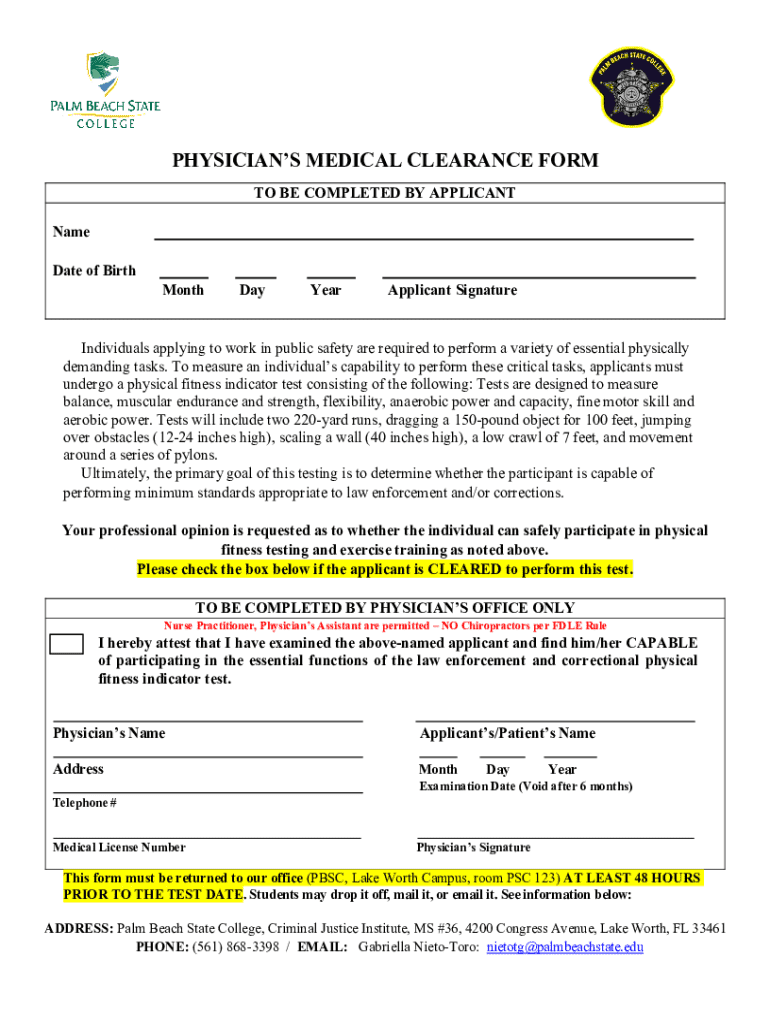
The Physician's Medical Clearance Form is a critical document used primarily in the public safety sector. It serves to evaluate an individual's physical fitness and medical readiness for engaging in roles that require physical exertion, such as law enforcement and corrections. The form facilitates the assessment of whether an applicant can participate in various physical tasks, including running, crawling, jumping, and weight dragging, without risk to personal or public safety. This evaluation is paramount to ensuring that all personnel are capable of performing their duties effectively and safely.
Steps to Complete the Physician's Medical Clearance Form
-
Initial Consultation: Schedule an appointment with a qualified physician. This consultation allows the healthcare provider to understand the physical requirements of the role you are applying for.
-
Medical Examination: Undergo a full medical examination. The physician will check your cardiovascular health, muscular strength, endurance, and other physical parameters.
-
Documentation: Provide any existing medical records that might assist in the evaluation. These records could include past injuries, surgeries, or chronic conditions.
-
Filling the Form: The physician will complete the form based on the medical findings, indicating any limitations or concerns.
-
Review and Signature: Both you and the physician should review the completed form for accuracy. The physician must sign the form to validate the evaluation.
Importance of the Physician's Medical Clearance Form
The form is crucial because it protects both the individual and the hiring agency. It ensures that applicants can safely perform essential job functions and helps mitigate risks associated with inadequate physical readiness. Moreover, it contributes to maintaining workplace safety and health standards, ultimately benefiting the wider community by ensuring public safety roles are filled by capable individuals.
Key Elements of the Physician's Medical Clearance Form
-
Applicant Information: Full name, contact details, and specific role being applied for.
-
Physical Fitness Tests: Detailed list of physical challenges such as cardiovascular and strength assessments.
-
Medical History: Section for previous medical conditions or surgeries that could impact job performance.
-
Physician's Evaluation: Assessment of the applicant's ability to perform the required tasks.
-
Recommendations: Any modifications, limitations, or additional tests the physician deems necessary.
-
Signature and Date: Confirmation of consultation and agreement of findings by both the applicant and physician.
Who Typically Uses the Physician's Medical Clearance Form
This form is generally utilized by individuals seeking roles that involve physical demands or exposure to potentially hazardous situations. Typical users include applicants for positions in law enforcement, fire and rescue services, and correctional facilities. These roles require candidates to demonstrate physical fitness to effectively handle job-related duties.


How to Obtain the Physician's Medical Clearance Form
-
Employer Provision: Most employers supply this form as part of the application process.
-
Online Access: Some institutions provide downloadable versions from their official websites.
-
Medical Facilities: Forms might be available directly from occupational health services or clinics specializing in workplace physicals.
Legal Use and Compliance of the Physician's Medical Clearance Form
Using this form is often a legal requirement in the hiring process for public safety positions. Compliance ensures adherence to employment health regulations and standards. Employers must ensure the form is filled out accurately and legitimately to avoid legal liabilities related to workplace injuries or incapacity claims.
State-Specific Rules for the Physician's Medical Clearance Form
While the core components of the form remain consistent across states, certain jurisdictions may have additional requirements. These can include specific fitness benchmarks, additional medical tests, or more frequent recertification cycles. It is essential for applicants and employers to be aware of these variations to ensure full legal and procedural compliance.