




Definition and Meaning
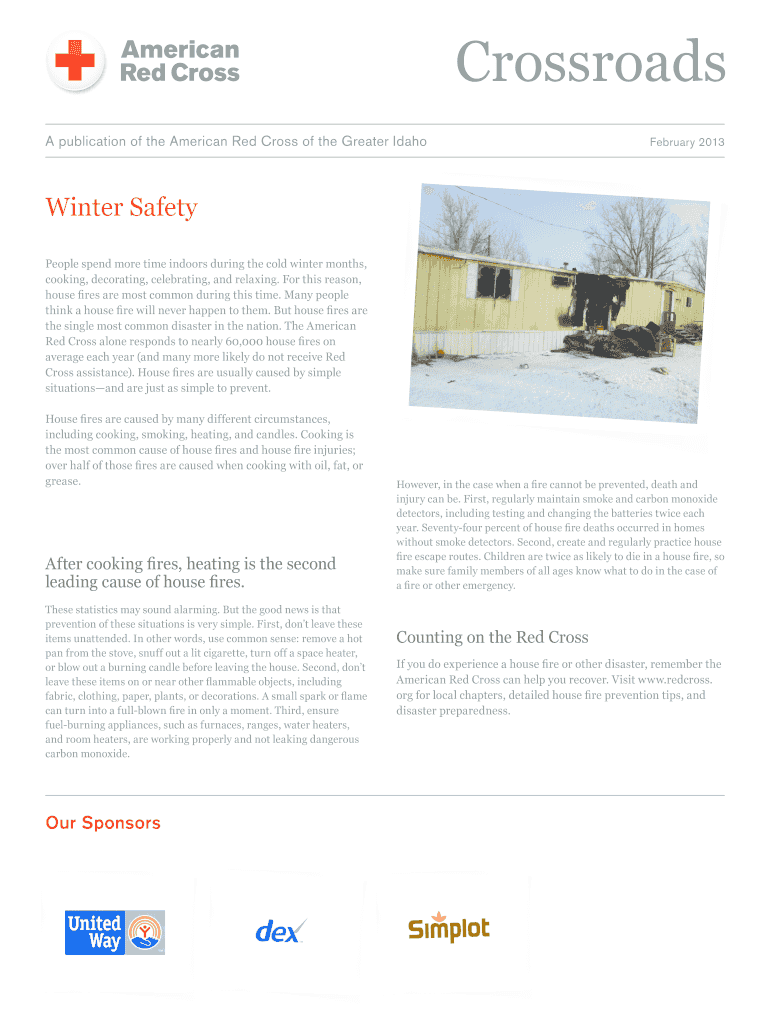
"A publication of the American Red Cross of the Greater Idaho" serves as an informational guide designed to enhance community awareness on key issues such as winter safety and house fire prevention. This publication includes practical advice to mitigate common risks and explores broader topics such as emergency response and community involvement. It also highlights notable incidents like a bus crash in Oregon and the resignation of a CEO, demonstrating the organization's involvement in current events and its influence on regional safety.
How to Use the Publication
Individuals can use this publication to gain vital knowledge about safety practices that help prevent accidents and emergencies. The document is structured to provide practical steps and safety tips applicable to everyday scenarios, making it a valuable resource for households and community groups. Readers are encouraged to review its sections regularly, especially during winter months or when updating their emergency preparedness plans, to ensure they are informed about the latest prevention methods and Red Cross initiatives.
How to Obtain the Publication
The publication is available through local offices of the American Red Cross in the Greater Idaho region. Interested parties can request copies by visiting their official website or contacting their local chapter directly. Outreach events and community seminars often distribute these materials to expand accessibility. Additionally, digital versions might be available for download, ensuring easy access regardless of the reader's location.
Key Elements of the Publication
Several key elements define the publication's comprehensive nature:
- Winter Safety Measures: Detailed guidelines on how to stay safe during extreme weather conditions.
- House Fire Prevention: Tips on managing common fire hazards such as cooking and heating appliances.
- Community Resources: Information on support systems and resources available for victims of house fires or other emergencies.
- Incident Reports: Coverage of major incidents to highlight lessons learned and the Red Cross's response efforts.
Who Typically Uses the Publication
While the publication is designed for a broad audience, it is particularly beneficial for homeowners, educators, and community organizers who prioritize safety and risk mitigation. Emergency response teams and local governments may also utilize it as a training tool to improve community readiness. Additionally, individuals participating in public safety campaigns or educational programs will find its content directly applicable to their activities.


Steps to Complete Safety Audits Using the Publication
- Read Thoroughly: Begin by reading the relevant sections related to safety measures thoroughly.
- Checklist Creation: Create a customized safety checklist based on the recommendations provided.
- Assessment: Conduct a home or community safety assessment using the checklist.
- Implement Changes: Make necessary adjustments or improvements to address identified risks.
- Follow-up: Regularly review and update the safety plan based on new information or changes in the environment.
Legal Use of the Publication
The publication can serve as a legal document in promoting safety compliance and emergency preparedness, particularly for organizations required to adhere to certain safety standards. It also functions as an educational tool, supporting liability reduction efforts by documenting proactive safety measures and compliance with recommended practices.
Examples of Using the Publication
Case examples enhance the utility of this guide, illustrating successful implementation of safety measures:
- In Boise, a neighborhood initiative utilized publication guidelines to decrease house fire incidents through a door-to-door education campaign.
- A school district incorporated recommendations into its winter sports safety program, resulting in a significant reduction of weather-related injuries.
Important Terms Related to the Publication
- ESIGN Act Compliance: Ensures that electronic transactions are legally recognized.
- Interactive Templates: Enables dynamic data entry sections in digital formats.
- Emergency Preparedness: A key focus area for household and community planning.
- Fire Hazard Reduction: Practical methods aimed at minimizing fire risks in residential contexts.
By exploring these facets in detail, readers gain a thorough understanding of how this publication can be integrated into both personal safety strategies and broader community initiatives.