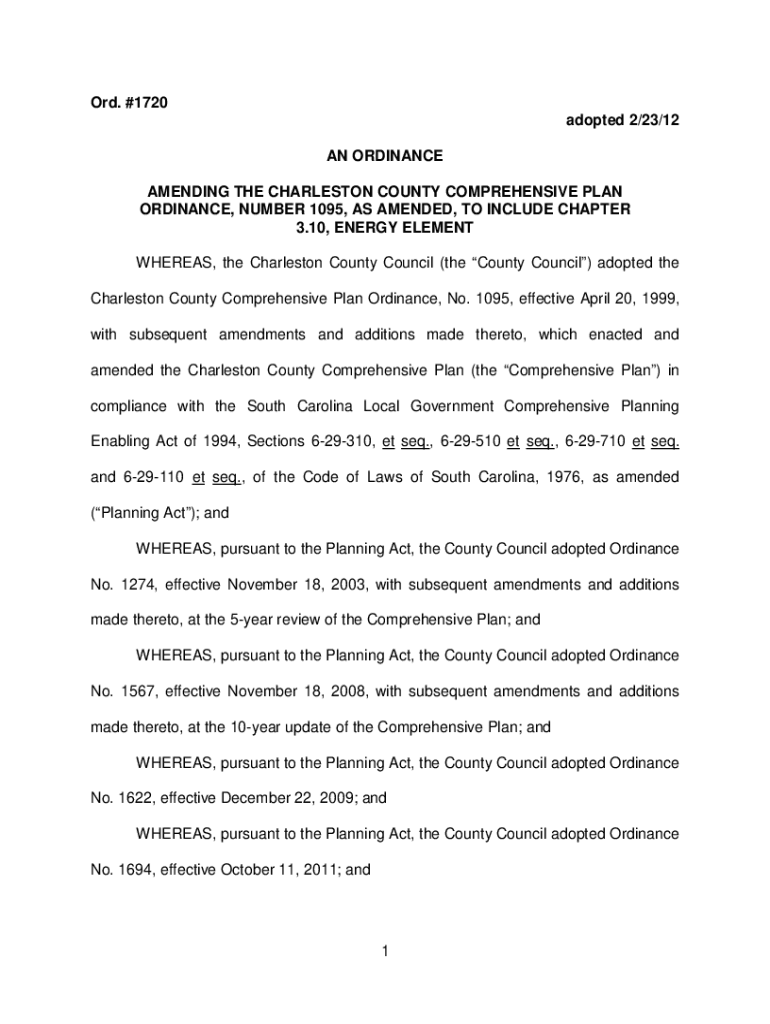







Definition & Meaning of 1 Ord #1720 Adopted 2 23 12 AN ORDINANCE AMENDING THE
Understanding ordinance 1 Ord #1720 requires an overview of its primary aim: amending the Charleston County Comprehensive Plan by integrating Chapter 3.10, the Energy Element. The ordinance focuses on energy usage, conservation, and promotion of renewable energy sources, aligning with goals to enhance sustainability and energy independence. Often, such ordinances contribute significantly to policy-making by establishing frameworks for energy efficiency and conservation in county development plans.
How to Use the Ordinance
Utilizing ordinance 1 Ord #1720 involves recognizing its relevance in planning and development projects within Charleston County. Stakeholders, including planners and developers, should incorporate the guidelines of Chapter 3.10 in project assessments. This includes re-evaluating energy consumption patterns and integrating renewable energy solutions in line with the ordinance’s strategies. Those engaged in public infrastructure or private development projects can also use the ordinance to guide energy-related project components, ensuring compliance with county standards.
Steps to Complete or Implement Ordinance 1 Ord #1720
- Review Ordinance Requirements: Examine the specific amendments outlined in Chapter 3.10 to understand energy conservation requirements.
- Analyze Current Energy Usage: Evaluate existing energy consumption patterns and identify areas for improvement in line with the ordinance.
- Develop an Energy Strategy: Formulate a plan that incorporates renewable energy solutions and improved efficiency, adhering to the ordinance.
- Integrate Strategies into Planning: Ensure that your development or planning documents reflect the amendments and compliance criteria established by the ordinance.
- Consult with Local Authorities: Collaborate with Charleston County officials to confirm alignment and compliance with the ordinance.
- Monitor Implementation Progress: Continuously assess the effectiveness of energy strategies and adapt as necessary to meet ordinance goals.
Key Elements of the Ordinance
- Energy Use Assessment: Highlighting areas for reduced consumption and improved efficiency.
- Conservation Initiatives: Programs or practices aimed at saving energy and promoting sustainable usage.
- Promotion of Renewable Energy Sources: Supporting alternative energy solutions such as solar or wind power.
- Public Education: Initiatives to raise awareness about energy conservation and renewable energy benefits.
- Partnerships: Collaborations with stakeholders to implement energy-saving measures and technologies.
Legal Use of Ordinance 1 Ord #1720
The ordinance has a legal framework that mandates compliance with its provisions for planning and development within Charleston County. It is pertinent for ensuring legal adherence to new building projects or major renovations, aligning with county sustainability goals and legal requirements. Non-compliance can potentially result in project delays or legal repercussions, emphasizing the need for thorough understanding and application.
Who Typically Uses this Ordinance
Various entities utilize the ordinance, such as government planning departments, developers, environmental consultancies, and legal professionals specializing in environmental law. It serves as a critical document for those involved in shaping the county’s structural and energy policies, including stakeholders in public infrastructure development and private development sectors.
Important Terms Related to the Ordinance
- Energy Element: A component of a broader comprehensive plan focusing specifically on energy policies and initiatives.
- Sustainability: Practices that meet the needs of the present without compromising future generations’ ability to meet theirs, especially relating to energy and resource use.
- Renewable Energy: Energy from sources that are naturally replenishing, such as wind, solar, or hydroelectric power.
State-Specific Rules Associated with the Ordinance
While the ordinance applies specifically to Charleston County, there are broader state regulations and guidelines influenced by South Carolina's energy policies. Particular attention to both local and state-level energy requirements is essential in comprehensive project planning to avoid discrepancies and ensure full compliance.
Examples of Using the Ordinance
For instance, a new housing development project in Charleston County can apply the ordinance by ensuring solar panels are installed, enhancing natural lighting designs to reduce electricity use, and using energy-efficient insulation materials consistent with Chapter 3.10 guidelines. Another example could be retrofitting existing public schools with energy-efficient systems, implementing smart heating and cooling technologies in accordance with the ordinance’s conservation goals.