01. Edit your form online
Type text, add images, blackout confidential details, add comments, highlights and more.

Type text, add images, blackout confidential details, add comments, highlights and more.

Draw your signature, type it, upload its image, or use your mobile device as a signature pad.

Send it via email, link, or fax. You can also download it, export it or print it out.
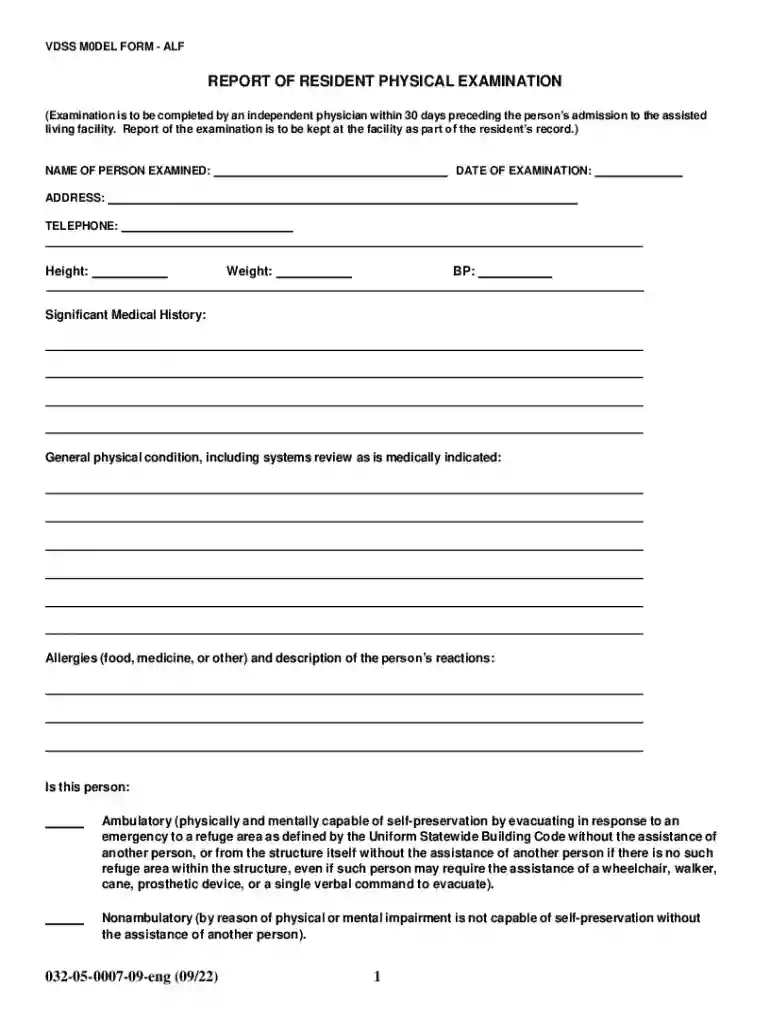
The Report of Resident Physical Examination is a comprehensive document intended for residents entering assisted living facilities. It is instrumental in outlining a resident’s physical health status, ensuring that they receive the appropriate care and support upon admission. This document covers various aspects such as personal information, medical history, physical condition, and specific care needs. By providing a detailed evaluation, the form assists healthcare providers and administrators in crafting individualized care plans to enhance the resident’s living experience.
Using the Report of Resident Physical Examination involves a systematic process aimed at accurately capturing a resident's health status. This form is generally filled out by healthcare professionals who conduct a thorough physical examination. Key areas assessed include:
The completed report is then reviewed by the facility’s healthcare team to plan any necessary medical interventions or adjustments to the resident’s daily routine.
Completion of the Report of Resident Physical Examination requires adherence to a structured sequence of actions to ensure accuracy and completeness:
Healthcare professionals should ensure that all data is captured accurately to aid the development of tailored medical and nutritional plans for the resident.
Rules governing the Report of Resident Physical Examination can vary by state, which underscores the importance of understanding local regulations. In Virginia, for example, there are specific directives for tuberculosis screening and risk assessment. Healthcare providers must follow state guidelines carefully, as they impact both the examination process and the subsequent care plan development. This ensures regulatory compliance and enhances the safety and well-being of residents within these facilities.
Several critical elements make up the Report of Resident Physical Examination, thereby ensuring a comprehensive review of an individual’s health:
These components collectively provide a holistic view of the resident’s well-being, informing the care strategy that will be implemented.
The Report of Resident Physical Examination is primarily utilized by healthcare professionals in assisted living facilities. Physicians, nurses, and medical assistants use the form to assess incoming residents’ health conditions. Facility administrators also rely on it to ensure they provide adequate resources and staff to address the diverse needs of each resident. Additionally, family members of residents may review this report to remain informed about their loved one’s health status and care plan.


Legally, the Report of Resident Physical Examination serves as a critical document in complying with state health regulations and facility admission requirements. It provides a certified medical evaluation that establishes the resident's fitness for the living arrangement and identifies any necessary accommodations. Keeping accurate records is essential in defending legal or medical queries that may arise, ensuring that facilities meet both ethical and legal standards for resident care.
Several scenarios illustrate the practical use of the Report of Resident Physical Examination:
Overall, the report is a vital tool in managing and delivering resident care effectively within assisted living environments.
We've got more versions of the REPORT OF RESIDENT PHYSICAL EXAMINATION form. Select the right REPORT OF RESIDENT PHYSICAL EXAMINATION version from the list and start editing it straight away!
At DocHub, your data security is our priority. We follow HIPAA, SOC2, GDPR, and other standards, so you can work on your documents with confidence.