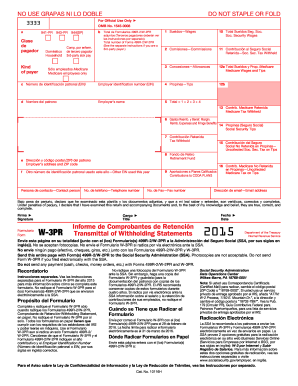
MANURE TRANSPORT PROJECT 2026

Get Form
MANURE TRANSPORT PROJECT Preview on Page 1

Here's how it works

01. Edit your form online
Type text, add images, blackout confidential details, add comments, highlights and more.

02. Sign it in a few clicks
Draw your signature, type it, upload its image, or use your mobile device as a signature pad.

03. Share your form with others
Send it via email, link, or fax. You can also download it, export it or print it out.

Definition and Purpose of the Manure Transport Project

The Manure Transport Project is a program initiated by the Maryland Department of Agriculture aimed at facilitating the movement of surplus manure from farms with excess supply to those with a deficit. The primary goal is to enhance nutrient management practices, minimize environmental impact, and promote sustainable agriculture. This project is particularly beneficial in regions where nutrient imbalances affect environmental quality. By transporting manure efficiently, it helps in reducing nutrient runoff into waterways, thus supporting both agricultural productivity and environmental health.

Key Elements of the Manure Transport Project

Participant Roles

  • Sending Farm Operators: These are farms that generate more manure than they can use. They provide the manure that will be transported.
  • Receiving Farm Operators: These farms receive the transported manure, which is used to meet their fertilizer needs.
  • Transport Agents: These individuals or companies are responsible for the logistics of moving the manure between the sending and receiving farms.

Cost-Share Components

The project includes a cost-share payment system to assist with transportation costs. This is crucial in ensuring the financial viability of moving manure over potentially long distances. The cost-share calculations are based on factors such as the manure weight and distance transported.

Steps to Complete the Manure Transport Project

  1. Identify Participation: Determine whether your farm can participate as a sending or receiving farm.
  2. Application Submission: Submit the required application form to the Maryland Department of Agriculture, including all necessary participant information and verification documents.
  3. Transport Coordination: Collaborate with a designated transport agent to arrange the logistics of manure movement.
  4. Documentation: Maintain detailed records, including weight tickets and transportation verification, which are necessary for cost-share payment calculation.
  5. Review and Approval: Once submitted, the application and supporting documents are reviewed for compliance before approval and commencement of transportation.

Required Documents for Manure Transport Project

  • Participant Information Sheet: Detailed information about both sending and receiving farm operators.
  • Verification Attachments: Proof of farm operation status, including licenses or certifications if applicable.
  • Transport Agent Agreement: Documentation of the arrangement with an approved transport agent.
  • Weight Tickets: Documents that verify the weight of manure transported, crucial for cost-share calculations.

Important Terms Related to Manure Transport Project

  • Nutrient Management: The process of managing the amount, source, placement, form, and timing of the application of nutrients.
  • Surplus Manure: Manure that exceeds the fertilization needs of the originating farm.
  • Runoff Reduction: Strategies employed to minimize nutrient losses from farm fields to water bodies.

Who Typically Uses the Manure Transport Project

The Manure Transport Project is predominantly used by:

  • Large Animal Farms: Particularly those with livestock that produce significant amounts of manure, such as dairy or swine operations.
  • Crop Farms: These farms may require additional nutrient sources, like manure, to meet fertilization requirements for crops.
decoration image ratings of Dochub

State-Specific Rules for the Manure Transport Project

The Maryland Department of Agriculture stipulates specific rules, including:

  • Application Deadlines: Farms must adhere to submission deadlines for cost-share eligibility.
  • Compliance Criteria: Participants must comply with Maryland's nutrient management regulations to qualify.
  • Environmental Guidelines: All transported manure must adhere to guidelines that prevent environmental harm.

Form Submission Methods for the Manure Transport Project

Participants have multiple options for submitting their applications:

  • Online Submission: Forms can be filled and submitted through the Maryland Department of Agriculture's official portal.
  • Mail: Printed forms, along with necessary documentation, can be sent via postal service to the department's office.
  • In-Person Delivery: Farms can also hand-deliver applications and supporting documents to designated department locations.

Penalties for Non-Compliance

Failure to comply with the guidelines and regulations of the Manure Transport Project can result in several penalties, including:

  • Suspension of Cost-Share Payments: Farms may lose financial support if they fail to meet documentation and compliance standards.
  • Revocation of Participation: Farms can be barred from future participation in the program if they violate transport or environmental regulations.
  • Legal Actions: In severe cases, non-compliance can lead to legal repercussions under state environmental laws.

Examples of Using the Manure Transport Project

Consider a dairy farm producing excess manure that cannot be utilized on-site. By participating in the Manure Transport Project, this farm partners with a nearby crop farm needing additional organic fertilizer. With the project's support, transportation arrangements are made, costs are shared, and both environmental and agricultural benefits are realized through effective resource management.

be ready to get more

Complete this form in 5 minutes or less

Get form

Got questions?

We have answers to the most popular questions from our customers. If you can't find an answer to your question, please contact us.
Contact us
Manure Management Plans (MMPs) Filling out an MMP helps producers identify the amount of manure being produced, the nutrient concentration in the manure, the number of acres that are required for land application and the amount that will be applied to each available acre.
Cow manure is a good fertilizer that helps build organic matter in your soil without burning your plants. once its aged in the field or composted it can be using directly in your vegetable garden, flower beds, and lawn.
Start by collecting field maps (electronic or paper maps are fine) and mark out sensitive features, like streams, ditches, wetlands, wells, sinkholes, open-tile inlets, etc. Next, highlight the setbacks from these sensitive areas where manure cannot be applied according to state rules.
The Manure Transport Program helps cover the cost of transporting manure to farms with low phosphorus fields or to alternative use facilities. Payments of up to $28 per ton are available to eligible farmers or registered manure brokers. Click here to find out how to become a registered manure broker.
As per Pennsylvania law Chapter 91, all facilities, properties, and farming operations that have animals that produce manure (or import manure) or apply manure and/or agricultural process wastewater to crop fields and pastures MUST have a written Manure Management Plan (MMP).

Security and compliance

At DocHub, your data security is our priority. We follow HIPAA, SOC2, GDPR, and other standards, so you can work on your documents with confidence.

Learn more
ccpa2
pci-dss
gdpr-compliance
hipaa
soc-compliance
be ready to get more

Complete this form in 5 minutes or less

Get form

People also ask

You need a liquid manure tank. You can find this in the building menu under Silo Extensions. You need a manure spreader/tank to either spread the manure on your fields or transport it to the point of sale. You need a slurry spreader/tank to either spread the slurry on your fields or transport it to the place of sale.
The 90120-Day Rule You may not apply raw, uncomposted livestock manure to food crops unless it is: Incorporated into the soil a minimum of 120 days prior to harvest when the edible portion of the crop has soil contact; OR. Incorporated into the soil a minimum of 90 days prior to harvest of all other food crops.

Related links