Definition & Meaning
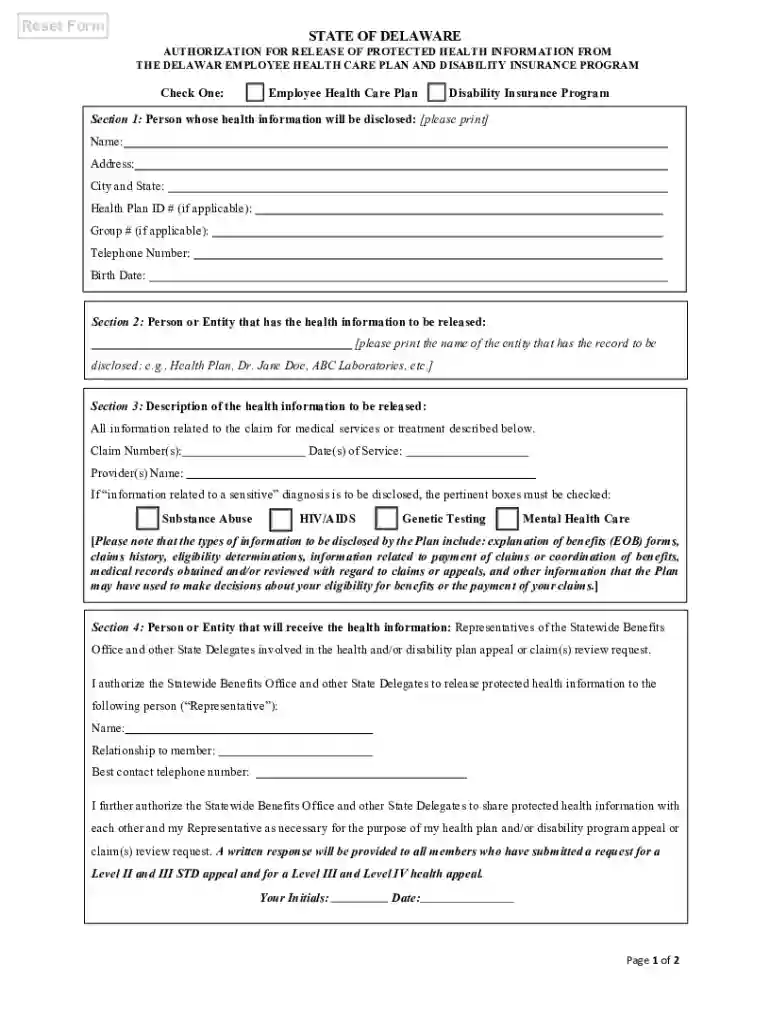
The DE Authorization for Release of Protected Health Information is a legal document from the State of Delaware designed to permit the release of an individual's protected health information (PHI). This form is essential for allowing the transfer of medical records from entities like the Delaware Employee Health Care Plan and Disability Insurance Program for a defined purpose. It stipulates what information can be shared and with whom, thus ensuring compliance with privacy laws such as HIPAA.
Key Components
- Personal Information: Includes fields for the individual's name, contact details, and identification numbers.
- Health Information Details: Specifies the types of health information that can be disclosed, such as treatment records or billing information.
- Purpose of Release: Clarifies why the health information is being released, like for insurance claims or medical treatment coordination.
How to Use the DE Authorization for Release of Protected Health Information
This form is crucial for times when medical information needs to be shared with third parties or institutions. To use it effectively:
- Identify the Specific Information: Clearly define what health information is necessary for the release.
- Designate Recipients: List the individuals or organizations authorized to receive the information.
- Clarify the Purpose: Ensure that the purpose aligns with the legal and intended use of the data.
Practical Examples
- Insurance Claims: Enabling insurance companies to access medical records to process claims.
- Medical Transfers: Allowing new healthcare providers access to a patient’s complete medical history for continuity of care.
Steps to Complete the DE Authorization for Release of Protected Health Information
Accurate completion of this form ensures legally compliant information sharing. Follow these steps:
- Personal Details: Start by filling out your full name, address, and contact information.
- Specify Health Information: Clearly outline the records you are authorizing for release.
- Identify the Receiving Party: Fill in the details of who will receive your information.
- Purpose Section: Provide a detailed reason for the release, ensuring it meets legal standards.
- Sign and Date: Validate the form with your signature and the date of signing.
Important Tips
- Review Carefully: Double-check for any errors or omissions.
- Retain Copies: Keep a copy of the signed form for personal records.
Why Use the DE Authorization for Release of Protected Health Information
Using this form is not only about adhering to legal obligations but also about ensuring smooth interaction between healthcare providers and other related entities:
- Enhances Care Coordination: Facilitates seamless information sharing between healthcare providers.
- Streamlines Insurance Processes: Expedites the verification process with insurers, reducing delays in claim settlements.
Real-World Impact
- Patient Empowerment: Patients maintain control over who accesses their sensitive information.
- Legal Assurance: Provides a documented trail that can protect both patients and providers legally.
Important Terms Related to DE Authorization for Release of Protected Health Information
Understanding specific terminology is pivotal:
- Protected Health Information (PHI): Any information about health status, provision of health care, or payment for health care.
- Covered Entity: Entities that handle PHI, including providers and insurers.
- Authorization: A detailed document providing legal consent for specific disclosures of PHI.
Legal Use of the DE Authorization for Release of Protected Health Information
This form complies with HIPAA regulations, ensuring that patients' rights are protected while facilitating necessary information exchange:
- Regulatory Compliance: Helps ensure healthcare operations adhere to federal privacy laws.
- Legal Recourse: Provides enforceable rights if unauthorized disclosures occur.
Considerations
- Revocation Rights: A patient can withdraw the authorization at any time, provided the revocation is submitted in writing.
Key Elements of the DE Authorization for Release of Protected Health Information
Each section of the form plays a crucial role in ensuring clarity and compliance:
- Recipient Details: This section ensures data is only shared with the correct entities.
- Authorization Duration: Specifies how long the release remains valid, typically until the resolution of the purpose for the disclosure.
Form Submission Methods (Online / Mail / In-Person)
Convenience and accessibility are key when submitting the DE Authorization form:
- Online Submission: Often the fastest, most direct method, allowing for immediate acknowledgment.
- Mail Submission: Offers a physical paper trail and can be necessary if digital submission is unavailable.
- In-Person Submission: Ensures personal interaction, which might be required for complex cases.
Who Issues the Form
The DE Authorization for Release of Protected Health Information is issued by healthcare entities within Delaware, including:
- Healthcare Providers: Hospitals, clinics, and doctors' offices.
- Insurance Companies: Specifically related to employee healthcare and disability insurance programs.
In conclusion, this form serves as a crucial tool in managing the flow of personal health information while ensuring compliance, privacy, and security standards are maintained in the health sector.