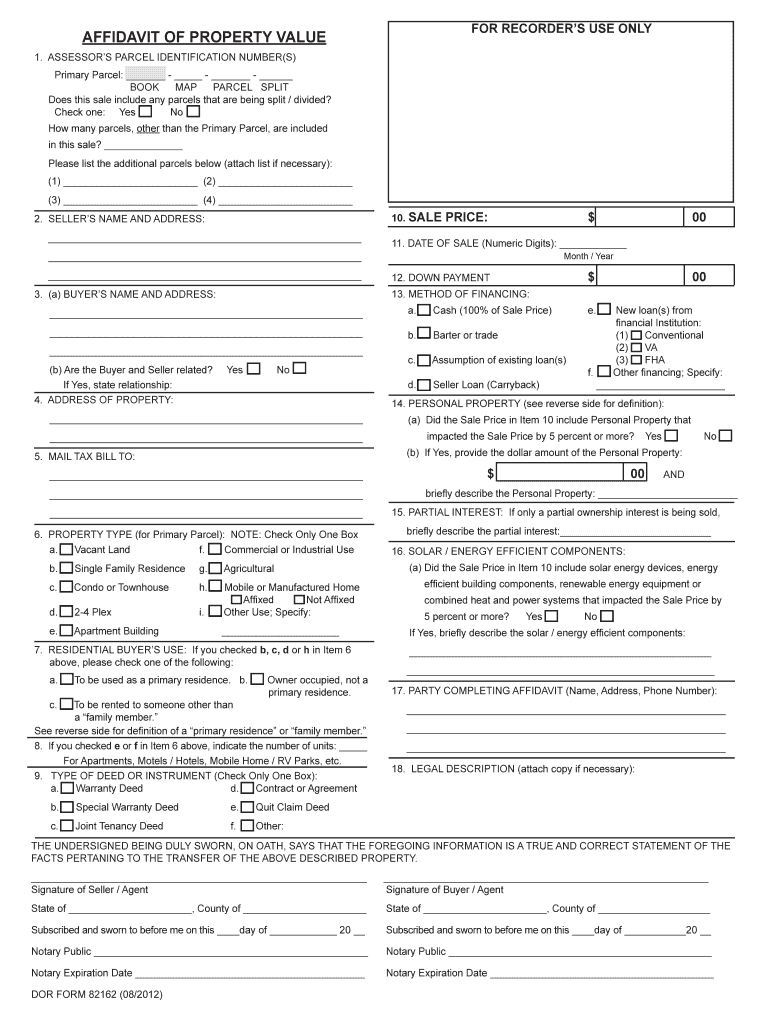







Definition and Purpose of the Affidavit of Property Value
The Affidavit of Property Value is a legal form used in real property transactions to provide detailed information about the sale. It is typically required in the United States to ensure transparency in the real estate market by disclosing sale prices and other pertinent details. This document serves multiple purposes, including helping assessors and government entities determine accurate property tax values. Moreover, it assists in maintaining an accurate record of real estate transaction trends within specific jurisdictions.
Key Components
- Sale Price and Financing Methods: The document requires disclosure of the final sale price agreed upon by the buyer and seller, along with any financing arrangements.
- Parcel Identification: It includes the parcel identification numbers, which are unique identifiers for the real estate being transacted.
- Buyer and Seller Details: Full names and contact information of both parties involved in the transaction are mandatory.
- Property Address: The complete address of the property must be detailed, providing a clear location reference.
Steps to Complete the Affidavit of Property Value
Preparing the Affidavit of Property Value involves a series of systematic steps to ensure accuracy and legal compliance.
- Gather Required Information: Collect all necessary details about the property, including the parcel number, legal description, and address.
- Fill Buyer and Seller Information: Complete sections with personal details like names, addresses, and contact information for both parties.
- Enter Sale Details: List the sale price, date of transaction, and any financing information accurately.
- Review Exemption Criteria: Determine if there are any exemption criteria that may apply to the transaction.
- Signature and Notarization: Both the buyer and seller must sign the document. It is crucial to have the affidavit notarized to uphold its legitimacy under legal scrutiny.
Common Mistakes to Avoid
- Incorrect Information: Double-check all entries for typos or inaccuracies.
- Missing Signatures: Ensure both parties sign before notarization.
- Ignoring Exemptions: Assess if any exemptions apply and properly document them.
Legal Requirements and Notarization of the Affidavit
The affidavit must adhere to specific legal procedures to be deemed valid. Proper notarization is a critical part of this process.
Importance of Notarization
- Authenticity Verification: Notarization confirms that the document is signed voluntarily and with full understanding by both parties.
- Legal Binding: It elevates the affidavit’s status to a legally binding document, enforceable by courts if disputes arise.
State-Specific Rules for the Affidavit of Property Value
Each U.S. state may have unique requirements regarding the Affidavit of Property Value, necessitating awareness of regional differences.
Regional Variations
- Exemptions: Some states may have broader or more restrictive exemption policies.
- Filing Requirements: Deadlines and procedures for filing the affidavit can vary significantly across states.
- Fees: There might be state-specific fees associated with filing the affidavit, which need to be accounted for.
Who Typically Uses the Affidavit of Property Value
The form is primarily used by individuals and entities involved in real estate transactions, including:
- Homebuyers and Sellers: To officially record the sale details and fulfill legal obligations.
- Real Estate Agents: To assist clients in completing real property transactions.
- Title Companies: To ensure all legal paperwork, including the affidavit, is correctly filed and maintained.


Importance of the Affidavit of Property Value
Beyond fulfilling legal requirements, the Affidavit of Property Value plays a crucial role in the broader real estate ecosystem.
Economic Impact
- Property Tax Assessments: The data assists local governments in assessing property taxes equitably.
- Real Estate Market Analysis: It contributes valuable data for market trend analysis and forecasting.
Practical Scenarios and Use Cases
Understanding real-world applications of the Affidavit of Property Value enhances its comprehension and utility.
Example Scenarios
- Estate Planning: When real estate is transferred as part of an estate sale, clear documentation of value is essential.
- Divorce Settlements: To ensure fair division of property through accurate valuation.
- Business Transactions: Companies acquiring commercial real estate use this affidavit to accurately record investments.
Obtaining the Affidavit of Property Value Form
To acquire the form, interested parties typically have several options:
- Online Access: Most counties offer downloadable versions from their official websites.
- Title Companies: Forms can often be obtained when processing title and escrow dealings.
By understanding the detailed aspects and application of the Affidavit of Property Value, stakeholders can properly prepare and submit this vital document, ensuring compliance and transparency in real estate transactions.