01. Edit your form online
Type text, add images, blackout confidential details, add comments, highlights and more.

Type text, add images, blackout confidential details, add comments, highlights and more.

Draw your signature, type it, upload its image, or use your mobile device as a signature pad.

Send it via email, link, or fax. You can also download it, export it or print it out.
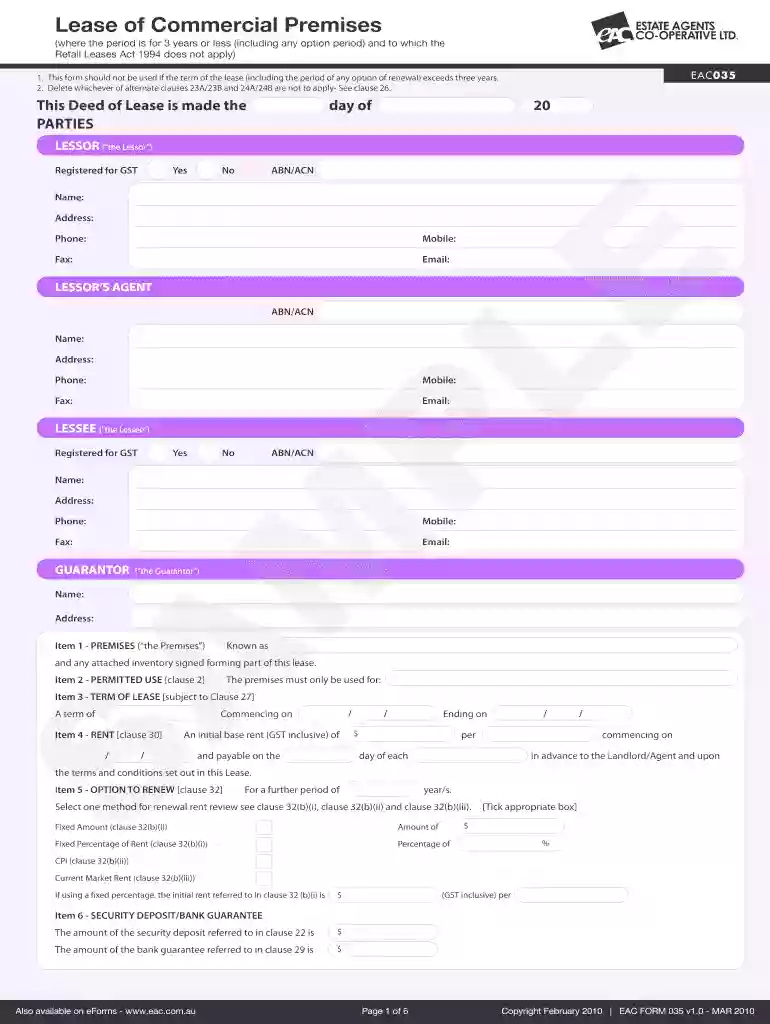
A Lease of Commercial Premises refers to a contractual agreement in which a landlord or lessor permits a business tenant or lessee to occupy a space for a specified duration in exchange for rent payments. This lease is essential for businesses looking to establish a physical location to conduct commercial activities. The document outlines the rights and obligations of both parties, covering critical aspects such as rent, permitted use, maintenance, and compliance with legal regulations. This agreement is typically structured for terms ranging from one to three years, offering businesses the flexibility needed to adapt to changing market conditions.
Understanding the key elements of a Lease of Commercial Premises is crucial for both lessors and lessees. These elements typically include:
These components ensure clear communication and understanding between the involved parties, minimizing potential disputes.
The legal enforceability of a Lease of Commercial Premises is fundamental to its function as a binding agreement. The lease should comply with relevant state laws and regulations, ensuring that both parties' rights are legally protected. This includes adherence to:
A well-drafted lease protects both parties by preventing legal disputes and providing a framework for resolving issues that may arise during the lease term.
Completing a Lease of Commercial Premises involves several steps to ensure accuracy and legal compliance:
These steps promote transparency and help avoid misunderstandings between the landlord and tenant.
The Lease of Commercial Premises is utilized by various parties, including:
This lease is common among various business types, providing a legal framework that supports their physical presence in the marketplace.


State-specific regulations can influence the terms and enforcement of a Lease of Commercial Premises. Important variations may include:
Being aware of these rules is vital for both lessors and lessees to ensure compliance and avoid legal pitfalls.
Familiarity with key terms is essential for understanding the Lease of Commercial Premises:
Understanding these terms helps parties navigate the complexities of the lease agreement.
Real-world scenarios highlight the application of a Lease of Commercial Premises:
These examples underscore the versatility and necessity of commercial leases across different business contexts.
At DocHub, your data security is our priority. We follow HIPAA, SOC2, GDPR, and other standards, so you can work on your documents with confidence.