






Definition and Meaning of the Manual
The "Manual of Requirements for Child Care Centers" serves as a comprehensive guide for establishing and operating child care centers in New Jersey. This document contains detailed regulations and standards that operators must adhere to for obtaining and maintaining a child care license. It encompasses guidelines on the physical environment, staffing requirements, health and safety protocols, and administrative procedures. The manual aims to ensure that child care centers provide a supportive and secure environment for children.
How to Use the Manual
Using the manual effectively involves understanding its structure and contents. The document is divided into sections that cover various aspects of child care center operations. Care providers must familiarize themselves with each section, from general licensing requirements to specific health and safety protocols. Reviewing the manual regularly ensures that center operations remain compliant with state regulations.
Key Sections to Focus On
- Licensing Requirements: Includes details on acquiring and renewing a license.
- Health and Safety Protocols: Outlines standards for maintaining a safe environment for children and staff.
- Staffing Requirements: Provides qualifications and roles of staff members to ensure adequate supervision and care.
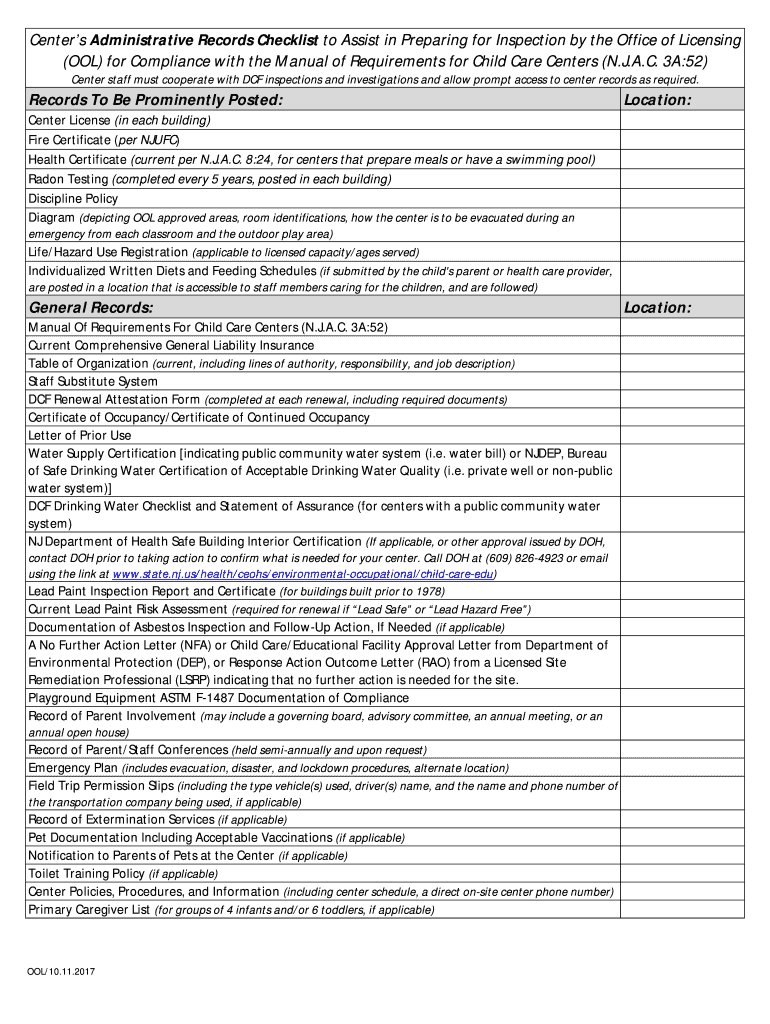
- Administrative Records: Lists necessary documentation for compliance and audits.
Obtaining the Manual
The manual is issued by the Department of Human Services in New Jersey. Child care center operators can access the manual through the department's website or contact their local licensing office for a physical copy. Keeping a copy of the latest version is crucial for ensuring compliance with current regulations.
Where to Find the Manual
- New Jersey Department of Human Services website
- Local licensing offices
- Online child care resource portals
Steps to Complete the Compliance Process
- Review the Manual Thoroughly: Begin by reading each section to understand the requirements.
- Conduct a Self-Assessment: Evaluate current practices against the manual's standards.
- Implement Necessary Changes: Adjust policies and procedures to align with regulations.
- Prepare Documentation: Gather and organize all required administrative records and evidence of compliance.
- Schedule Regular Reviews: Set intervals to reassess the center's operations and ensure ongoing adherence to the manual.
Importance of the Manual for Child Care Centers
Adhering to the manual ensures that child care centers meet state standards, which is critical for safeguarding the well-being of children and earning parental trust. Compliance reduces the risk of penalties and enhances the center's reputation by demonstrating a commitment to high-quality care.
Who Typically Uses the Manual
Child care center directors, operators, and staff members regularly reference the manual. Licensing officials and inspectors also use it to gauge compliance during reviews and audits. Additionally, parents may consult the manual to understand what they should expect from a compliant child care facility.


Key Elements of the Manual
- Physical Environment: Guidelines for facility layout, including space requirements and equipment safety.
- Health and Safety Protocols: Procedures for food safety, hygiene, emergency preparedness, and medication administration.
- Staff Qualifications and Training: Criteria for hiring staff and mandatory training for maintaining high standards of care.
- Communication with Parents: Policies on regularly updating parents about their child's progress and incident responsiveness.
State-Specific Rules and Regulations
While the manual shares common elements with those of other states, it includes particular stipulations unique to New Jersey. Child care centers must be aware of state-specific rules, such as local zoning laws and region-specific emergency procedures.
New Jersey-Specific Considerations
- Local health department regulations
- State-mandated training programs for staff
- Regional dietary guidelines for meal preparations
Examples of Using the Manual
Scenario 1: Opening a New Child Care Center
A prospective child care center operator uses the manual to guide the licensing process, ensuring their facility's design, staffing, and policies are compliant before opening.
Scenario 2: Routine Compliance Audit
Existing centers use the manual to prepare for routine state inspections. They ensure all records are up-to-date, staff credentials meet requirements, and that health and safety procedures are followed.
By comprehensively understanding and consistently applying the guidelines within the manual, child care centers can provide high-quality, compliant care, fostering a safe and nurturing environment for children.