






Definition & Meaning
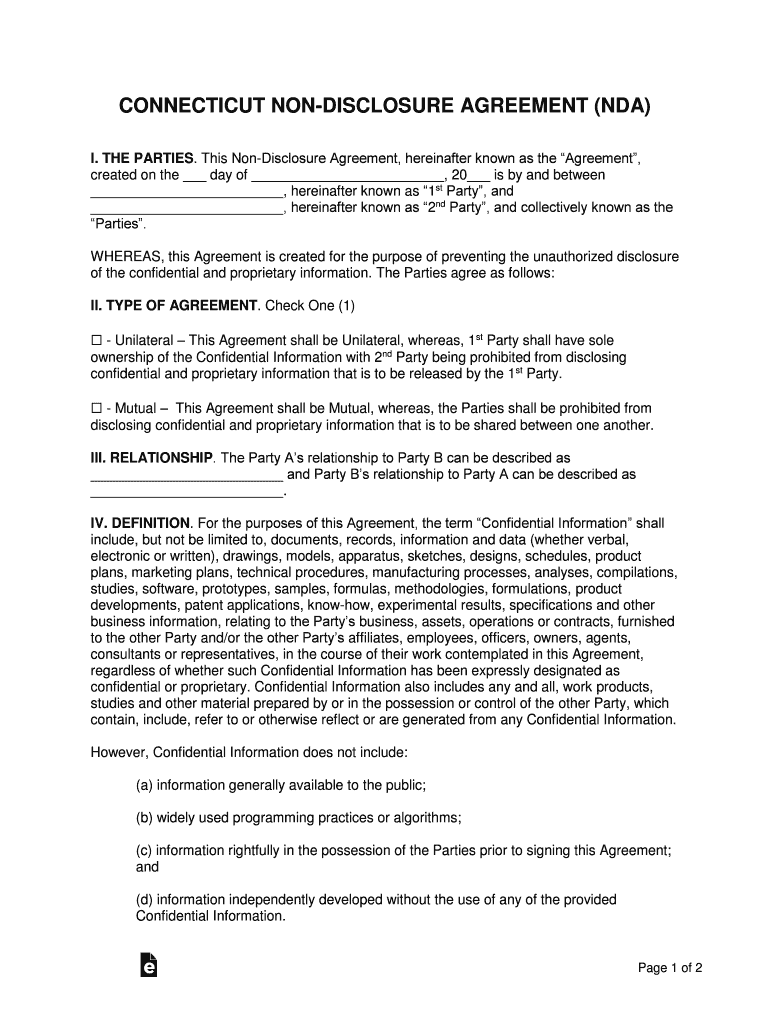
The Connecticut Non-Disclosure Agreement (NDA) Template is a legal document designed to protect sensitive information shared between two or more parties. It helps define 'Confidential Information', specifying what is considered proprietary or secret. This template is used primarily to outline the responsibilities of each party in maintaining the confidentiality of shared data, whether it involves business plans, trade secrets, or intellectual property. NDAs can be either unilateral, where only one party discloses information, or mutual, involving bidirectional information sharing.
Key Elements of the Connecticut Non-Disclosure Agreement (NDA) Template
The template for a Connecticut NDA includes several critical components that ensure its effectiveness:
- Confidential Information Definition: Clearly states what constitutes confidential data and any exceptions.
- Parties Involved: Lists the individuals or entities entering into the agreement.
- Purpose of Disclosure: Specifies why the information is being shared and how it can be used.
- Obligations: Details each party's duty to keep information confidential and any restrictions on use.
- Duration: Indicates how long the NDA remains in effect, which may vary depending on the industry or nature of the information.
- Return or Destruction of Information: Outlines procedures for returning or destroying confidential materials once the NDA’s purpose is fulfilled.
- Severability and Integration Clauses: Ensure that if one part of the agreement is invalidated, the rest remains enforceable.
Legal Use of the Connecticut Non-Disclosure Agreement (NDA) Template
The legal utility of the Connecticut NDA Template is primarily in its ability to prevent unauthorized dissemination of sensitive information. The NDA must comply with Connecticut state laws while also adhering to broader principles under U.S. law. It is essential for the agreement to:
- Specify the governing law, typically aligning with Connecticut statutes.
- Clearly define what constitutes a breach and outline the consequences.
- Include clauses for dispute resolution, which may involve mediation or arbitration, to resolve conflicts cost-effectively.
- Indicate the jurisdiction for legal proceedings, typically within the state of Connecticut.
Steps to Complete the Connecticut Non-Disclosure Agreement (NDA) Template
Completing the Connecticut NDA Template involves several crucial steps:
- Gather Information: Identify all parties involved and clearly outline the purpose of the NDA.
- Define Confidential Information: Collaboratively determine what information is considered confidential and ensure all parties agree.
- Draft and Review: Fill in the template, taking care to review all clauses, especially those related to term length and obligations.
- Legal Review: Have a legal professional examine the document to ensure compliance with local and federal laws.
- Signatures: Complete the process by obtaining signatures from all parties, indicating mutual consent to the terms of the NDA.
State-Specific Rules for the Connecticut Non-Disclosure Agreement (NDA) Template
Connecticut has specific legal nuances that must be considered when drafting an NDA:
- Duration Limitations: Some NDAs in Connecticut might be subject to limitations on duration, particularly in relation to employment contract NDAs.
- Trade Secret Protection: Connects to state-enacted versions of the Uniform Trade Secrets Act, which may influence definitions and enforcement.
- Employee Rights: Employment-related NDAs should be crafted in compliance with state statutes protecting employee mobility and rights.
Important Terms Related to Connecticut Non-Disclosure Agreement (NDA) Template
Several terms are essential for understanding a Connecticut NDA:
- Disclosing Party: The entity sharing confidential information.
- Receiving Party: The entity receiving and obligated to maintain the confidentiality of the information.
- Breach of Contract: Occurs when either party fails to uphold their confidentiality obligations.
- Proprietary Information: Refers to sensitive data that provides a competitive advantage to its holder.
Who Typically Uses the Connecticut Non-Disclosure Agreement (NDA) Template
Various individuals and entities utilize the Connecticut NDA Template:
- Businesses: Frequently used in mergers, acquisitions, and partnerships to protect intellectual property and financial information.
- Employees and Contractors: Often required to sign NDAs to protect sensitive company information they may access.
- Investors and Entrepreneurs: Used during discussions with potential business partners or investors to safeguard innovative ideas and strategies.


Examples of Using the Connecticut Non-Disclosure Agreement (NDA) Template
Real-world examples illustrate the utility of the Connecticut NDA:
- Technology Companies: Use NDAs when hiring contractors to ensure proprietary software code is not disclosed.
- Entrepreneurs: Implement NDAs when pitching to investors, protecting business ideas from being disclosed to competitors.
- Medical Research Firms: Utilize NDAs to maintain the confidentiality of clinical trial data shared with partnering organizations.