






Definition & Meaning
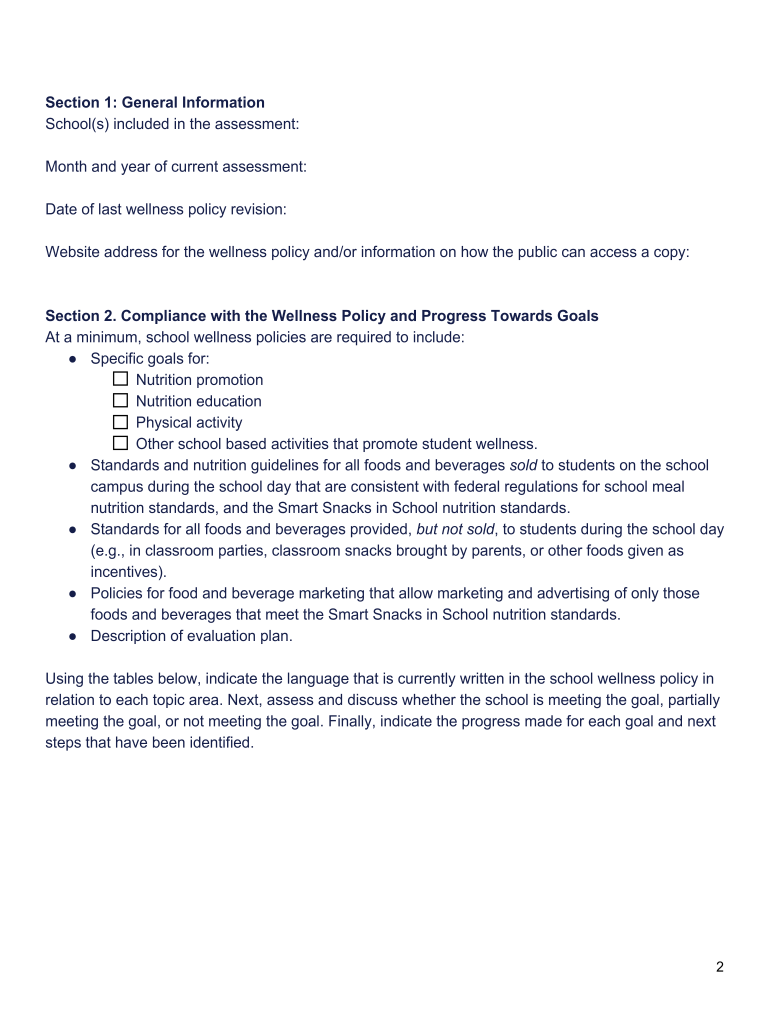
The IDOE Triennial Assessment Template is a standardized tool used to evaluate Local School Wellness Policies, as mandated by the USDA. This template guides school wellness committees in assessing their compliance with wellness policy components, comparing their policies to model standards, and tracking progress towards wellness objectives. Its application ensures that wellness policies are actively fostering healthy school environments aligned with federal regulations.
Key Features:
- Compliance Evaluation: Helps schools assess adherence to specific wellness policy components.
- Comparison to Model Policies: Facilitates comparison with established model policies to identify areas needing improvement.
- Progress Tracking: Supports tracking advancements towards targeted wellness goals.
How to Use the IDOE Triennial Assessment Template
Using the IDOE Triennial Assessment Template involves several steps, which facilitate a thorough analysis of a school's wellness policy.
- Initial Review: Begin by gathering your existing Local School Wellness Policy documents. Analyze these policies to ensure they cover all necessary components outlined by federal guidelines.
- Section Completion: Fill out each section of the template with relevant information about how your wellness policy aligns with required criteria.
- Policy Comparison: Compare your current policy to model wellness policies as suggested in the template to identify areas for adaptation and improvement.
- Progress Evaluation: Document progress made since the last assessment, emphasizing improvements in wellness environments and identifying persistent challenges.
Best Practices:
- Ensure accuracy by involving multiple stakeholders during the review process.
- Regularly update policies based on feedback and new health standards.
Steps to Complete the IDOE Triennial Assessment Template
Completing the template involves a structured approach to ensure thorough evaluation and documentation.
- Gather Documentation: Collect all relevant materials, including the current wellness policy and any assessments from previous years.
- Schedule Meetings: Organize meetings with the wellness committee to discuss findings and gather input.
- Fill Out Sections:
- General Information: Document school details and the scope of the wellness policy.
- Compliance Check: Evaluate each component of the wellness policy to ensure it meets mandated standards.
- Policy Comparison: Align your policy against model policies and note discrepancies or alignments.
- Public Accessibility: Ensure results are accessible to the public, emphasizing transparency and accountability. This could involve publishing results on a designated school website.
Tips for Efficient Completion:
- Utilize previous assessment data for comparative analysis.
- Engage diverse voices, including students and parents, for a well-rounded perspective.
Key Elements of the IDOE Triennial Assessment Template
The template encompasses several key elements critical for comprehensive evaluation.
- General Information: Requires detailed school data and wellness committee info.
- Compliance Assessment: Involves a checklist of specific policy components needed to meet USDA guidelines.
- Policy Comparison & Progress Tracking: Provides a structured format for comparing current policies to models and documenting progress.
- Public Accessibility & Recordkeeping: Outlines how the results and records are maintained and made accessible to the public.
Additional Considerations:
- Consistent updating of records increases policy transparency.
- Regular comparisons with model policies encourage continuous improvement.
Examples of Using the IDOE Triennial Assessment Template
Practical application of the template involves real-world scenarios to illustrate its utility.
- Case Study - School A: This school used the template to overhaul their wellness policy, focusing on nutrition and physical activity. By comparing against model policies, they identified gaps, implemented changes, and achieved notable improvements in student wellness metrics.
- Case Study - School B: After using the template, School B was able to reveal areas of strength and weakness in their policy, leading to targeted professional development for staff on wellness topics.
Detailed Insights:
- Comparing different case studies can demonstrate the template's adaptability across various school settings.
- Sharing success stories helps other schools visualize potential policy impacts.
Legal Use of the IDOE Triennial Assessment Template
Adherence to the template is not just best practice but legally required for compliance with the USDA's federal mandates.
- USDA Compliance: The template ensures schools meet specific federal regulations governing wellness policies.
- Documentation Requirement: Schools must keep detailed assessments and make them publicly accessible to demonstrate compliance.
Legal Implications:
- Failure to complete the template properly can result in non-compliance penalties.
- Legal use emphasizes transparency and accountability in school wellness initiatives.
Required Documents
To accurately complete the IDOE Triennial Assessment Template, certain foundational documents are necessary.
- Current Wellness Policy: A copy of your existing wellness policy must be on hand.
- Previous Assessments: Past assessment records provide a comparative baseline.
- Supporting Health Data: Statistics and reports that support policy outcomes and goals.
Document Management Tips:
- Keep documents organized and accessible, as this facilitates smoother completion of the template.
- Utilize digital storage solutions for secure and easy access to necessary documents.
Who Typically Uses the IDOE Triennial Assessment Template
The primary users of this template include school wellness committees, administrators, and policy decision-makers involved in shaping school environments.
- School Wellness Committees: Comprised of educators, administrators, and sometimes community members responsible for monitoring and guiding wellness policy implementation.
- Administrators: Lead or facilitate the assessment process and ensure compliance with the USDA regulations.


User Engagement Strategies:
- Encourage active participation from all committee members to foster comprehensive assessments.
- Provide training sessions on template completion to ensure understanding and compliance.
By following these structured blocks, users can confidently navigate the requirements and expectations associated with the IDOE Triennial Assessment Template in a detailed and effective manner.