






Understanding the Excision of a P4-Like Cryptic Prophage
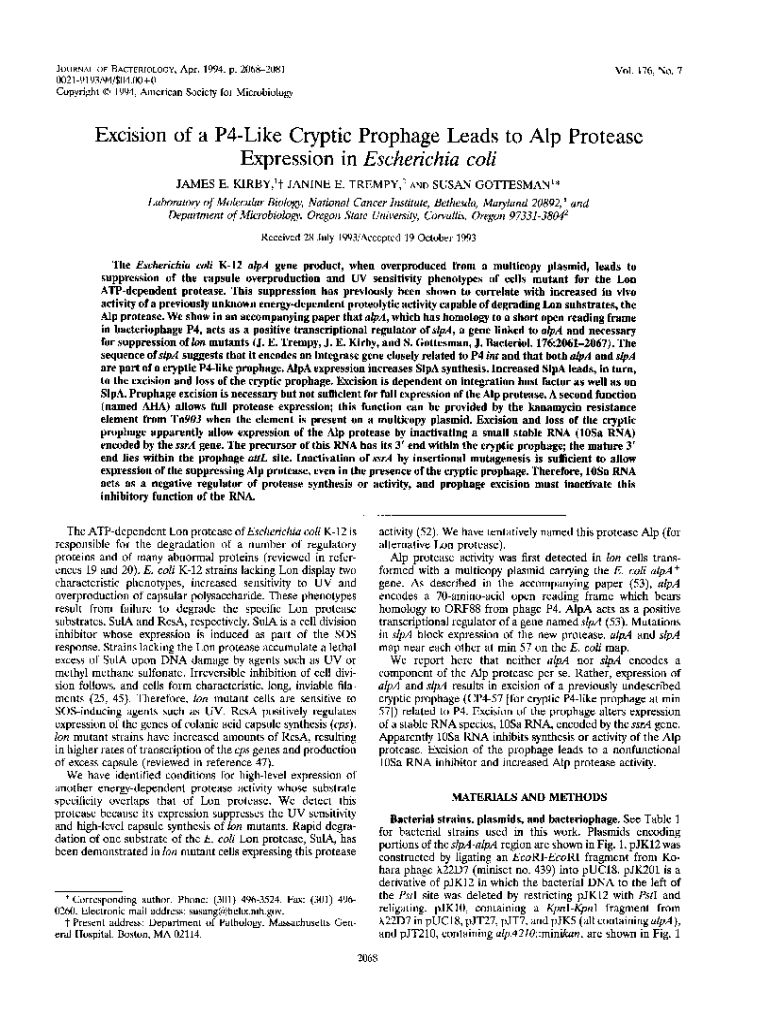
The excision of a P4-like cryptic prophage in Escherichia coli results in the activation of the Alp protease, a critical enzyme in cellular processes. This event involves the removal of specific DNA segments, which leads to the expression of the Alp protease. The process is closely regulated by the integration host factor, which plays a pivotal role in maintaining cellular homeostasis by controlling the activity of stable RNA molecules that negatively regulate Alp protease activity.
Role and Composition of Alp Protease
Regulatory Mechanisms
Alp protease is regulated by the alpA gene product, which serves as a positive regulator for the slpA gene. This regulatory function is essential in suppressing phenotypes observed in Lon protease mutants.
Functional Benefits
- Enhances cellular resistance to UV-induced damage.
- Reduces capsule overproduction in Escherichia coli lon mutant strains.
Steps in Prophage Excision
Initiation and Regulation
- Recognition: The integration host factor identifies specific DNA sequences within the cryptic prophage.
- Binding: The factor binds to these sequences to facilitate the excision process.
- Excision: DNA cutting and removal occur, leading to the expression of Alp protease.
Effects of Excision
- Activates Alp protease by removing the stable RNA element known as lOSa RNA.
- Suppresses superfluous cellular phenotypes related to protease activity.
Key Terms and Definitions
Integration Host Factor (IHF)
The integration host factor is a protein that assists in the recombination and integration of viral DNA within host cells. It is crucial for the excision of cryptic prophages and the regulation of gene expression.
Lon Protease
This protease is part of a system controlling protein degradation within Escherichia coli. Mutants lacking functional Lon protease demonstrate notable changes in phenotype, influenced by other proteases like Alp.
SlpA and AlpA Genes
- SlpA: Gene crucial in phenotype suppression linked to the activity of the Alp protease.
- AlpA: Acts as a positive regulator, promoting Alp protease activity when required by the cell.
Practical Applications and Use Cases
Microbial Research
In microbial research, understanding the mechanisms behind the excision of cryptic prophages can lead to insights into bacterial resistance and adaptability, particularly in harsh environments or pharmaceutical settings.
Biotechnology
- Development of novel antimicrobial strategies by manipulating Alp protease pathways.
- Engineering of bacterial strains with customized resistance to UV radiation or other environmental stresses.
Legal and Ethical Considerations
Use in Genetic Modification
Ensuring compliance with genetic modification regulations is crucial when employing excision processes in biotechnology and research. This includes adherence to ethical standards related to gene editing.
Patentability
Activities involving gene regulation processes, such as the excision of a P4-like cryptic prophage, may have legal implications concerning patents and intellectual property in biotechnology.
State-Specific Regulations
Regulations concerning genetic research and manipulation, including prophage excision and Alp protease activity, can vary significantly by state. Researchers must be aware of local legislative frameworks that govern biotechnological advancements and their applications.
Digital and Technological Integration
Research and Analysis Tools
Leveraging software compatible with biotechnological analysis can enhance the understanding and application of prophage excision processes. Tools designed for bioinformatics can assist in analyzing gene sequences and regulatory mechanisms.
Future Directions
Integrating machine learning algorithms to predict and simulate the outcomes of prophage excision events holds promise for both scientific understanding and practical developments in this field.
Conclusion: Comprehensive Insights into Prophage Excision
Understanding the excision of a P4-like cryptic prophage and its role in Alp protease activation offers significant insights into bacterial behavior and regulatory mechanisms. Researchers can exploit these findings to innovate in areas ranging from disease treatment to environmental management, while adhering to relevant legal standards.