01. Edit your form online
Type text, add images, blackout confidential details, add comments, highlights and more.

Type text, add images, blackout confidential details, add comments, highlights and more.

Draw your signature, type it, upload its image, or use your mobile device as a signature pad.

Send it via email, link, or fax. You can also download it, export it or print it out.
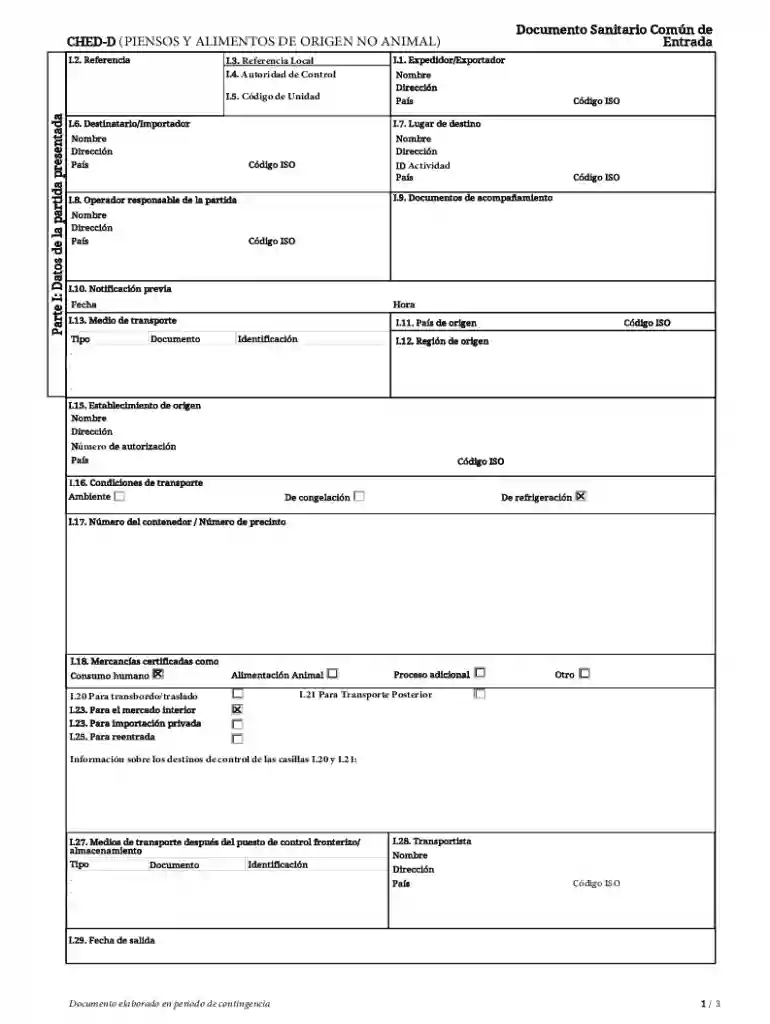
The Documento Sanitario Común De Entrada (Common Health Entry Document) is a vital document used for the importation of non-animal origin feed and food products into the European Union. It ensures compliance with EU regulations by documenting the necessary health inspections and certifications required for safe and legal importation. This document is crucial for maintaining public health standards by verifying that imported goods adhere to the stipulated safety and quality guidelines.
To effectively use the Documento Sanitario Común De Entrada, importers must accurately complete various sections detailing exporter and importer information, transport details, and specific product parameters such as weight, quantity, and origin. The document acts as a checklist ensuring that all necessary health and safety certifications are in place. Ensure all fields are filled out with precise data to avoid delays or rejections during inspection processes.
Filling Out Exporter and Importer Information: Provide complete details of both the exporter and importer to establish traceability.
Detailing Transport Information: Record information about the transport mode and route to ensure compliance with transport regulations.
Providing Product Details: Include specifications such as product weight, quantity, and origin to facilitate proper inspection.
Health Certifications: Attach the necessary health inspections and certification documents as required by EU law.
Double-Check Entries: Ensure all information is accurate and complete to avoid complications during the inspection process.
Exporter Information: Includes company name, address, and contact details.
Importer Information: Requires full details of the receiving entity, crucial for traceability.
Transport Details: Documents specifics of the transportation method, crucial for compliance checks.
Product Information: Captures details of the products being imported, including type, weight, and origin.
Certification and Compliance: Lists certifications and inspections adhered to by the exporter, ensuring legal entry.
Food importers, logistics companies, and customs officials are the primary users of the Documento Sanitario Común De Entrada. Importers must complete the document to ensure their products meet EU health standards upon entry. Customs officials use this document to verify the compliance of goods entering the food supply chain.


Legally, importers must use the Documento Sanitario Común De Entrada to declare that their products have undergone necessary health inspections and comply with EU safety regulations. Non-compliance with this requirement can result in fines, import delays, and shipment rejections, highlighting the document's crucial role in legal importation processes.
Health Certificates: Documents proving the product has passed necessary safety and health checks.
Origin Certificates: Providing proof of the product's origin, critical for traceability and compliance.
Transport Documents: Such as a Bill of Lading or air waybill, depending on the transportation mode.
Case Study: A Food Importing Company in Spain: Illustrates how accurate completion of the document facilitated smooth entry of canned vegetables from Morocco.
Scenario: Importing Organic Produce: Shows specific challenges and solutions in fulfilling organic certification requirements while completing the entry document.
By addressing each section with thorough detail, the Documento Sanitario Común De Entrada ensures compliance with rigorous health standards, safeguarding consumer safety across the EU.
At DocHub, your data security is our priority. We follow HIPAA, SOC2, GDPR, and other standards, so you can work on your documents with confidence.