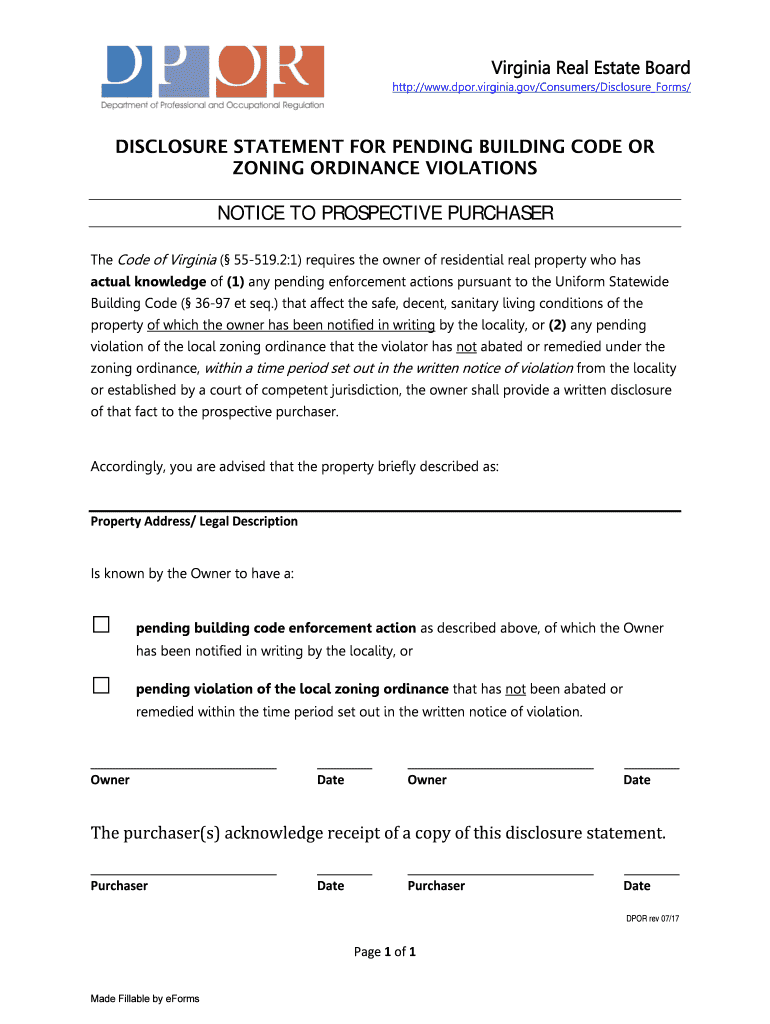







Key Elements of the Virginia Building Code or Zoning Ordinance Violations Disclosure
When completing the Virginia Building Code or Zoning Ordinance Violations Disclosure, it's essential to understand its primary components:
-
Property Details: Include accurate descriptions such as property address, owner's name, and contact information to ensure identification.
-
Violation Information: Detail any known building code enforcement actions or zoning ordinance violations. This should cover the type, scope, and current status of each violation.
-
Impact on Living Conditions: Explain potential impacts the violations may have on the property's habitability or value. Offering this insight provides transparency to potential buyers.
-
Resolution Progress: If steps are underway to resolve these violations, describe the actions taken, expected timeframe, and any plan approval by local authorities.
Understanding these aspects is critical for ensuring compliance and transparency in property transactions.
How to Use the Virginia Building Code or Zoning Ordinance Violations Disclosure
Utilizing this form involves several important steps:
-
Gather Necessary Information: Before starting, collect all relevant data about potential violations and their status.
-
Complete the Form Accurately: Fill in all required fields based on the gathered information, ensuring no details are omitted.
-
Provide Supporting Documentation: Attach reports or documents that provide evidence of violations or progress toward their resolution.
-
Review for Completeness: Double-check the form to confirm all sections are complete, and all attachments are correct.
-
Deliver to Prospective Buyers: Ensure that the completed form, along with any supporting documents, is delivered to potential buyers in a timely manner.
By following these steps, you uphold transparency and align with legal requirements during the property sale process.
Steps to Complete the Virginia Building Code or Zoning Ordinance Violations Disclosure
Completing this disclosure involves a systematic and detailed approach:
-
Identify Violations: Begin by detailing any known building or zoning violations associated with the property.
-
Document Details: Include the circumstances and implications of each violation, specifying any health and safety concerns.
-
Consult Experts: If uncertain about any violations, consulting with a legal or real estate expert ensures accuracy.
-
Compilation of Evidence: Collect any relevant evidence, such as inspection reports or correspondence with local authorities, that supports the disclosure statements.
-
Verification by Owner: Ensure that the property owner verifies and agrees with the disclosed information.
-
Retain Copies: Maintain copies of the completed form for your records and potential future inquiries.
By adhering to these steps, you maintain thorough documentation and compliance.
Importance of the Virginia Building Code or Zoning Ordinance Violations Disclosure
Understanding the importance of this disclosure is essential for both sellers and buyers:
-
Promotes Transparency: Ensures buyers are informed of any potential issues, safeguarding them from unexpected surprises after purchase.
-
Legal Compliance: Fulfills legal requirements as per the Code of Virginia, protecting sellers from possible legal action due to nondisclosure.
-
Facilitates Negotiation: Provides a basis for negotiations regarding property price or conditions based on existing violations.
Recognizing these aspects underlines the vital role this disclosure plays in real estate transactions.
Legal Use of the Virginia Building Code or Zoning Ordinance Violations Disclosure
This disclosure serves as a legal document to protect all parties involved in real estate transactions:
-
Seller Liability: Protects sellers by officially stating known violations, including efforts being undertaken for resolution.
-
Buyer Awareness: Alerts potential buyers of existing conditions that might affect their investment decision.
-
Regulatory Compliance: Supports adherence to state regulations and demonstrates due diligence by the seller.
By using this disclosure, you contribute to a legally compliant and transparent transaction process.
Examples of Using the Virginia Building Code or Zoning Ordinance Violations Disclosure
Scenario examples can illustrate the practical application of the disclosure:
-
Historic Home Sale: An owner selling a historic house might disclose violations related to non-conforming structures or materials that cannot be readily updated due to preservation laws.
-
Commercial Property in Development: A commercial property with pending zoning violation issues due to incomplete site permits must be disclosed to potential investors who might plan further development.
These examples highlight how the disclosure provides clear communication, preventing future disputes.
Disclosure Requirements for the Virginia Building Code or Zoning Ordinance Violations
Understanding the disclosure requirements is vital:
-
Full Transparency: Provide complete and accurate details about any observed violations affecting the property.
-
Timely Disclosure: Share the completed disclosure before binding any sales agreement to comply with legal obligations.
-
Supplementary Proof: Include additional evidence or documentation that corroborates the statements made in the form.
Meeting these requirements is mandatory to ensure the legal integrity of property transactions.
Penalties for Non-Compliance with the Virginia Building Code or Zoning Ordinance Violations Disclosure
Failing to comply with this disclosure can have severe consequences:
-
Legal Repercussions: Sellers may face lawsuits or fines if violations are not disclosed prior to a sale.
-
Sale Invalidity: A transaction discovered to be founded on nondisclosure can be voided, leading to financial and legal complications.
-
Reputational Damage: Non-compliance can harm an individual’s reputation, impacting future real estate dealings.
Awareness of these penalties reinforces the necessity of thorough and honest disclosure.