






Definition and Meaning
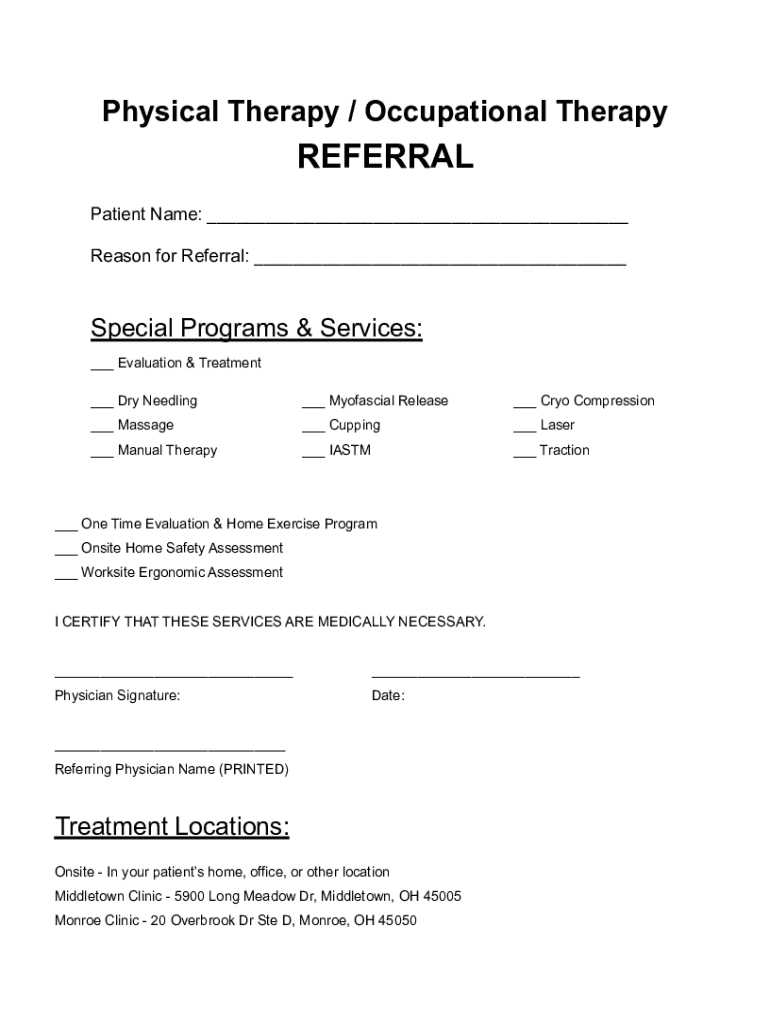
The Occupational Therapy Patient Referral and Prescription Form is a document designed to facilitate the referral of patients to occupational therapy services. It serves as a communication tool between healthcare providers, detailing the prescribed therapy, patient details, and the medical necessity for such treatments. This form ensures that therapy treatments are appropriately initiated, based on a certified medical need identified by healthcare professionals.
Key Components
- Patient Information: Includes personal details such as name, age, and insurance information.
- Treatment Plan: Specifies the type of therapy needed, along with frequency and duration.
- Medical Certification: Confirmation from a licensed physician regarding the necessity of the therapy.
- Referral Source: Identifies who is referring the patient, providing context for the referral.
How to Use the Occupational Therapy Patient Referral and Prescription Form
Healthcare providers use this form to officially request occupational therapy services for patients. Once filled out, it becomes part of the patient's medical record, guiding subsequent treatment plans. The process generally involves:
- Assessment: Evaluation of the patient's condition by a healthcare provider.
- Documentation: Detailed recording of the necessary treatment on the form.
- Submission: Sending the completed form to the occupational therapy provider.
Case Study Example
For instance, if a patient experiences mobility issues due to a stroke, their physician would assess their condition, document the need for occupational therapy, and use this form to refer them to an appropriate therapist.
Steps to Complete the Occupational Therapy Patient Referral and Prescription Form
Completing the form involves several steps to ensure accuracy:
- Fill in Patient Details: Start with personal and insurance information.
- Describe Medical Necessity: Document the condition that requires therapy.
- Specify Treatment Plan: Outline the type, frequency, and goals of therapy.
- Sign and Certify: Ensure the form is signed by a physician to validate the referral.
Detailed Breakdown
- Patient Details Section: Collect comprehensive personal and health insurance information.
- Medical Necessity Section: Provide a detailed account of health conditions necessitating therapy.
- Treatment Details Section: Define specific therapeutic interventions and expected outcomes.
Important Terms Related to the Occupational Therapy Patient Referral and Prescription Form
Understanding specific terms associated with this form can aid in effective utilization:
- Physician Certification: A written endorsement from a physician attesting to the medical necessity for therapy.
- Treatment Frequency: The number of sessions required per week or month.
- Therapy Duration: The total length of the treatment course.
- Referral Source: The healthcare professional initiating the referral process.
Real-World Scenario
For example, the term 'treatment frequency' is crucial when determining the impact and scheduling of therapy sessions. Patients recovering from surgery may need frequent sessions initially, tapering off as they improve.
Who Typically Uses the Occupational Therapy Patient Referral and Prescription Form
This form is primarily used by:
- Physicians: To refer patients needing occupational therapy.
- Therapists: To understand and implement the prescribed therapy plan.
- Insurance Providers: To verify the need for the requested therapy services.


Utilization Example
In a clinical setting, a general practitioner might use the form to refer a patient with arthritis for specialized hand therapy to improve daily functioning.
Key Elements of the Occupational Therapy Patient Referral and Prescription Form
Essential elements include:
- Identification Information: Complete details about the patient and referrer.
- Medical Justification: Clear rationale for therapy necessity certified by a physician.
- Proposed Therapy Regimen: Detailed plan of action including anticipated therapy techniques.
Practical Applications
Each element ensures that every party involved—from the therapist to the insurance provider—has a clear understanding of the patient's needs and the goals of therapy.
Legal Use of the Occupational Therapy Patient Referral and Prescription Form
The form must comply with healthcare laws and regulations, including patient privacy standards and medical necessity criteria. It is legally binding and protects both the referrer and therapist by clearly outlining treatment intentions.
Regulatory Considerations
For example, ensuring HIPAA compliance when handling patient information on the form is crucial to avoid legal repercussions and maintain patient confidentiality.
Digital vs. Paper Version
While traditional paper forms are still in use, digital versions offer enhanced accessibility and convenience through platforms like DocHub. Digital forms allow for seamless completion, storage, and transmission, which can be particularly beneficial in time-sensitive medical scenarios.
Advantages of Digital Forms
- Ease of Access: Can be accessed and filled out from any device.
- Efficiency: Reduces the time taken to process referrals.
- Secure Storage: Utilizes encryption for protecting sensitive patient data.
In summary, the Occupational Therapy Patient Referral and Prescription Form is a vital tool in coordinating care for patients requiring occupational therapy. By adhering to legal standards and ensuring comprehensive completion, healthcare providers can facilitate timely and effective patient care.