




01. Edit your form online
Type text, add images, blackout confidential details, add comments, highlights and more.

Type text, add images, blackout confidential details, add comments, highlights and more.

Draw your signature, type it, upload its image, or use your mobile device as a signature pad.

Send it via email, link, or fax. You can also download it, export it or print it out.
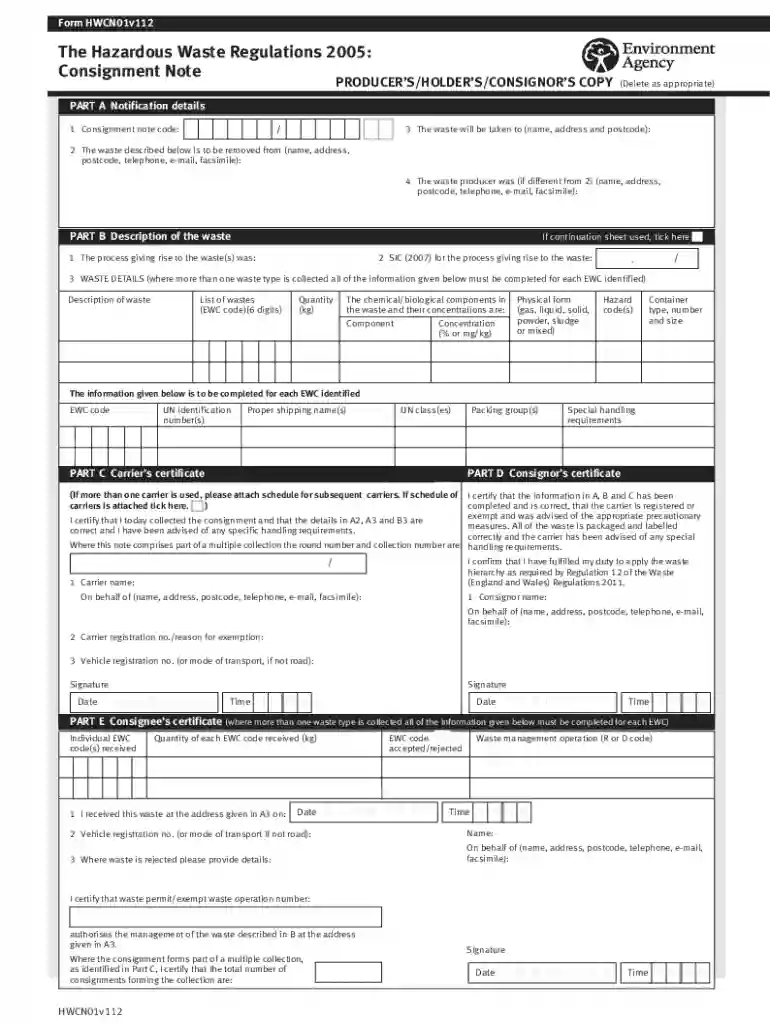
The consignment note template is an essential document used specifically for tracking hazardous waste management under the Hazardous Waste Regulations 2005. This template serves as a legal record ensuring compliance with waste management regulations. It provides a structured format that includes sections for essential details such as notification information, waste description, carrier and consignor certificates, and consignee confirmation. Typically used in waste management scenarios, it requires detailed input on the type, quantity, and chemical components of the hazardous waste being transported. This ensures that all stakeholders involved can access a clear and unified documentation process, which is critical for maintaining safety and legal standards.
This section captures introductory information about the consignment note. It includes numbers and dates that are crucial for tracking the document, such as the consignment note number and the date of issuing. Ensuring accuracy in this section is fundamental as it links the document to a specific instance of waste transport and management.
A comprehensive description of the hazardous waste is necessary for legal compliance and safety. This part of the template requires details on the type of waste, including its chemical properties and physical state. Additionally, it includes the quantity being handled. The description must be precise to avoid miscommunication and potential regulatory violations.
The carrier certificate section provides the credentials of the entity responsible for transporting the waste. It requires information on the carrier’s license and acknowledgment of the waste's condition upon receipt. Simultaneously, the consignor certificate documents the details of the waste’s origin. It is important to specify the consignor’s identity and declare any pertinent conditions related to the waste’s initial state.
Gather Necessary Information:
Complete Notification Details:
Describe the Waste:
Input Carrier Information:
Complete Consignor Information:
Both digital and paper versions of the consignment note template are available, allowing flexibility in how the document is filled and stored. When using digital tools, edits and annotations can facilitate revisions and updates. Conversely, a paper version may be preferred in scenarios where digital access is limited, ensuring that all necessary signatures and certificates are manually validated.
The consignment note template plays a key role in maintaining compliance with the Hazardous Waste Regulations 2005. It ensures all details regarding the waste's transportation adhere to legal requirements. Every section must be completed accurately to avoid sanctions, which can occur from misreported or undocumented waste handling.
To further solidify compliance, the usage of this template can be enhanced through digital platforms like DocHub, which allow for electronic signatures and secure document sharing. Utilizing these tools ensures a legally binding and traceable documentation process, confirming the document’s integrity throughout its lifecycle.
Industries that routinely handle hazardous materials, such as chemical manufacturing or waste management companies, are primary users of the consignment note template. Professionals such as compliance officers and environmental managers use this document to ensure all regulatory requirements are met.
Government bodies and inspectors also utilize the template to verify that consignors and carriers adhere to pertinent safety and environmental regulations. This document serves as a critical piece in audit trails and regulatory inspections.
A chemical manufacturing company transports waste to a licensed waste recycling facility. The consignment note acts as the official record, documenting every aspect of the waste transfer. This ensures both the manufacturer and carrier comply with all safety and legal standards.
A waste management firm that collects hazardous materials from multiple clients utilizes the consignment note to track all waste types and quantities. This aids in logistics planning and ensures each waste shipment is traceable back to the original producer.
While the Hazardous Waste Regulations 2005 provide national standards, individual states in the U.S. may have additional rules or modifications. For instance, certain states require extra documentation or specific terminology regarding waste categorization. It is essential for businesses to be aware of and accommodate these differences when preparing consignment notes.
Errors can lead to regulatory fines or delays in waste processing. It is crucial to double-check all entries before submission and consult legal advisors when necessary to correct potential inaccuracies.
Yes, electronic signatures are legally accepted on consignment notes, provided they adhere to specific legal acts such as the ESIGN Act. Utilizing platforms like DocHub can simplify this process while maintaining document authenticity.
At DocHub, your data security is our priority. We follow HIPAA, SOC2, GDPR, and other standards, so you can work on your documents with confidence.


