Definition and Meaning of the NVB1 Form
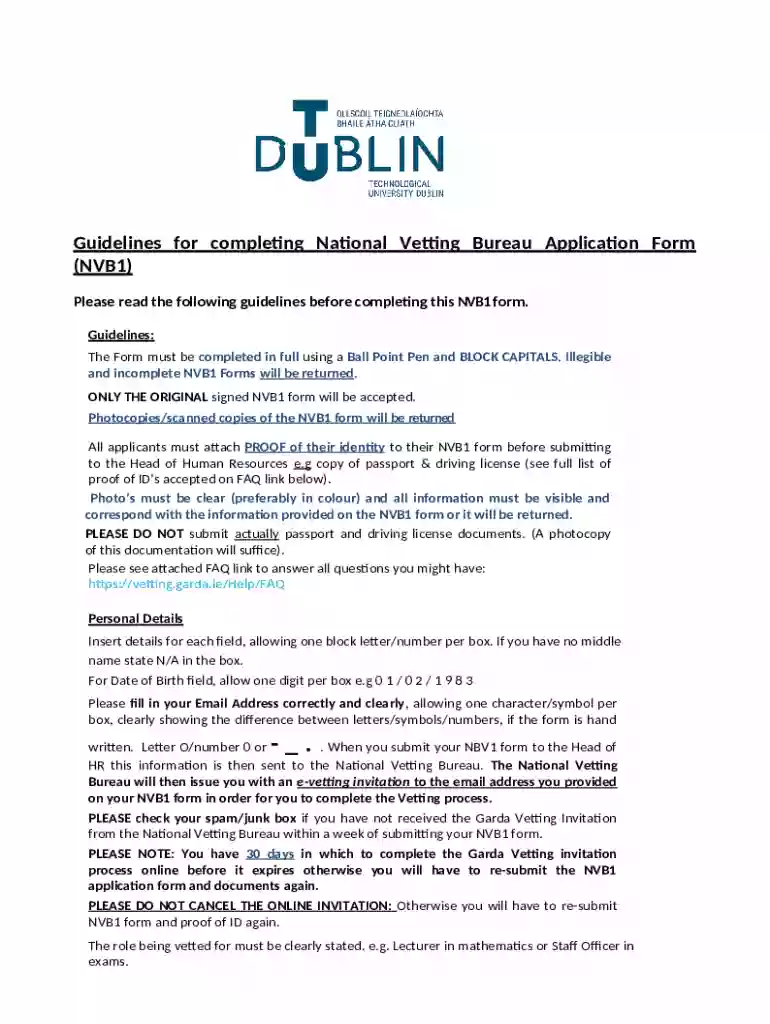
The NVB1 Form is an essential document used primarily for the National Vetting Bureau application process, notably for institutions such as Technological University Dublin. It is designed to facilitate secure vetting of individuals who need to work in various capacities where children or vulnerable adults are involved. By assessing the suitability of candidates through a standardized form, the NVB1 ensures compliance with legal requirements for safeguarding vulnerable groups.
Practical Application
- The NVB1 Form is utilized to collect personal and identification details necessary for background checks.
- It plays a crucial role in upholding legal and ethical standards within educational and health institutions.
How to Use the NVB1 Form
Understanding how to correctly complete and submit the NVB1 Form is vital for ensuring compliance with legal vetting processes.
Step-by-Step Completion Guide
- Download the Form: Obtain the NVB1 Form from the official Technological University Dublin or relevant organization’s website.
- Fill in Personal Details: Use block capitals to enter your full name, date of birth, and contact information to facilitate clear legibility.
- Address History: List all addresses you have lived at, ensuring you include precise postal information for each.
- Proof of Identity: Attach original documents or certified copies that verify your identity.
- Submitting the Form: Once completed, submit the form and documents as per the specified instructions, either online or via postal service.
Ensuring Accuracy
- Double-check all entries to prevent errors that could cause delays.
- Verify the attachment of all necessary identification documents.
Steps to Complete the NVB1 Form
Completing the NVB1 Form entails several critical steps, each requiring care and precision.
Detailed Steps
- Gather Required Documents: Have original identification documents ready, such as a passport or driver’s license.
- Use Block Capitals: All information should be written in block capitals for clarity.
- Review and Double-check: Ensure all sections are filled out completely, and there are no omissions.
- Secure Attachments: Properly affix any necessary additional documents or evidence.
Common Issues
- Failing to attach required documentation can result in form rejection.
- Inaccurate personal details lead to delays in the vetting process.
Legal Use of the NVB1 Form
The legal implications of the NVB1 Form extend to fulfilling mandatory vetting requirements for roles involving the care of vulnerable groups.
Compliance and Security
- The form is part of strict measures implemented to maintain safety and trust within various institutions.
- Ensures that individuals have no relevant criminal history that might disqualify them from working with vulnerable populations.
Role in Institutional Safety
- Institutions rely on the NVB1 Form to meet legal obligations and safeguard service users.
Required Documents for the NVB1 Form
Certain documents are crucial when completing the NVB1 Form to verify identity and residency.
Documents List
- Valid Photo ID: Passport or driver's license to confirm identity.
- Address Verification: Utility bills or official letters evidencing residency.
- Additional Identification: Social security number or equivalent for verification.
Importance of Document Accuracy
- Ensures your application is processed without unnecessary obstacles.
- Reduces the risk of your application being invalidated due to incorrect submission.
Who Issues the NVB1 Form
The NVB1 Form is predominantly issued by institutions that require national vetting compliance, such as educational and healthcare facilities.
Issuing Bodies
- Technological University Dublin: As a key institution, it processes and requires the NVB1 for various roles.
- National Vetting Bureau: Ultimately oversees the vetting process and procedural compliance.
Purpose and Function
- Ensures that the issuance and completion of forms align with national legal standards for protection.
Submission Methods for the NVB1 Form
Submitting the NVB1 Form involves several options catering to different needs, whether digital or physical.
Online vs. Mail
- Online Submission: A faster option allowing for real-time tracking and confirmation.
- Mail Submission: Allows for physical documentation handling and serves users without internet access.
Advantages and Disadvantages
- Online submissions provide speed and ease but may require digital literacy.
- Mail submissions are universally accessible but slower in processing times.
Penalties for Non-Compliance with the NVB1 Form
Failing to complete the NVB1 Form where required can result in significant consequences.
Legal Implications
- Non-compliance can lead to withdrawal from the application process for relevant roles.
- Institutions may face legal scrutiny when failing in due diligence.
Critical Importance
- Ensures both individuals and institutions adhere to mandatory vetting procedures.
- Protects organizations from legal exposure arising from employing unsuitable candidates.