






Definition and Meaning
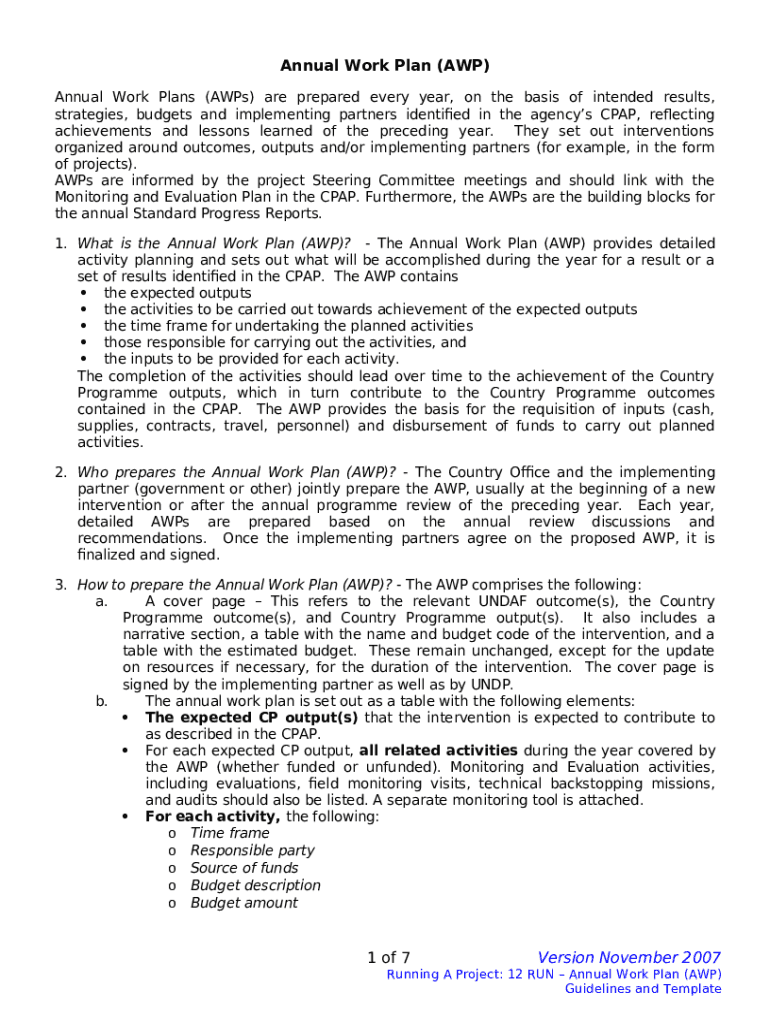
The Annual Work Plan (AWP) serves as a structured document that details the yearly objectives and necessary activities within a given project framework. Based on the Country Programme Action Plan (CPAP), the AWP outlines specific interventions, assigns responsibilities, establishes timelines, and allocates budgets to achieve defined outputs and outcomes. It is a collaborative tool used by Country Offices and implementing partners to both guide and monitor project progress while efficiently managing resources.
Key Elements of the Annual Work Plan AWP Format - EnglishMonitoring And
The AWP is composed of several significant sections, each serving a distinct purpose:
- Goal Setting: Clearly defined goals at the start of the document establish the intended outcomes for the year.
- Planned Interventions: Describes specific activities necessary to reach the set goals.
- Responsible Parties: Lists individuals or teams accountable for each activity, ensuring clarity in assignments.
- Timelines: Establishes deadlines for each task, facilitating time management and progress tracking.
- Budget Allocations: Details the financial resources dedicated to various activities, aiding in transparent budgetary management.
How to Use the Annual Work Plan AWP Format - EnglishMonitoring And
Using the AWP format effectively requires an understanding of its structure and purpose:
- Initial Preparation: Gather all relevant information, including past performance data and future project objectives.
- Input Detailed Information: Accurately fill in each section, ensuring all planned interventions, timelines, and budgets align with project goals.
- Collaborate and Review: Work with other stakeholders to refine and approve the draft plan, making adjustments as necessary.
Steps to Complete the Annual Work Plan AWP Format - EnglishMonitoring And
Completing the AWP requires a strategic approach:
- Assessment and Review: Begin by evaluating past performance and identifying unresolved issues.
- Define Objectives: Establish clear, measurable objectives for the upcoming year.
- Develop Strategy: Outline interventions and strategies to achieve these objectives.
- Assign Responsibilities: Clearly designate roles for each team member involved.
- Resource Allocation: Determine and allocate necessary resources, including budget and manpower.
- Set Timelines: Create a timeline that encompasses all project activities.
- Approval Process: Submit the draft for review and approval by key stakeholders.
- Implementation and Monitoring: Once approved, implement the plan and regularly monitor progress.
Who Typically Uses the Annual Work Plan AWP Format - EnglishMonitoring And
The AWP is generally utilized by:
- Project Managers: To guide project execution and resource allocation.
- Country Offices and Implementing Partners: For collaborative planning and project oversight.
- Donors and Sponsoring Agencies: To understand project scope and funding requirements.
- Evaluation Teams: To measure and analyze project outcomes against the initial plan.


Important Terms Related to the Annual Work Plan AWP Format - EnglishMonitoring And
Grasping critical terms is essential for clarity and accuracy:
- Outputs and Outcomes: Outputs are immediate project results, whereas outcomes refer to the longer-term impact.
- Baseline Data: Information gathered prior to project commencement, used as a reference point for measuring progress.
- Indicators: Metrics used to assess progress toward the project goals.
Legal Use of the Annual Work Plan AWP Format - EnglishMonitoring And
The AWP serves a vital legal purpose in project documentation:
- Contractual Alignment: Ensures alignment between planned activities and contractual obligations.
- Resource Accountability: Provides a framework for financial and operational accountability.
- Progress Documentation: Serves as a formal record of planned versus executed activities, useful for audits and reviews.
Form Submission Methods (Online / Mail / In-Person)
Submitting the AWP can differ based on organizational policies and technological capabilities:
- Online: Some organizations have digital platforms for plan submission, streamlining the review process.
- Mail: Traditional submission involves mailing printed copies to relevant stakeholders.
- In-Person: In certain cases, especially where detailed discussions are required, submission and review might occur during scheduled meetings.
Software Compatibility
Understanding the compatibility of the AWP format with various software systems can streamline its completion and management:
- Document Software: Microsoft Word and Google Docs for drafting and editing.
- Project Management Tools: Integration with software like Microsoft Project or Asana for dynamic updates and timeline adjustments.
- Cloud Storage: Utilization of services like Google Drive for easy access and sharing among stakeholders.
Utilizing these elements, users can effectively develop, implement, and monitor their Annual Work Plans, ensuring alignment with organizational goals and strategic priorities.