






Definition & Meaning
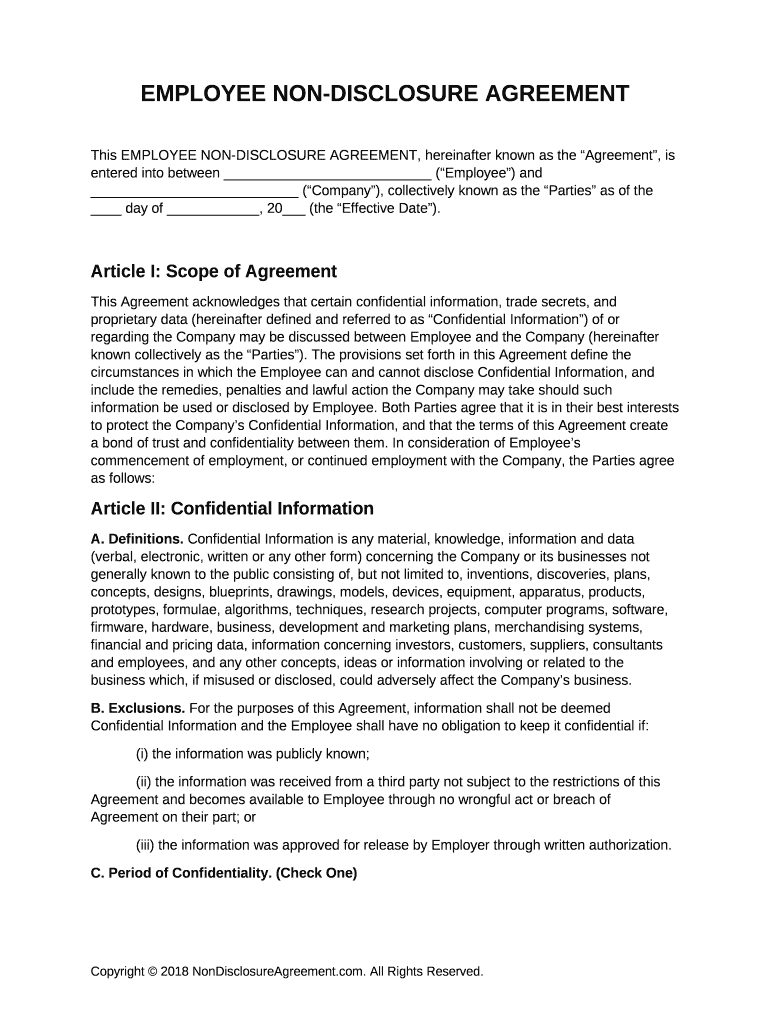
An Employee Non-Disclosure Agreement (NDA) is a legally binding contract between an employee and their employer that ensures the confidentiality of proprietary and sensitive information. This document outlines what information is considered confidential and restricts the employee from disclosing that information to unauthorized parties. Typically, confidential information includes trade secrets, business strategies, customer lists, and other non-public company matters. The agreement clarifies the employee's responsibilities regarding the use of this information and the consequences of any breach.
Key Elements of the Employee-Non-Disclosure-Agreement-NDA docx
The Employee NDA document comprises several crucial components that clearly define the scope and enforceability of the agreement:
- Confidential Information: Descriptions of what constitutes confidential data, covering items like business practices, data, and trade secrets.
- Obligations of the Employee: Detailed responsibilities for maintaining confidentiality and restrictions on using sensitive information.
- Consequences of Breach: Legal implications and penalties that may follow any unauthorized disclosure.
- Duration: Specifies how long the confidentiality obligations last, which could extend beyond the termination of employment.
- Ownership of Inventions: Clarifies that any inventions developed during employment are the property of the employer.
- Severability and Governing Law: Legal provisions that ensure the agreement remains enforceable under specific state laws even if part of it is rendered invalid.
Steps to Complete the Employee-Non-Disclosure-Agreement-NDA docx
Completing an NDA involves several steps to ensure clarity and full compliance:
- Identify Confidential Information: Clearly specify the information that requires protection.
- Draft the Agreement: Use a comprehensive template, ensuring specifics are relevant to the business and employment.
- Include Legal Terms: Incorporate clauses that address confidentiality, remedies for breach, and duration.
- Review by Legal Counsel: A legal expert should evaluate to ensure enforceability and adherence to state laws.
- Signatures: Both the employer and employee must sign the document for it to be legally binding.
Legal Use of the Employee-Non-Disclosure-Agreement-NDA docx
The legal use of an Employee NDA lies in its ability to protect a company's intellectual property and confidential information from unauthorized disclosure. It serves to:
- Prevent employees from using proprietary knowledge to benefit competitors.
- Provide legal recourse in the event of a breach.
- Protect the company's competitive edge by keeping strategic plans confidential.
- Establish trust and credibility, demonstrating a commitment to safeguarding sensitive information.
Who Typically Uses the Employee-Non-Disclosure-Agreement-NDA docx
This form is predominantly used by:
- Companies across various sectors: Organizations that deal with trade secrets and proprietary methods need NDAs to safeguard their assets.
- Startups and Tech Companies: Industries where innovation is key often require NDAs to protect new ideas and technological advancements.
- Consulting Firms and Agencies: Businesses offering specialized services use NDAs to protect client and organizational information.
- Research Institutions: Protect research data from unauthorized uses or disclosures.


Important Terms Related to Employee-Non-Disclosure-Agreement-NDA docx
Understanding key legal terms in an NDA is vital for both employers and employees. These include:
- Trade Secrets: Information that provides a business advantage over competitors who do not know or use it.
- Proprietary Information: Knowledge regarding the company that is not public and is crucial to maintaining a competitive advantage.
- Non-Compete Clause: Sometimes included to prevent employees from engaging with direct competitors.
- Indemnification: Clause obligating the employee to compensate the employer for any damages arising from unauthorized disclosure.
Software Compatibility for Employee-Non-Disclosure-Agreement-NDA docx
The availability of various software programs to facilitate NDAs allows for flexibility and ease of access:
- DocHub: Allows for editing, signing, and safeguarding NDA documents securely.
- Microsoft Word (docx): Primarily used for drafting and editing with robust formatting tools.
- Adobe Acrobat (PDF): Often used for sharing and finalizing signed agreements with security features.
State-Specific Rules for the Employee-Non-Disclosure-Agreement-NDA docx
The enforceability and structure of NDAs can vary by state:
- California: Strong restrictions on non-compete clauses within NDAs to support employee mobility.
- New York: Allows broader interpretation of protectable interests, such as customer goodwill.
- Texas: Requires consideration for the enforcement of NDAs, which can include monetary or employment benefits.
- Massachusetts: Recent legislation impacts the extent to which NDAs can be enforced, specifically regarding limiting employee mobility.