







Definition and Significance of the Right-of-Way Use Permit
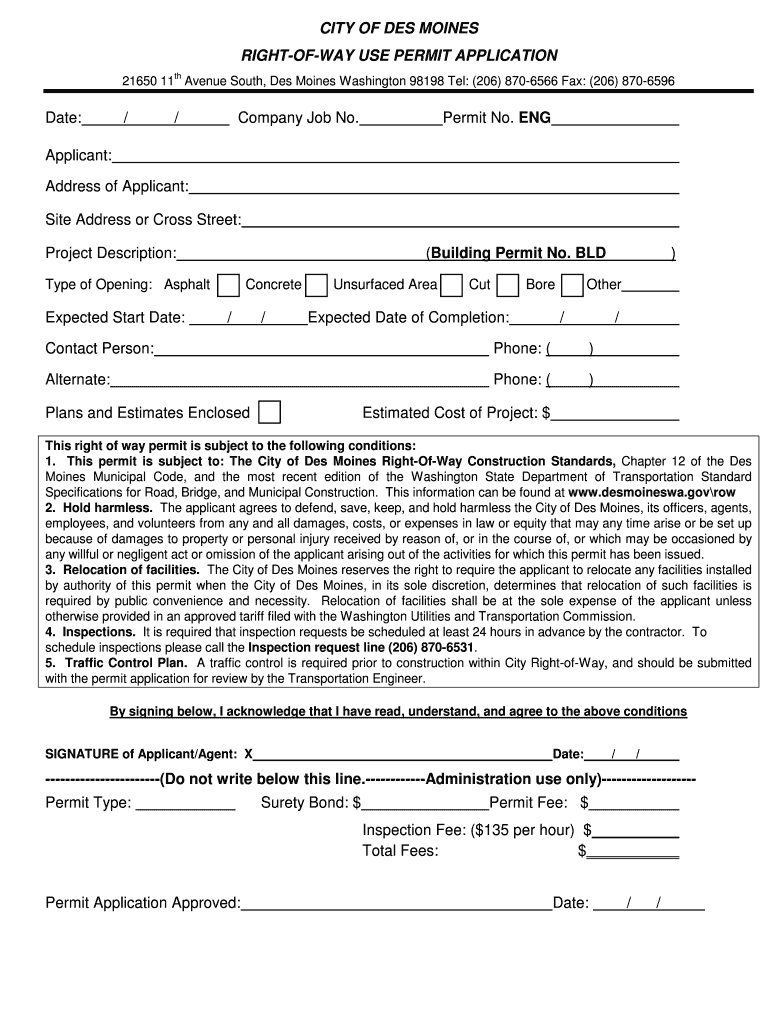
The City of Des Moines Right-of-Way Use Permit Application is a formal request process required for individuals or organizations intending to use public right-of-way for various purposes. This permit is crucial for maintaining public safety and ensuring that such uses comply with city regulations. It is typically required for activities such as construction, installation of utilities, or temporary events that might obstruct or use public pathways or streets.
Steps to Complete the Application
-
Gather Necessary Information: Begin by collecting details about the project, including the nature of the work, exact location, and duration of the intended right-of-way use.
-
Download the Application Form: Access the City of Des Moines website to obtain the latest Right-of-Way Use Permit Application form.
-
Fill in the Details: Carefully enter all required information into the application, ensuring accuracy. This includes project description, applicant details, and any specific plans for traffic control or restoration.
-
Attach Supporting Documents: Include site plans, proof of insurance, and any other documents outlined in the application guidelines.
-
Submit the Application: Applications can typically be submitted online, by mail, or in person at the designated city office. Verify the preferred submission method before proceeding.
-
Pay Required Fees: Be aware of any fees associated with processing the permit application. Payment methods and details should be provided within the application instructions.
Key Elements of the Application
Project Description
- Detailed explanation of the intended use of the right-of-way.
- Proposed timeline and schedule for the project.
Traffic Control Plans
- Requirements for maintaining pedestrian and vehicular traffic safety.
- Necessity for traffic barriers or reroutes during project execution.
Restoration Obligations
- Applicant's responsibilities for restoring the right-of-way to its original condition.
- Compliance with municipal standards for post-project cleanup.
Legal and Compliance Considerations
Applicants must adhere to local municipal codes and standard practices. Ensuring compliance typically involves:
- Securing necessary inspections from city officials.
- Following specific guidelines for material usage and debris disposal.
- Adhering to any additional city-specific environmental or safety regulations.
Who Typically Uses the Right-of-Way Use Permit
- Construction Companies: For activities such as roadworks or infrastructure installation.
- Event Organizers: When planning events that require street closings or public space usage.
- Utility Providers: For the installation or maintenance of utility lines and related infrastructure.


Important Terms Associated with the Application
Bonding Requirements
- Some projects may require a bond to ensure the financial capability of completing the proposed work, including restoration.
Inspection Protocols
- Specific procedures for city inspections of the project are often outlined in the permit guidelines.
Permit Duration
- Permits are time-bound, and any extensions generally require a separate application or approval process.
Form Submission Methods
Online Submission
- Many applicants prefer digital submission for its convenience and efficiency. Ensure online forms are filled accurately and all required digital files are attached.
Mail or In-Person
- For those who prefer traditional methods, mailed or in-person submissions are available. Verify the correct mailing address or drop-off locations before proceeding.
Penalties for Non-Compliance
Non-compliance with permit conditions can lead to legal penalties, fines, or revocation of the permit. It is crucial for applicants to fully understand permit stipulations to avoid these outcomes.
Required Documents for Application
Typically, the application requires:
- Comprehensive site plans.
- Proof of liability insurance.
- Any specific licenses or professional certifications relevant to the project scope.
Collecting and preparing these documents ahead of time can streamline the application process and help avoid delays.




