







Definition and Meaning of webapps7 doc state nc us dcccheckin offenderlogin htm
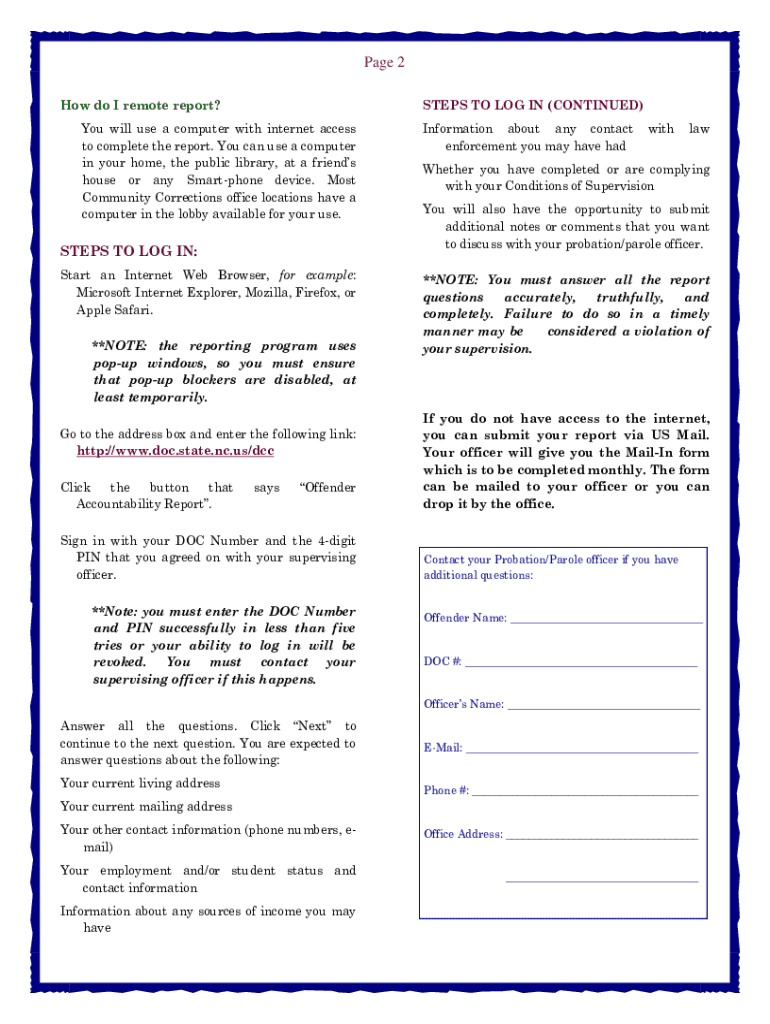
The webapps7 doc state nc us dcccheckin offenderlogin htm refers to a specific electronic platform provided by the North Carolina Department of Public Safety, designed for monitoring and managing offender check-ins via remote reporting systems. This web-based application allows individuals on probation or parole to report their compliance with required conditions without the need for in-person meetings. It is crucial for maintaining accurate records of offender activity and ensuring accountability throughout their supervised release period.
This system serves as a public safety tool that enhances the efficiency of monitoring offenders while providing convenience for users. By allowing online check-ins, it reduces the burden on both correctional facilities and individuals by streamlining the process of reporting. The form includes features that facilitate user access, such as secure login protocols and timely reminders for upcoming check-ins.
How to Use the webapps7 doc state nc us dcccheckin offenderlogin htm
Utilizing the webapps7 doc state nc us dcccheckin offenderlogin htm involves several simple steps for individuals on probation or parole. Here is a breakdown of how users can navigate through the platform effectively:
-
Access the Platform:
- Visit the official web address of the offender check-in system.
- Ensure that you have a reliable internet connection for seamless access.
-
Login Credentials:
- Input your unique username and password, which you must have received upon enrollment in the probation or parole program.
- If you are a first-time user, check if there are instructions regarding initial login setup.
-
Navigating the Dashboard:
- Once logged in, familiarize yourself with the dashboard interface where you will find check-in prompts, notifications, and other relevant information.
-
Submit Your Check-In:
- Click on the designated area to report your current status, which may include answering specific questions related to your compliance and current location.
- Ensure that all required fields are accurately completed to avoid any issues with your report.
-
Confirmation and Follow-Up:
- After submitting your report, you will receive a confirmation notification, typically through email.
- Review the confirmation for any further instructions or follow-up actions.
This accessible online platform empowers users to manage their required check-ins efficiently while providing correctional authorities with the necessary information to monitor compliance effectively.
Steps to Complete the webapps7 doc state nc us dcccheckin offenderlogin htm
Completing the offender login via webapps7 doc state nc us dcccheckin entails several precise steps to ensure that individuals fulfill their reporting obligations accurately. Here’s a structured approach to completing the process:
-
Preparation:
- Gather any necessary information or documents that may be required for your check-in. This can include reporting any changes in residence or employment.
-
Visit the Login Page:
- Navigate to the official offender check-in URL.
-
Enter Login Details:
- Input your username and password securely. Ensure that passwords are kept confidential and are not shared.
-
Access Your Record:
- After successfully logging in, click on the link or button that prompts for check-in.
-
Complete the Check-In Form:
- Fill in the form as required, ensuring that you provide accurate information regarding your status and activities.
- Special attention should be given to mandatory fields needing completion to avoid submission errors.
-
Review and Submit:
- Before submitting, review all entered data for accuracy and completeness.
- Once confirmed, click the submit button to finalize your report.
-
Log Out:
- After submitting your report, securely log out of your account to protect your personal information.
Following these steps ensures compliance with parole or probation requirements, helping maintain your status in good standing with authorities.
Important Terms Related to webapps7 doc state nc us dcccheckin offenderlogin htm
Understanding key terms associated with the webapps7 doc state nc us dcccheckin offenderlogin htm provides clarity on its functionality and legal implications. Here are some critical terms:
- Offender: An individual who has been sentenced for a crime and is under supervision, which may include parole or probation.
- Check-In: The process by which an offender reports their compliance status to correctional authorities, either electronically or in person.
- Remote Reporting: A system that allows offenders to fulfill their reporting obligations online rather than visiting a correctional facility.
- Compliance: Adhering to the rules and conditions set forth by the court or a supervising officer regarding the offender’s conduct.
- Supervised Release: The period during which an offender is monitored after serving a portion of their sentence, which may include specific reporting requirements.
These terms form the foundational understanding essential for navigating the offender check-in system effectively and ensuring compliance with legal obligations.
Legal Use of the webapps7 doc state nc us dcccheckin offenderlogin htm
The webapps7 doc state nc us dcccheckin offenderlogin htm is utilized legally within the framework established by the North Carolina Department of Public Safety. Its implementation allows for several critical legal aspects:
- Compliance with State Regulations: The use of this electronic reporting system aligns with North Carolina laws and regulations concerning probation and parole supervision.
- Data Privacy and Security: All submissions via the platform are safeguarded under relevant privacy laws, ensuring that personal data is encrypted and securely managed.
- Documentation of Offender Status: It serves as an official record of compliance that can be referenced in legal proceedings if necessary, promoting accountability.
- Facilitating Legal Rights: Offenders retain the right to access their records and report their status without undue burden, promoting justice and transparency within the system.
By complying with the established legal framework, both offenders and authorities can maintain a structured and effective monitoring process that safeguards public safety while respecting the rights of individuals under supervision.




