



01. Edit your form online
Type text, add images, blackout confidential details, add comments, highlights and more.

Type text, add images, blackout confidential details, add comments, highlights and more.
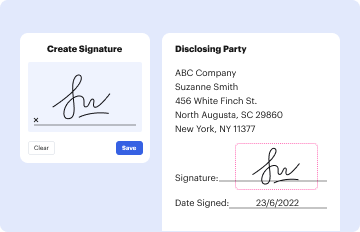
Draw your signature, type it, upload its image, or use your mobile device as a signature pad.

Send it via email, link, or fax. You can also download it, export it or print it out.
The Certificate of Medical Necessity for Ankle Foot Orthosis (AFO) is a critical document required for the prescription and provision of an ankle foot orthosis. This certificate serves as a formal declaration that the AFO is medically essential for a patient's condition, ensuring that healthcare providers can supply the orthosis according to medical and insurance requirements. AFOs are prescribed to support patients with various foot and ankle conditions, assisting in mobility and functionality. As an authoritative document, the certificate outlines the specific medical conditions necessitating the AFO and justifies its use, establishing a clear communication channel between healthcare providers and insurers.
Utilizing the Certificate of Medical Necessity for Ankle Foot Orthosis involves several steps to ensure accurate and efficient processing:
Obtain the Form: The healthcare provider begins by acquiring the form, frequently available through medical equipment suppliers or directly from healthcare institutions.
Complete Patient Information: Include personal details such as the patient’s name, age, and contact information, ensuring accuracy to avoid processing delays.
Document Medical Diagnosis: Accurately list diagnosis codes related to the specific foot or ankle condition, referencing standards such as ICD-10 codes to specify medical needs.
Prescribe the Orthosis: Clearly state the type of ankle foot orthosis required, including specifications or adjustments tailored to the patient's condition.
Authorization and Signatures: A certified healthcare provider must authorize the form by providing their signature and professional details, confirming the medical necessity of the AFO.
Submit for Approval: The completed form is then submitted to the insurance provider for approval, facilitating coverage or reimbursement procedures.
Filling out the Certificate of Medical Necessity for Ankle Foot Orthosis involves a series of defined steps to ensure completeness and precision:
Patient Details: Begin by recording the patient’s demographics, focusing on accuracy to prevent misidentification.
Medical Diagnosis Codes: Enter precise diagnosis codes that reflect the patient’s condition, helping insurers understand the necessity of the orthosis.
Prescription Details: Clearly articulate the type of AFO being prescribed, including any customization required for effective patient support.
List of Justifications: Provide a detailed justification for the orthosis, explaining how it will improve or maintain desired health outcomes.
Authorization: Ensure the prescribing healthcare professional provides an endorsement through their signature, verifying the need for the orthosis.
Submission: Forward the form to relevant stakeholders, such as insurance companies or medical suppliers, ensuring all sections are complete to facilitate processing.
Certain components are essential to the Certificate of Medical Necessity for Ankle Foot Orthosis:
Patient Information: Comprehensive details about the patient.
Diagnosis Codes: Standardized codes indicating the medical condition.
Type of Orthosis: Specification and description of the recommended ankle foot orthosis.
Justification for Necessity: Explanation outlining the clinical necessity.
Healthcare Provider Authorization: Signature and credentials of the prescribing professional.
Date of Prescription: The effective date when the orthosis is needed.
The certificate is predominantly used by:
Healthcare Providers: Physicians and specialists who diagnose and treat foot and ankle conditions.
Orthotists: Professionals specializing in the design and fitting of orthoses.
Patients: Individuals requiring medical validation for insurance purposes.
Insurance Companies: Entities that require the form to process claims and provide coverage.
Medical Suppliers: Vendors who distribute the prescribed orthotic devices.


The legal utilization of this certificate is crucial for compliance with healthcare regulations and insurance mandates:
Insurance Verification: Insurers use the document to verify medical necessity and authorize payments.
Medical Records: It forms part of the patient’s medical records, substantiating clinical decisions.
Regulatory Compliance: Adheres to health industry standards and regulations, such as Medicare guidelines.
Different states may impose specific regulations that affect the certificate’s use:
Regulatory Variations: Each state may have unique requirements regarding documentation and approval processes.
Insurance Procedures: Local insurance practices might affect how the form is processed and approved.
Medicaid Policies: States with Medicaid may have additional stipulations for coverage.
Understanding the terminology associated with the Certificate of Medical Necessity for Ankle Foot Orthosis is vital:
AFO: Ankle Foot Orthosis, the prescribed device for supporting the foot and ankle.
ICD-10 Codes: International Classification of Diseases codes used to denote medical diagnoses.
Prescribing Practitioner: A healthcare professional authorized to prescribe medical treatments.
Medical Necessity: A justification required to demonstrate the essential nature of a medical device.
Following these guidelines ensures comprehensive and accurate completion of the Certificate of Medical Necessity for Ankle Foot Orthosis, facilitating effective communication among patients, healthcare providers, and insurance companies.
At DocHub, your data security is our priority. We follow HIPAA, SOC2, GDPR, and other standards, so you can work on your documents with confidence.


