






Definition & Purpose of the Attestation
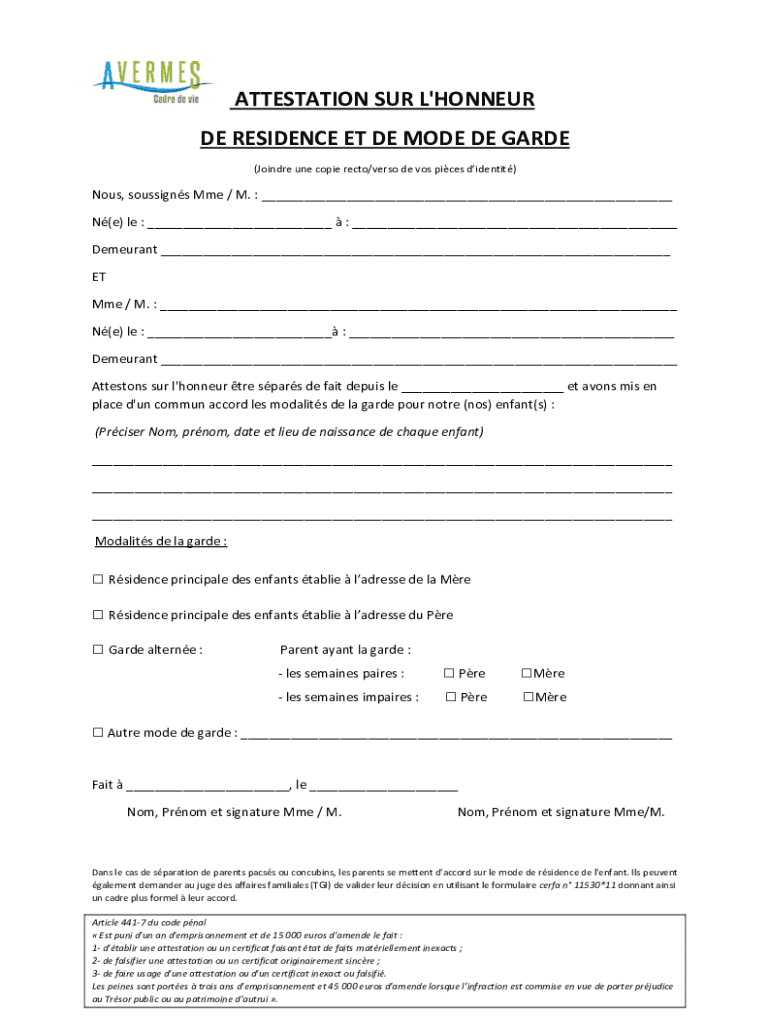
The "Attestation sur l'honneur de résidence et de mode de garde" in Avermes serves as a formal declaration concerning the residence and custody arrangements for children after the separation of their parents. It is a sworn statement that confirms the living arrangements and the agreed-upon caregiving schedule. This document is primarily used to ensure that both parties have a clear and mutual understanding of the custody details and to provide a legal framework for parenting responsibilities.
Key Elements of the Attestation
The attestation typically includes:
- Personal Information: Details of both parents, including names, addresses, and contact information.
- Separation Confirmation: A statement confirming the physical separation of the parents.
- Custody Arrangements: Specific details regarding how custody is divided, including where the child will reside and the visitation schedule.
- Legal Implications: Acknowledgment that providing false information may lead to legal consequences, underscoring the necessity for honesty in the declaration.
How to Obtain the Attestation
To obtain the attestation, follow these steps:
- Prepare Required Information: Gather essential personal and custody arrangement details.
- Contact Local Authorities: Approach the relevant local government office in Avermes for guidance on the attestation process.
- Complete Necessary Forms: Fill out any required forms with the information collected.
- Submit Documentation: Provide the necessary documents and submit the form in person or via mail, depending on local requirements.
Form Submission Methods
- Online Submission: Some regions may offer digital platforms for submission.
- Mail: Send the completed form and required documents through postal services.
- In-Person: Visit the local authority office to submit your form directly.
Steps to Complete the Attestation
Completing the attestation involves:
- Filling Out Personal Details: Indicating names, contact information, and residential addresses.
- Documenting Custody Arrangements: Clearly outlining custody schedules and responsibilities.
- Reviewing Legal Implications: Understanding the legal consequences of false declarations.
- Signing the Attestation: Both parents must sign the document to authenticate the information provided.
Legal Use of the Attestation
This attestation holds legal credibility, primarily serving as a notarized statement of agreed custody details. It can be used in court proceedings if disputes arise and serves as evidence of mutual agreements on custody and residence arrangements.
Important Legal Terms
- Sworn Statement: A declaration that is affirmed to be true under penalty of perjury.
- Custody Arrangement: The legally agreed plan for child care distribution between separated parents.
- False Information: Inaccurate declarations that could lead to legal penalties or actions.
Who Typically Uses the Attestation
This form is most commonly used by:
- Separated Parents: To formalize and streamline the parenting process post-separation.
- Legal Authorities: To validate and enforce agreed custody arrangements in disputes.
- Court Systems: As evidence in custody-related legal matters.


Penalties for Non-Compliance
Failure to adhere to the terms set in the attestation or providing false information can result in:
- Legal Action: Potential lawsuits or legal consequences for false declarations.
- Custody Re-evaluation: The court may reassess custody arrangements if non-compliance is discovered.
- Fines or Sanctions: Monetary penalties for breaching the terms or lying on the document.
Digital vs. Paper Versions
While traditionally available in paper form, some jurisdictions may offer digital versions, enhancing accessibility and ease of filing. Digital versions streamline the submission process and reduce processing times, but users should ensure compatibility with local legal standards.
Software Compatibility
Using document management software like DocHub can facilitate the digitization process, offering tools for form completion, signature application, and secure sharing. It supports various file formats, ensuring document accessibility across different devices and platforms.