




01. Edit your form online
Type text, add images, blackout confidential details, add comments, highlights and more.

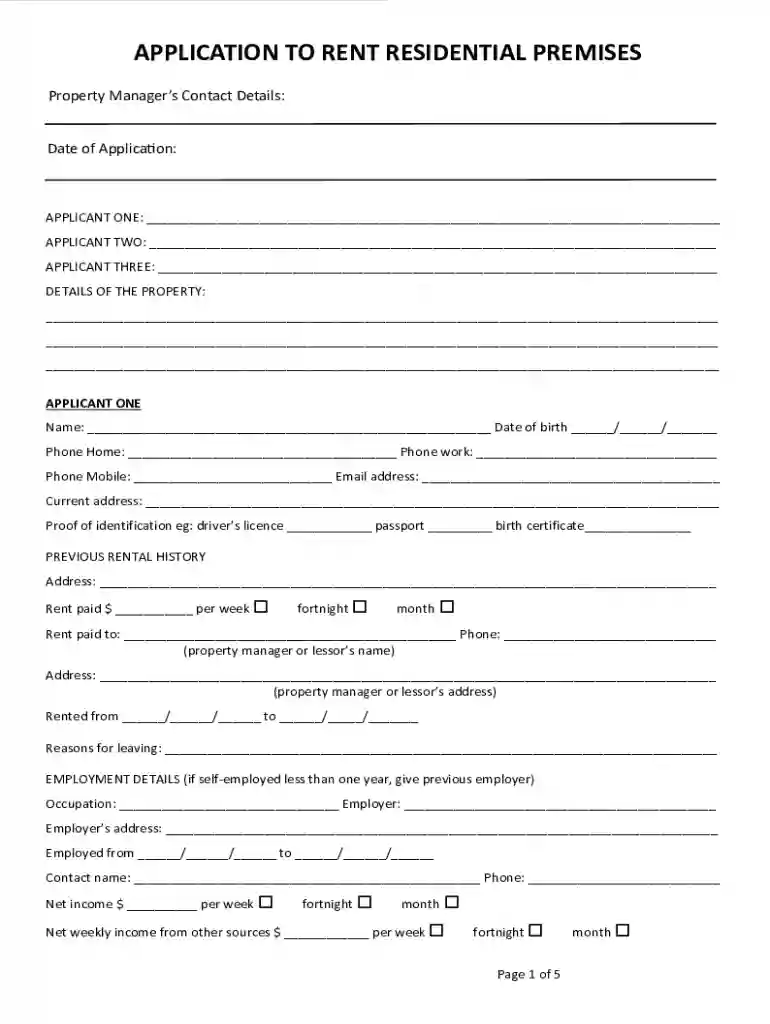
Type text, add images, blackout confidential details, add comments, highlights and more.

Draw your signature, type it, upload its image, or use your mobile device as a signature pad.

Send it via email, link, or fax. You can also download it, export it or print it out.
The Residential Rental Application Form (Canada) is a document used by potential tenants to apply for housing. It serves as a standardized method for landlords to collect necessary information about prospective tenants. This form typically gathers personal details, rental history, employment status, and references to assess a tenant's reliability and ability to fulfill rental obligations.
Landlords use the form to screen applications based on set criteria, ensuring they select tenants who meet their standards. Additionally, this form helps maintain legal compliance with tenant selection guidelines and privacy laws by systematically collecting information in a structured manner.
Accessing the Residential Rental Application Form (Canada) is straightforward, with several options available:
Online Resources: Many property management websites and real estate platforms offer downloadable versions of the form. This is a convenient option for tenants who prefer digital access.
Property Management Offices: Potential tenants can visit property management offices directly, where the form can usually be obtained in person. This approach also allows for any immediate questions to be addressed by office personnel.
Direct Requests from Landlords: In some cases, landlords provide the form as part of the initial inquiry process. This ensures that applicants use the correct version tailored to the landlord's specific requirements.
Real Estate Agencies: Agencies often have standard forms available for prospective tenants. They also offer guidance on how to fill out these forms correctly.
Filling out the Residential Rental Application Form (Canada) involves several steps, each requiring careful attention to detail:
Completing the form accurately and thoroughly is crucial to avoid delays or rejections in the application process.
The form is composed of several critical sections that capture all necessary data required by landlords:
Each section is designed to provide a comprehensive view of an applicant's suitability as a tenant.
The use of the Residential Rental Application Form (Canada) complies with several legal standards to protect both landlords and tenants:
By adhering to these legal standards, landlords protect themselves from legal ramifications, while tenants are assured of a fair application process.
The primary users of the Residential Rental Application Form (Canada) include:
These users benefit from the form's structured approach to tenant selection and compliance with legal requirements.


Several scenarios illustrate the use of the Residential Rental Application Form (Canada):
These examples demonstrate the form's flexibility in accommodating different applicant situations.
Understanding key terms associated with the Residential Rental Application Form (Canada) is essential:
Familiarity with these terms helps applicants and landlords communicate effectively and understand the application's scope.
At DocHub, your data security is our priority. We follow HIPAA, SOC2, GDPR, and other standards, so you can work on your documents with confidence.
DHCD launched a new Property Registration and Rental Licensing Portal. An annual registration is due by January 1 of each year. Create a new profile and new
Rent useful household items from your local high street. Borrow your Thing Join get inspired Sign. Rent 45+ useful items from 22 locations


