Definition & Meaning
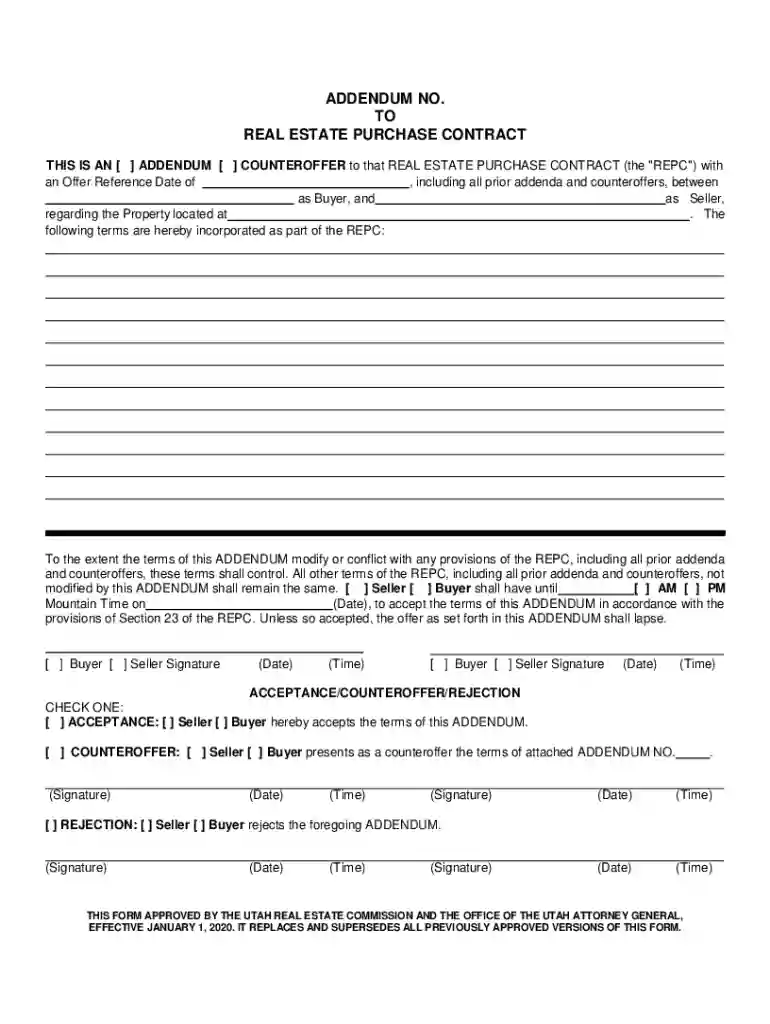
The "addendum no to real estate purchase contract" is a supplementary document to an existing real estate purchase agreement. It serves to modify, clarify, or add new provisions to the original contract between the buyer and seller regarding a specific property transaction. The addendum is legally binding once both parties have signed it, and it takes precedence over conflicting terms in the initial contract while maintaining the unchanged terms of the original agreement.
Real-World Applications
- Modification of Terms: The addendum is commonly used to amend details such as closing dates, purchase prices, or contingencies that arise after the original contract has been signed.
- Incorporation of Additional Provisions: It allows the inclusion of new clauses that address specific issues either party might have, thus preventing potential disputes.
- Clarification: In scenarios where specific terms of the initial agreement may be ambiguous, the addendum can clarify the intentions of the parties involved.
How to Use the Addendum to Real Estate Purchase Contract
Using the addendum involves a clear process to ensure all parties understand the modifications and agree to the changes proposed.
- Identify the Need: Determine the aspects of the original contract that require amendment. This could be due to new information or changes in circumstances.
- Draft the Addendum: Clearly document the changes or additions in the addendum. It should reference the original contract and specify the sections being altered.
- Review: Both parties should thoroughly review the addendum to understand its implications. It is advisable to involve legal counsel for significant changes.
- Sign: Both the buyer and seller must sign the addendum to validate it.
- Attach to Original Contract: The signed addendum should be securely attached to the original contract and copies provided to all parties involved.
Practical Example
- Price Adjustments: If an inspection reveals unforeseen repairs, parties might use an addendum to lower the purchase price to account for these additional costs.
Steps to Complete the Addendum
Completing the addendum effectively ensures that all modifications are mutually agreed upon and legally binding.
- Title the Document: Clearly identify it as an "addendum to the real estate purchase contract" followed by the property address and contract date.
- Reference the Original Contract: Include details of the original agreement, such as the date it was executed and parties involved.
- Detail the Changes: List each change or addition clearly. Use bullet points or numbered lists for clarity.
- Specify Effective Date: Indicate when the changes will take effect.
- Signatures: Ensure signatures are obtained from both parties, providing date lines for clarity.
- Witness or Notarization: Depending on state regulations, a witness or notarization might be required to authenticate the document.
Important Terms Related to the Addendum
Familiarity with real estate jargon can enhance comprehension and effective use of addendums.
- Contingency: A clause in the contract specifying conditions that must be met for the agreement to be binding.
- Escrow: A neutral third party holds assets in a transaction until conditions are met.
- Amendment: A formal change made to a contract.
- Counteroffer: A rejection of the original offer with proposed terms to replace it.
Case Study
Consider a buyer who initially overlooked the inclusion of furniture in the property. An addendum specifying the inclusion of furniture at no additional charge can prevent misunderstandings at closing.
Key Elements of the Addendum
An effective addendum should be comprehensive and well-articulated to achieve its purpose.
- Clear Reference to Original Contract: Ensures that the addendum is directly linked to the initial agreement.
- Detailed Descriptions of Changes: Exact language should describe the modifications or additions clearly and unambiguously.
- Signature and Date Lines: Legal validation by the parties involved.
- Deadline for Response: A specified timeline within which disagreements must be addressed prevents indefinite negotiations.
State-Specific Rules for the Addendum
Real estate transactions are subject to state laws that can affect how addendums are used and enforced.
- Variation in Notarization Requirements: Some states require notarization of the addendum to verify signatures.
- Different Disclosure Obligations: State-specific disclosures could affect the content needed in an addendum. For instance, Californian transactions may necessitate additional environmental reports as part of an addendum.
- Timelines for Modification: Variations in state-imposed deadlines for contract modifications can influence the validity of an addendum if changes occur too late in the process.
Business Contexts
- Property Management Firms: Utilize addendums for rental agreements or management contracts needing periodic updates.
- Real Estate Developers: Amend project development terms following unexpected changes in planning or market conditions.
Legal Use of the Addendum
The legitimacy of an addendum relies on its adherence to legal standards and practices.
Compliance with Legal Framework
- Adherence to Contract Law: Must be executed in line with principles governing contract modifications.
- Automatic Term Precedence: Terms in the addendum supersede conflicting provisions in the original contract upon mutual agreement.
- Binding Nature: Once signed, the addendum is as binding as the original contract, compelling parties to adhere to its stipulations.
Practical Compliance Examples
- Dispute Resolution Clauses: Adding a mediation requirement can guide parties on how to resolve conflicts arising during transaction execution.
- Regulation Changes: Adaptations reflecting new municipal laws, such as zoning alterations, ensure continued legality of property transactions.