






Definition & Purpose of the Idaho Motor Vehicle Record Request
The Idaho Motor Vehicle Record Request allows individuals or organizations to obtain motor vehicle records from the Idaho Transportation Department. This form serves as an official document to request access to vehicle records, which include vehicles' registration details, title transfers, and driving history. This is essential for purposes such as verifying an individual's driving record, updating vehicle registration information, or conducting a background check during employment processes. Understanding the purpose and components of this document ensures compliance with state regulations and facilitates efficient handling of motor vehicle records.
How to Use the Idaho Motor Vehicle Record Request
To use the Idaho Motor Vehicle Record Request effectively, begin by downloading the form from the Idaho Transportation Department's official website or request it from their office. Fill out the form with precise and accurate information, which typically includes personal details such as the requestor's name, contact information, and the specific type of records required. Ensure that all required fields are completed and double-check for accuracy, as incomplete or incorrect submissions may delay processing. This form can be submitted through various methods including online, by mail, or in-person depending on the department's offerings.
Steps to Complete the Idaho Motor Vehicle Record Request
-
Gather Required Information:
- Collect necessary personal identification details and vehicle information before starting the form.
- Verify the type of motor vehicle record needed (e.g., driving record, registration information).
-
Download the Form:
- Access the form from the Idaho Transportation Department’s website or obtain a physical copy from their office.
-
Fill Out the Form:
- Enter all personal and vehicle-related information carefully.
- Indicate the specific records being requested and the reason for the request.
-
Review and Sign:
- Double-check for any errors or omissions.
- Sign the document to authorize the request for information.
-
Submit the Form:
- Submit through the chosen method (online, mail, or in-person).
- Pay any associated fees, as instructed by the department.
Who Typically Uses the Idaho Motor Vehicle Record Request
The Idaho Motor Vehicle Record Request is commonly used by employers, legal professionals, insurance companies, and individuals. Employers utilize this form to verify the driving history of prospective employees, particularly when the job requires the operation of a company vehicle. Legal professionals may require motor vehicle records for cases involving traffic violations or accidents. Insurance companies often need access to these records for assessing risk and determining premiums. Individual vehicle owners might use this form to ensure their records are accurate and up-to-date.


Key Elements of the Idaho Motor Vehicle Record Request
-
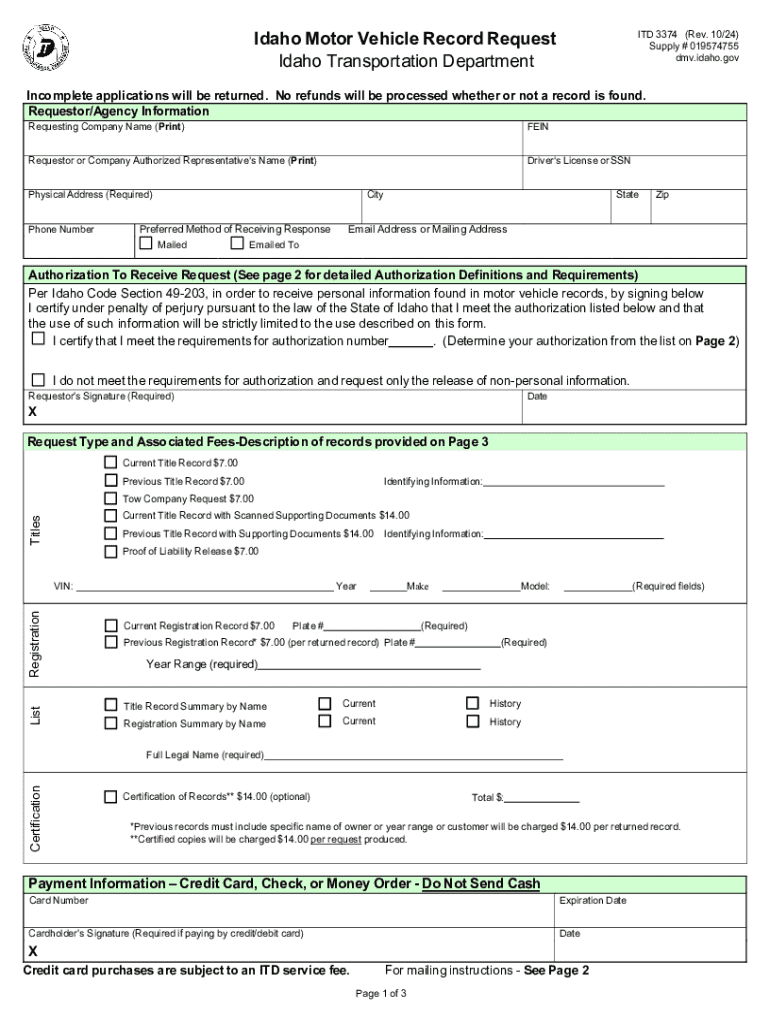
Requestor Information:
- Includes the full name, contact number, and mailing address of the individual or entity requesting the records.
-
Vehicle Information:
- Mandatory details such as the vehicle identification number (VIN), license plate number, and registered owner’s details.
-
Purpose of Request:
- Clearly states the reason for requesting the record, such as employment screening or insurance underwriting.
-
Consent and Authorization:
- A section requiring the signature of the requestor or authorized representative, granting permission to access the desired records.
-
Types of Records Requested:
- Options to select specific records, like title history, registration history, or driving reports.
Legal Use of the Idaho Motor Vehicle Record Request
The use of the Idaho Motor Vehicle Record Request is governed by state laws that ensure the privacy and security of personal information. It is crucial to use this form only for legitimate purposes such as verifying identity, employment background checks, or insurance evaluations. Unauthorized access or misuse of personal records can lead to legal penalties, including fines or criminal charges. Familiarity with Idaho's legal regulations surrounding motor vehicle records helps in maintaining compliance and avoiding unauthorized disclosures.
State-Specific Rules for the Idaho Motor Vehicle Record Request
Idaho has specific rules that regulate the access and distribution of motor vehicle records, aligning with federal and state privacy laws. These rules stipulate who may request records, under what circumstances, and the type of information that may be disclosed. For instance, access is often limited to those with a direct relationship to the record, such as the individual named in the record or those authorized by them. Understanding these rules ensures that requests are handled in accordance with legal standards, promoting responsible management of personal data.
Form Submission Methods for the Idaho Motor Vehicle Record Request
The Idaho Transportation Department provides multiple methods for submitting the Motor Vehicle Record Request. These methods include:
-
Online Submission: Use an online portal provided by the department to submit the form and pay any applicable fees digitally.
-
Postal Mail: Complete the form and send it to the department’s physical address through mail. Include a check or money order for any fees.
-
In-Person: Visit a local Idaho Transportation Department office to hand in the form directly and make payments on-site.
Each method has its own processing time and convenience level, allowing individuals to choose based on their situation and preference.
Required Documents to Accompany the Idaho Motor Vehicle Record Request
When submitting an Idaho Motor Vehicle Record Request, certain documents may be required to accompany the form. These typically include:
-
Proof of Identification: A valid driver’s license, state ID, or passport.
-
Authorization Form: If applicable, a notarized letter from the record holder granting permission.
-
Payment Receipt: Proof of fee payment, either an online confirmation or a physical copy of a check or money order.
Ensuring that all necessary documents are attached will help facilitate smooth processing and reduce the likelihood of delays or refusals.