







Definition & Meaning
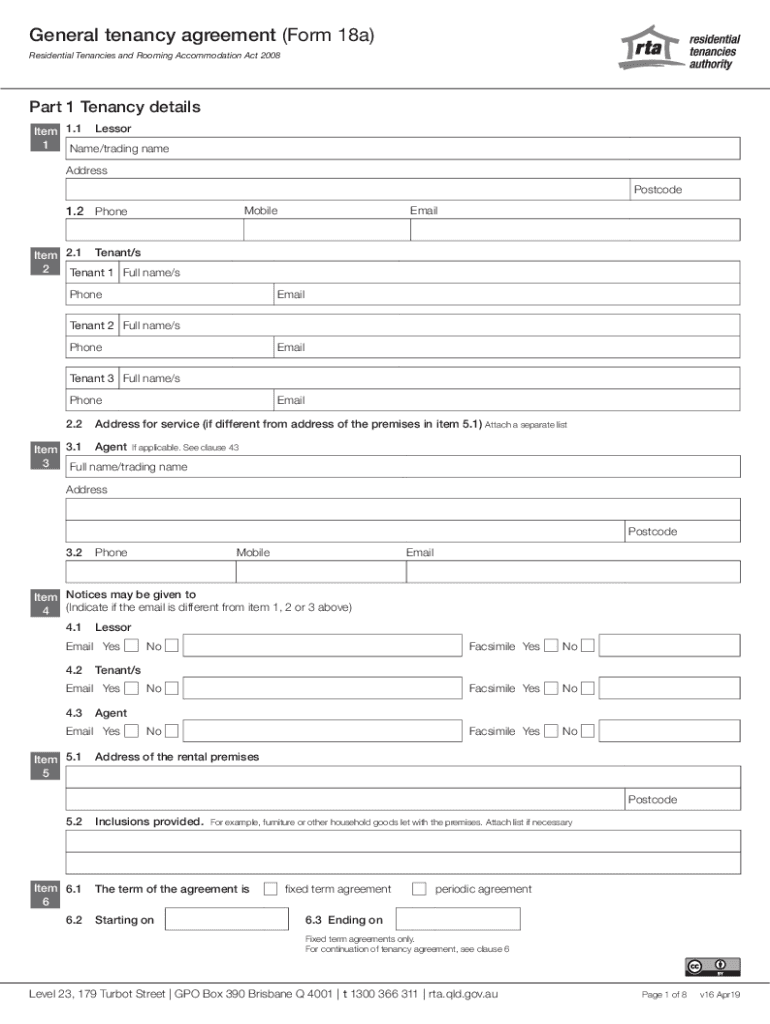
Form 18a, known as the General Tenancy Agreement, is a legal document used under the Residential Tenancies and Rooming Accommodation Act 2008. It outlines the rental agreement's terms between a lessor, such as Uber Realty Pty Ltd, and a tenant. This form specifies obligations for both parties including tenancy details, rent payment methods, and is pivotal in ensuring that both lessor and tenant understand their rights and responsibilities.
Specifics of Form 18a
- Tenancy Details: This section captures fundamental information about the rental property and the parties involved, including the property address, lessor's and tenant's names, and the tenancy duration.
- Rent Payment: Details the amount of rent, payment frequency, and acceptable payment methods. It might include specifics around late fees and grace periods.
- Maintenance and Repairs: Specifies the responsibilities of the tenant and lessor when it comes to property repairs and upkeep, aiming to maintain the property's condition throughout the tenancy.
How to Use the Form 18a
Using Form 18a effectively requires understanding its stipulations and ensuring that all parties have clarity about their commitments. The form should be completed and agreed upon before the tenancy begins, providing a framework for the landlord-tenant relationship.
Filling Out The Form
- Before Signing: Both parties should thoroughly read the document to comprehend all the stipulations. It is advisable to consult a legal expert if any clauses are unclear.
- During Signing: Each section demands careful attention to detail. Ensure all fields are filled correctly and accurately.
- After Signing: The document should be stored safely by both parties. Make copies in case original copies are lost or misplaced.
Important Terms Related to Form 18a
Several terms are crucial for understanding the implications and applications of Form 18a. These include:
- Lessor: The property owner or representative responsible for leasing the property.
- Tenant: The individual(s) or entity renting the property for residential purposes.
- Bond: A security deposit held for the duration of the tenancy to cover potential damages or breaches of the agreement.
Key Elements of the Form 18a
Despite being comprehensive, certain elements are fundamental to the integrity of Form 18a. These elements serve as the document's backbone and must be clearly defined and agreed upon.
Core Components
- Special Terms and Conditions: These are specific agreements made between the parties that go beyond standard terms, often tailored to meet unique situations, such as pet policies or alterations to the property.
- Termination Protocols: Details the processes regarding termination by either party, ensuring compliance with legal requirements for notices and grounds for termination.
Legal Use of the Form 18a
The form is legally binding and enforces both parties to adhere to the stipulated conditions. It acts as a safeguard, outlining dispute resolution processes and protecting parties under local tenancy laws.
Steps to Complete the Form 18a
Completing Form 18a requires careful attention to legal and detail-oriented steps that ensure compliance with tenancy regulations. Here’s how to approach the process:
Step-by-Step Guide
- Gather Necessary Information: This includes personal identification, property details, and contact information for both the lessor and tenant.
- Discuss Terms: Both parties should agree on rent, bond amount, and other conditions to avoid misunderstandings.
- Fill Out the Form: Ensure all sections are completed with accurate information. Any ambiguities should be clarified in writing.
- Review and Sign: Both parties should review the document thoroughly before signing. It's beneficial to conduct this with witnesses present.
- Exchange Copies: Each party should retain a signed copy of the agreement for future reference.
State-Specific Rules for the Form 18a
State-specific regulations can influence how Form 18a is used and interpreted. For example, different states may require variations in bond amounts or specific disclosures to be included in tenancy agreements.
Recognizing Variations
- Bond Regulations: Some states might have a cap on the bond amount relative to the rental charge.
- Notice Periods: Varying timelines for notices regarding rent increases or property access might be mandated by state legislation.
Why You Should Use Form 18a
Choosing to use Form 18a for rental agreements offers organizations and individuals several advantages. It provides a standard format, promotes transparency, and reduces the risk of misunderstandings.
Benefits
- Structured Agreements: Assures that all rental conditions are clearly documented, making the tenancy period predictably managed.
- Legal Protection: Mitigates potential disputes by establishing clear terms, which are legally enforceable in instances of non-compliance.




