







Definition & Meaning
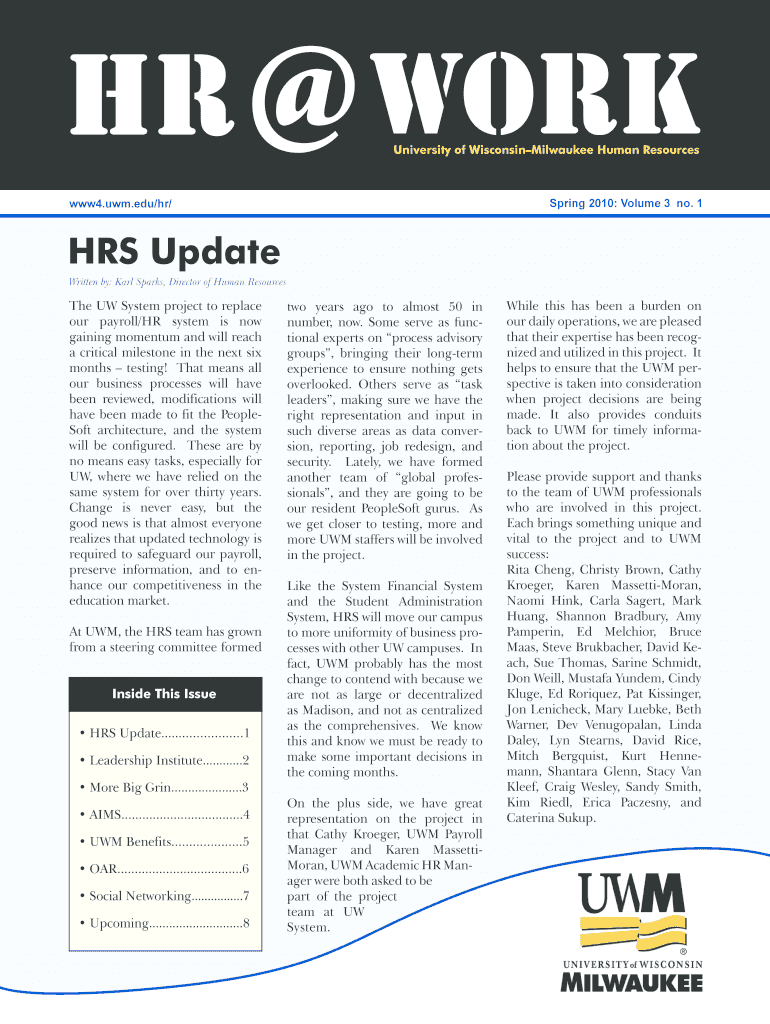
The "HRS Update - UW-Milwaukee - www4 uwm" refers to a document or resource providing the latest information on human resources initiatives at the University of Wisconsin-Milwaukee (UWM). This update typically focuses on advancements and changes in HR strategies, systems, and employee programs within the organization. HRS stands for Human Resources System, highlighting the emphasis on HR-related content.
Detailed Context
- Project Initiatives: UWM is actively involved in upgrading its payroll and HR system to PeopleSoft, indicating substantial infrastructure and process changes.
- Employee Programs: Programs such as the Leadership Institute aim to foster leadership skills, while the Big Grin Recognition Program acknowledges employee achievements.
The document provides an overview and valuable insights into the university's HR direction and its influence on employee engagement and organizational culture.
Steps to Complete the HRS Update - UW-Milwaukee - www4 uwm
Completing the HRS Update involves several steps to ensure that all relevant information is accurately collected and implemented.
-
Review Current HR Systems: Begin by evaluating existing HR protocols and systems to understand areas that need upgrading or replacement, specifically transitioning to the PeopleSoft system.
-
Collect Necessary Data: Gather data related to employee demographics, current system usage statistics, and feedback on existing HR processes to inform the update process.
-
Engage Stakeholders: Communicate with key university stakeholders, from HR managers to department heads, to gather input and ensure alignment with organizational goals.
-
Develop an Implementation Plan: Create a detailed plan outlining the transition to new systems, including timelines, resources needed, and potential challenges.
-
Train Staff and Faculty: Schedule training sessions for faculty and staff to familiarize them with new systems and protocols, ensuring a smooth transition.
-
Monitor and Adjust: After implementation, continuously monitor the performance of the new systems and make necessary adjustments based on feedback and operational performance.
Real-World Scenario
A common scenario involves resolving initial difficulties with the PeopleSoft integration. Through collaboration across departments, UWM can effectively transition, benefiting from streamlined operations and enhanced data management capabilities.
Key Elements of the HRS Update - UW-Milwaukee - www4 uwm
The HRS Update compiles several key components essential for HR functionality and development:
-
System Transition: Moving to PeopleSoft requires changes in software infrastructure and data management processes.
-
Employee Engagement Programs: Initiatives like the Leadership Institute and the Big Grin Recognition Program are crucial for fostering a supportive work environment.
-
Work/Life Benefits: Includes childcare facilities, wellness programs, and professional development opportunities to enhance work-life balance.
-
Collaboration and Communication: Emphasizes the importance of networking tools and open communication channels to improve organizational harmony.
Nuances and Variations
The update may vary annually or semi-annually depending on HR assessments, budget approvals, and feedback from employees and management. Real-time synchronization ensures that information remains current during implementation, adapting to any organizational changes.
Eligibility Criteria
Eligibility for specific initiatives or changes outlined in the HRS Update depends on several criteria:
-
Employee Status: Full-time faculty and staff typically have access to all HR updates and benefits, while part-time employees may have limited eligibility.
-
Position Level: Access to leadership training might be restricted to managerial or supervisory roles.
-
Department Requirements: Specific departmental needs may necessitate personalized criteria for eligibility to ensure relevant program application.


Edge Cases
An example might involve an employee on sabbatical, where eligibility for new HR initiatives depends on their active return and engagement with the workplace.
Required Documents
Several documents are necessary to carry out the HRS Update at UWM:
- Employee Feedback Forms: Used to collect opinions and suggestions on existing HR processes.
- System Specification Documents: Detailing technical requirements for PeopleSoft integration.
- Project Timelines and Budgets: Outlining financial and temporal resources allocated for the update.
Practical Examples
In practice, these documents serve as foundational resources to track progress, determine investment areas, and gather necessary approvals from UWM's executive leadership.
Important Terms Related to HRS Update
Understanding key terminology is crucial to navigating the HRS Update effectively. Here are some essential terms:
- PeopleSoft: The new HR system providing enhanced payroll, benefits, and personnel data management.
- Leadership Institute: A program designed to provide leadership skills training for employees.
- Big Grin Recognition Program: Acknowledges outstanding employee achievements and encourages engagement.
Variations and Exceptions
While these terms are specific to UWM's context, similar programs and initiatives may be adapted to align with changes in HR policies and management approaches.
Legal Use of the HRS Update - UW-Milwaukee - www4 uwm
The HRS Update document must comply with various legal standards and regulations:
- Data Privacy Regulations: Must adhere to data protection laws, ensuring employee data is safeguarded.
- Labor Laws Compliance: The update should align with state and federal labor laws, ensuring fair treatment of employees.
Example of Legal Application
A legal review might be required before implementing changes affecting employee contracts or benefits, ensuring compliance with employment legislation.
Examples of Using the HRS Update - UW-Milwaukee - www4 uwm
The HRS Update is utilized in a number of practical applications within UWM:
- Streamlining Payroll Systems: Adopting PeopleSoft for more efficient payroll processing and reporting.
- Recognizing Employee Excellence: Through the Big Grin Recognition Program, recognize and reward employee accomplishments.
- Enhancing Leadership Skills: Providing opportunities through the Leadership Institute to cultivate a future-oriented organizational leadership culture.
Case Studies
A case study might explore a department implementing these updates and witnessing elevated employee satisfaction scores and improved operational efficiency, demonstrating the comprehensive impact of well-executed HR strategies.




