







Definition and Meaning
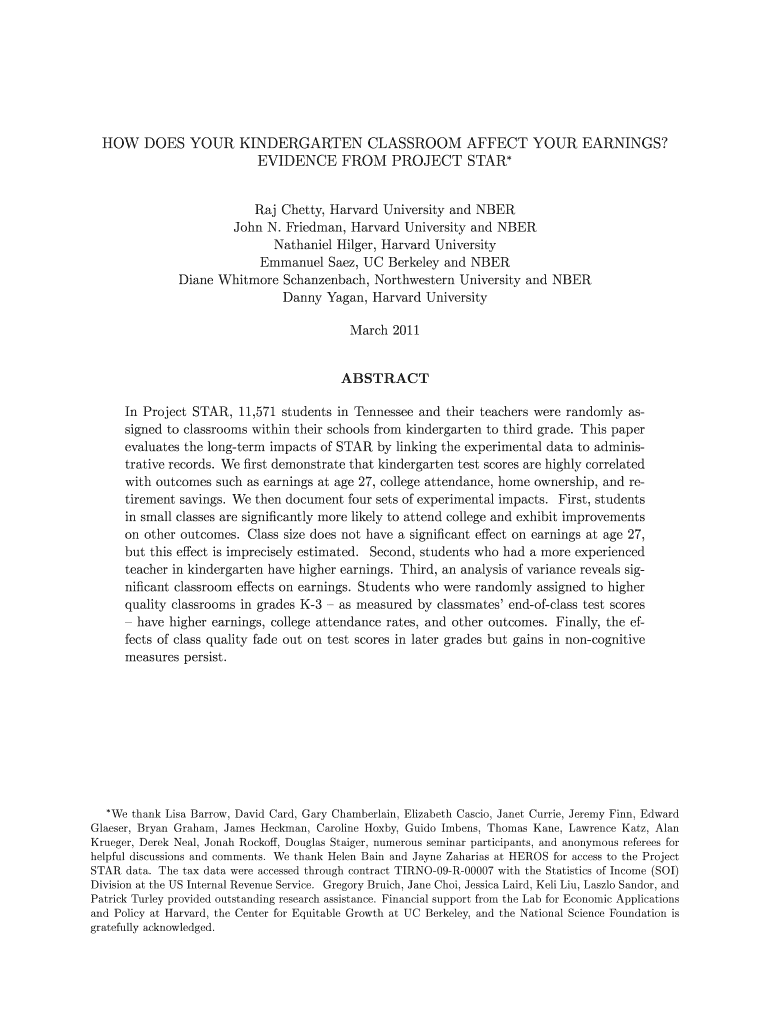
The study titled "How does your kindergarten classroom affect your earnings?" by SSC WISC explores the long-term economic impacts of early childhood education. Specifically, it examines how different kindergarten classroom environments can influence future earnings and other adult outcomes. The research indicates that factors like class size, teacher experience, and classroom quality are crucial in shaping skills and traits that persist into adulthood.
Key Elements of the Study
- Class Size and Composition: Smaller class sizes tend to lead to better individual attention, which can result in higher college attendance and improved earnings.
- Teacher Experience: Experienced teachers have been shown to contribute positively to long-term earnings, highlighting the importance of investing in skilled educators from an early age.
- Non-Cognitive Skills: Skills such as patience, motivation, and perseverance developed in kindergarten classrooms can lead to better overall outcomes, contributing to higher earnings.
How to Use the Insights
Educators and policymakers can leverage insights from the study to make informed decisions about classroom design and teaching practices. By focusing on reducing class sizes and hiring experienced teachers, schools can potentially enhance long-term economic outcomes for students.
- Policy Adjustments: Implement policies that promote hiring experienced teachers.
- Program Development: Design programs aimed at fostering non-cognitive skills in early education.
- Resource Allocation: Allocate resources to maintain optimal class sizes for individualized attention.
Examples of Impact
- Case Study: The Project STAR study showed a direct correlation between smaller class sizes in kindergarten and increased earnings by age 27.
- Real-World Application: Schools that implemented similar small class size policies saw marked improvements in student engagement and long-term socioeconomic status.
Steps to Complete the Analysis
- Collect Data: Gather relevant classroom data, including class sizes and teacher experience levels.
- Evaluate Outcomes: Assess current students' non-cognitive and cognitive skills at various intervals.
- Analyze Long-Term Impact: Track former students' educational attainment and earnings over time.
- Implement Changes: Use findings to refine classroom strategies and educational policies.
Important Terms Related to the Study
- Non-Cognitive Skills: Traits like perseverance and social skills that affect long-term life outcomes.
- Cognitive Skills: Skills involved in learning processes such as memory and problem-solving.
- Project STAR: The foundational study that informs this research, offering a comprehensive look at the influence of educational environments.
Who Typically Uses This Analysis
Educational policymakers and school administrators primarily use the findings from this study to inform decisions about curriculum development and resource distribution. Additionally, educational researchers utilize this to explore further implications of early childhood education on socioeconomic outcomes.
State-Specific Rules and Applications
Although the broad implications of the study apply across the United States, specific educational policies may vary by state. Some states may have already integrated findings from such research into their educational systems, while others are still assessing potential applications.
Software Compatibility and Integration
Integration into educational management systems can be facilitated through various platforms allowing data collection and analysis. Schools can use data systems to track student progress, gather extensive data, and apply findings practically. Educational software often provides tools for measuring both cognitive and non-cognitive skills development effectively.




