
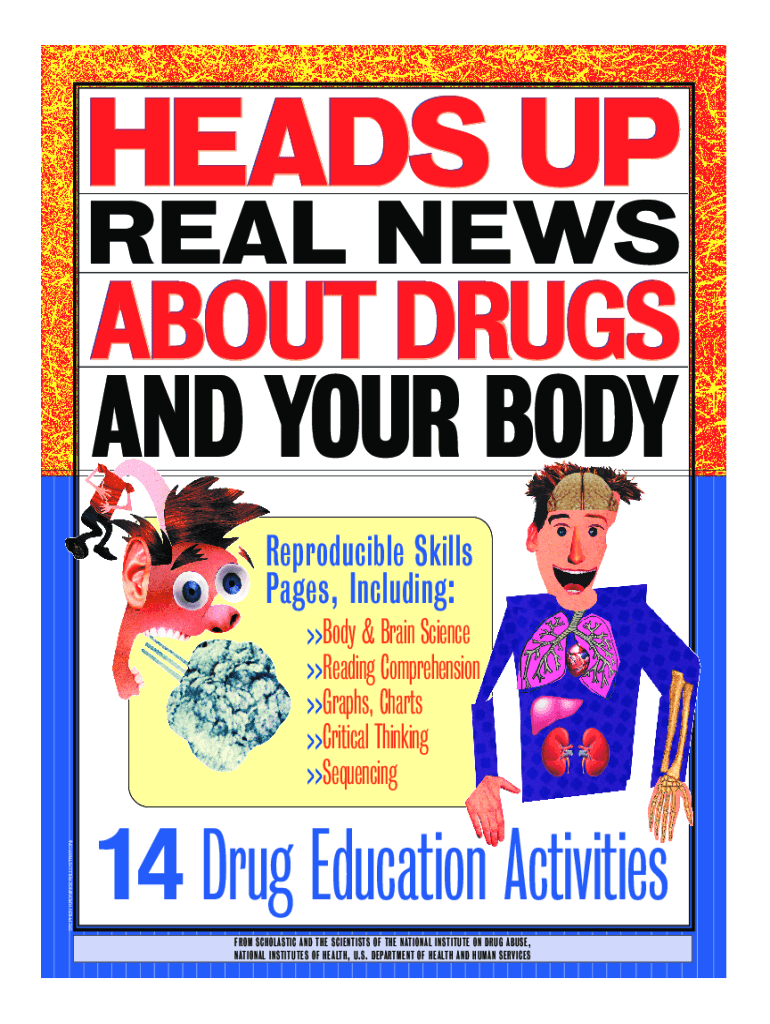







Understanding the Purpose of the 14 Drug Education Activities - PDF Free Download
The "14 Drug Education Activities - PDF Free Download" serves as an educational tool aimed at enhancing students' understanding of drug abuse and its effects on health. Developed in partnership with Scholastic and the National Institute on Drug Abuse (NIDA), this resource includes a series of reproducible activities and factual information. It covers various substances such as marijuana, inhalants, nicotine, steroids, club drugs, heroin, and cocaine. By highlighting the impact of these substances on the brain and body, the guide seeks to promote critical thinking and reading comprehension through interactive exercises.
How to Use the Educational Resource Effectively
This PDF can be utilized in classrooms, counseling sessions, or educational workshops to facilitate discussions about the dangers of drug use. Educators and facilitators are encouraged to integrate the activities into their lesson plans. A structured approach involves:
- Introducing the Topic: Begin by explaining the significance of understanding drug effects on health.
- Engaging Students: Use interactive exercises to stimulate interest and participation.
- Discussing Case Studies: Present real-life scenarios where drug effects can be analyzed and discussed.
- Critical Thinking: Encourage students to reflect on the information and relate it to personal or observed experiences.
Steps to Complete the Activities in the PDF
To maximize the benefits of the document, follow these steps:
- Download the PDF: Secure a free copy from trusted educational websites.
- Review All Activities: Familiarize yourself with the exercises and resources provided.
- Prepare Necessary Materials: Gather any additional materials required for activities, such as writing tools or access to a computer for research.
- Organize Group Sessions: Arrange students into small groups to perform activities collaboratively.
- Monitor Progress: Assist students as needed, offering guidance and clarifications.
- Evaluate Outcomes: Assess the comprehension of students through group discussions or quizzes.
Who Typically Uses This Resource
The primary users of the "14 Drug Education Activities - PDF Free Download" include:
- Teachers: For health and science classes in middle and high school settings.
- School Counselors: For workshops or counseling sessions addressing drug misuse.
- Parents and Guardians: For home education and to initiate conversations about drug abuse.
- Community Organizations: For outreach programs aimed at youth engagement and education.
- Healthcare Professionals: As part of preventive measures and informational sessions on health risks associated with drugs.
Key Elements and Features of the Form
Several core features make this resource effective:
- Reproducible Activities: Allows educators to print and distribute materials easily.
- Fact-Based Content: Offers scientifically-backed information on the effects of various drugs.
- Interactive Exercises: Includes sections designed to engage students actively.
- Critical Thinking Prompts: Encourages learners to analyze and question information critically.
- Comprehension Assessments: Provides activities that test understanding and retention of information.
Legal Use and Compliance
Using the "14 Drug Education Activities - PDF Free Download" requires adherence to copyright laws. The document is typically available for educational purposes and should not be replicated for commercial sale. Always ensure to attribute credit to the original creators, Scholastic and NIDA, when distributing or using the material publicly.
Software Compatibility and Accessibility
While the document is optimized for PDF format, it can:
- Be Accessed Across Various Devices: Compatible with desktop and mobile platforms.
- Support Multiple Document Editors: View and edit using popular software like Adobe Acrobat Reader.
- Enable Annotations and Editing: Users can highlight, comment, or fill out activities digitally.
Educators should ensure that all students have the necessary access to suitable hardware and software to participate effectively in activities.
Practical Example of Utilizing the PDF in Schools
Imagine a school implementing this educational resource in their health curriculum:
- Curriculum Integration: The document is incorporated into the syllabus for a term, aligning with units on health and wellness.
- Student Engagement: Weekly sessions dedicate time to exploring different drugs discussed in the resource.
- Community Involvement: Local health officials are invited to provide talks, supplementing the information presented in the PDF.
- Parental Involvement: Resources are shared with parents to discuss at home, reinforcing messages delivered at school.
Using this structured approach ensures the resource is fully leveraged for educational impact.




