Definition and Meaning of the Partnership LLC Tax Organizer (1065)
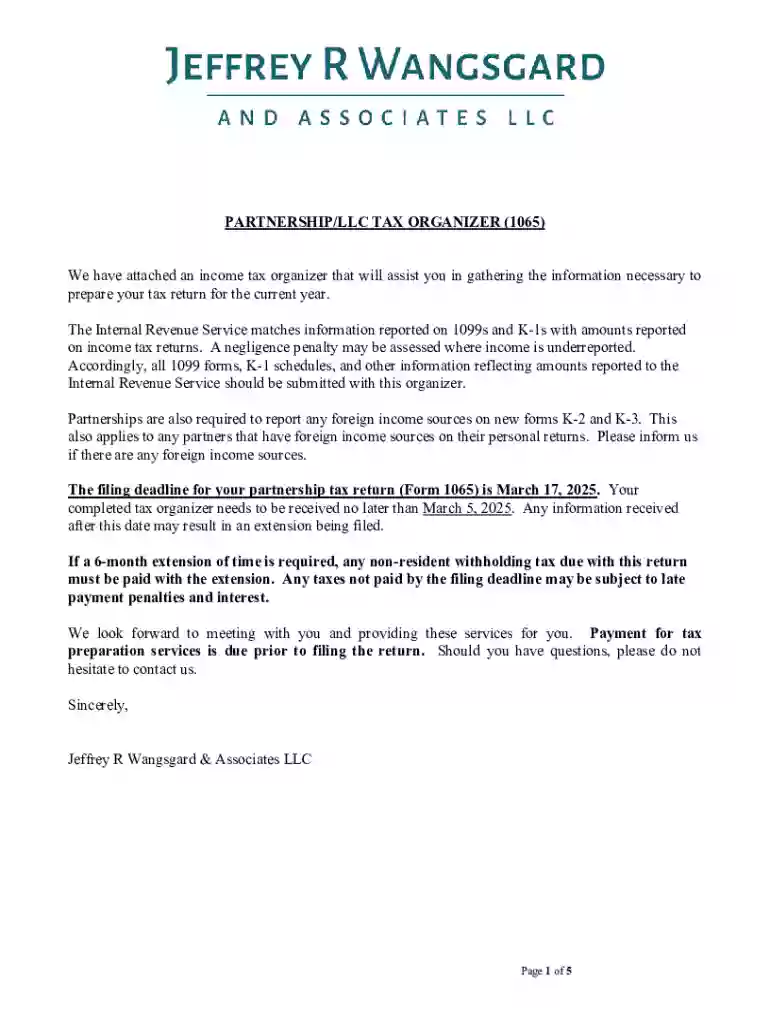
The Partnership LLC Tax Organizer, also known as Form 1065, serves as an essential tool for partnerships and LLCs to systematically compile all necessary financial information required to file their income tax returns with the IRS. It acts as a comprehensive checklist, ensuring that pertinent documents such as Form 1099s, Schedule K-1s, and records of foreign income are gathered and presented accurately.
Importance of Using the Partnership LLC Tax Organizer (1065)
Utilizing the Partnership LLC Tax Organizer is crucial for several reasons:
- Ensures Compliance: By organizing all relevant tax documents, partnerships and LLCs can avoid potential penalties from the IRS due to incomplete or incorrect filings.
- Streamlines Tax Preparation: Facilitates a smoother and more efficient tax filing process by having all necessary information in one place.
- Supports Accurate Reporting: Contributes to the provision of detailed and precise financial reports, which are instrumental in tax calculations and compliance.
Steps to Complete the Partnership LLC Tax Organizer (1065)
Filling out the Partnership LLC Tax Organizer involves several key steps:
- Collect Required Documents: Gather all relevant documents, such as Form 1099s, Schedule K-1s, and income statements.
- Review Provided Information: Ensure accuracy in the details recorded, including income, expenses, and any foreign income sources.
- Complete Applicable Sections: Fill out all sections pertinent to your partnership or LLC, guided by the instructions on Form 1065.
- Double-Check for Accuracy: Review all information to ensure it is complete and correct.
- Submit the Organizer: The completed organizer should be submitted in a timely manner, ideally by the specified deadline for optimum compliance.
Key Elements of the Partnership LLC Tax Organizer (1065)
The tax organizer encompasses various sections critical for completing a partnership's tax return:
- Income Documentation: Includes profit and loss statements and bank records.
- Expense Records: Details business expenses, including office supplies, salaries, and rent, among others.
- Ownership Information: Lists all partners and their profit-sharing percentages.
- Document Checklist: Aids users in verifying that all necessary forms and schedules are included.
Understanding Required Documents for Completion
To properly complete the organizer, partnerships will need:
- Form 1099s: For reporting various types of income.
- Schedule K-1s: To outline each partner's share of income, deductions, and credits.
- Financial Statements: Including balance sheets and income statements for the fiscal year.
Filing Deadlines and Important Dates
For the 2024 tax year, partnerships must keep in mind these critical dates:
- Organizer Completion: Recommended by March 5, 2025, to allow ample time for review.
- Tax Filing Deadline: March 17, 2025, is the last day to submit tax returns without penalties.
- Extension Requests: Must be filed by the original deadline date, extending the filing to September 15, 2025.
IRS Guidelines Concerning the Partnership LLC Tax Organizer (1065)
The IRS has laid out specific guidelines to ensure compliance when using Form 1065:
- Accurate Reporting: All financial details must be reported as accurately as possible to avoid any discrepancies.
- Consistent Record-Keeping: Partnerships should maintain consistent records to align with guidelines set forth in IRS Publication 541.
- Adherence to Deadlines: Observing filing deadlines is crucial to avoid penalties and ensure proper processing by the IRS.
Consequences for Non-Compliance with Filing Requirements
Failing to comply with IRS filing requirements can result in significant penalties:
- Late Filing Fees: Penalties are imposed for each month the return is late, potentially accumulating substantial fines.
- Interest on Unpaid Taxes: Does not halt and continues to accrue until the owed taxes, along with penalties, are paid.
- Audit Risks: Increased likelihood of an audit, which could result in further financial scrutiny and penalties.
This comprehensive overview of the Partnership LLC Tax Organizer (1065) underscores its critical role in ensuring effective tax compliance and preparation for partnerships and LLCs. Having a thorough understanding of all relevant components, deadlines, and legal requirements can aid in safeguarding financial operations and maintaining alignment with federal tax obligations.