






Definition and Purpose of the Petition for Rule to Show Cause
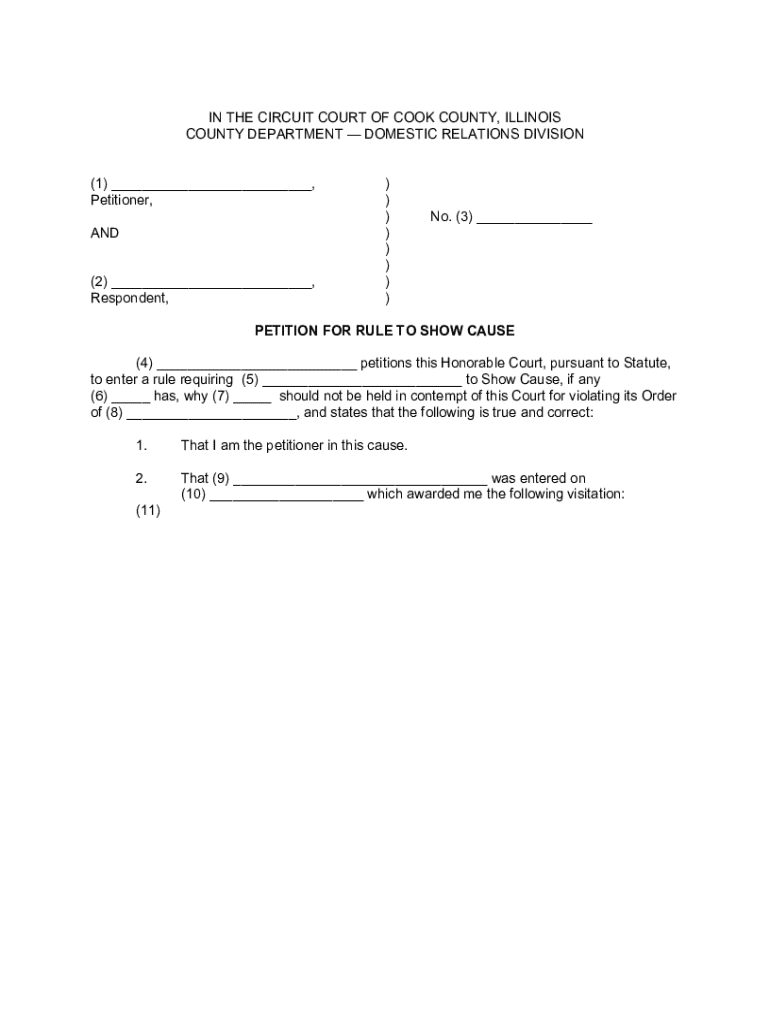
The Petition for Rule to Show Cause is a legal document utilized primarily within the Illinois jurisdiction to enforce court-ordered visitation rights. It is suited for use in situations where one parent believes the other is non-compliant with the terms specified in a visitation order. The document effectively serves as a formal request for the court to intervene and ensure adherence to legal agreements, demanding the non-compliant party to justify their breach of the court order.
Procedures for Using the Petition for Rule to Show Cause
-
Obtain the Correct Form: Ensure you have the correct petition form specific to Illinois legal aid standards. This form is designed to match state-specific protocols to maintain validity and enforceability.
-
Complete the Form: Fill out personal details, including the names of both parents and children involved, the violation of the visitation order, and your contact information. The form must comprehensively detail the specific breaches by the non-compliant parent.
-
Attach a Notice of Motion: Along with the petition, a Notice of Motion should be filed. This document informs the respondent of the hearing date, allowing the court to make a ruling based on the evidence presented in both the motion and the petition.
Steps to Complete the Petition for Rule to Show Cause
-
Gather Documentation: Collect evidence that supports your claims of non-compliance, such as written communications, notes from missed visits, or testimonies from witnesses.
-
Fill in Personal Information: Provide comprehensive details about yourself and the involved parties, ensuring accuracy to avoid delays in processing.
-
Detail the Violations: Clearly outline how the visitation order has been violated, providing dates and specific incidents to build a strong case.
-
File with the Court: Submit your completed form along with any supporting documents to the appropriate court. Ensure you follow protocols for submission either via online portals or in-person at designated court offices.
-
Serve the Notice: Once filed, serve the respondent with a copy of the Petition and Notice of Motion, adhering to state guidelines for lawful delivery.
Key Elements of the Petition for Rule to Show Cause
-
Compliance Details: A section dedicated to detailing the alleged non-compliance with the past visitation order, critical for the merits of the petition.
-
Supporting Evidence: An area to list any supplementary documents such as communications logs, recordings, or third-party witness statements that corroborate the allegations.
-
Acknowledgment Section: Where the petitioner must sign, declaring all information is accurate and true to the best of their knowledge.
State-Specific Rules Governing the Petition
In Illinois, strict rules govern the filing and processing of a Petition for Rule to Show Cause. Familiarize yourself with local court rules, which include specifics on how notifications should be served to the respondent and timeframes for responses. Adjustments may be in place based on county or district within the state.
Legal Justifications for Filing
The filing of this petition is legally justified when a visitation order is clearly being violated, impacting the petitioner's rightful access to visits with their children. Illinois law supports parents in enforcing court orders when it is demonstrated that a breach is both intentional and repeated.
Typical Users of the Petition for Rule to Show Cause
Primarily utilized by divorced or separated parents who are seeking to enforce a family court's visitation order. The petition aligns with individuals who face challenges in ensuring compliance with agreed-upon parenting plans due to the other party's non-cooperative actions.
Important Terms Related to the Petition
- Visitation Order: A legal order issued by a family court that dictates the terms and schedule of visits between the non-custodial parent and the child.
- Notice of Motion: A procedural document that notifies the opposing party of the actions being requested in court, including the official hearing date.
Variations and Alternatives
While the Petition for Rule to Show Cause is specific to enforcing visitation orders, alternative filings may be necessary for issues outside visitation, such as child support or custody order enforcement. These documents, though similar in format, serve different legal functions and may require unique procedural steps.