




01. Edit your form online
Type text, add images, blackout confidential details, add comments, highlights and more.

Type text, add images, blackout confidential details, add comments, highlights and more.

Draw your signature, type it, upload its image, or use your mobile device as a signature pad.

Send it via email, link, or fax. You can also download it, export it or print it out.
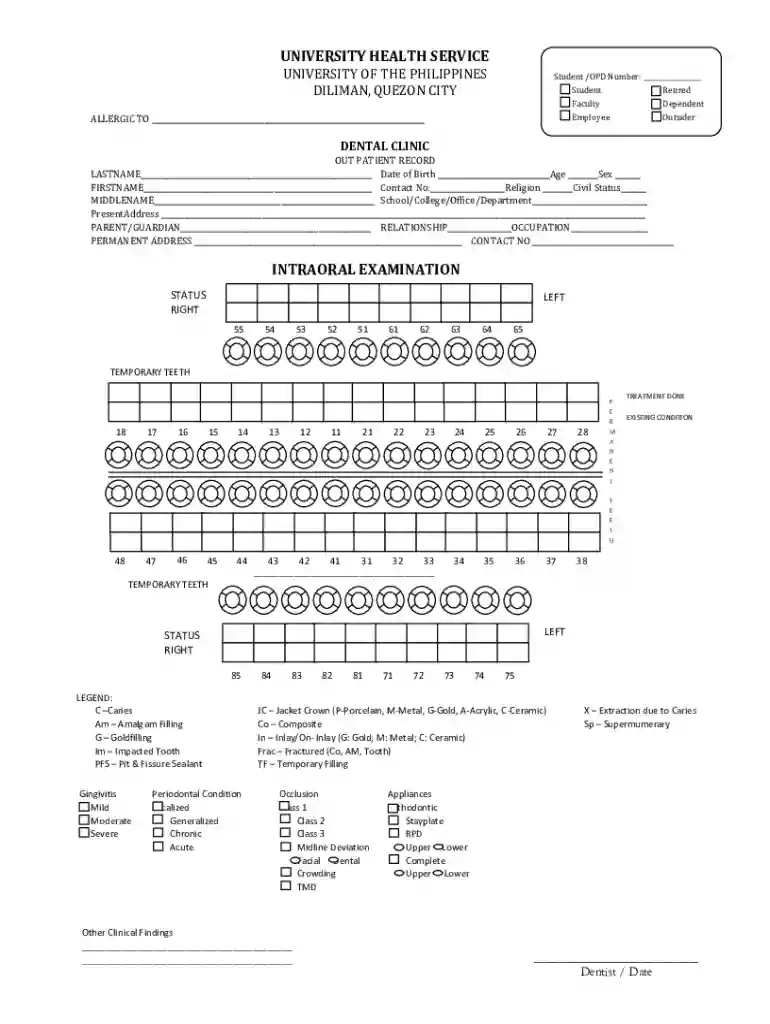
The University Health Service Intraoral Examination is a meticulously crafted dental clinic outpatient record form used primarily at the University of the Philippines, Diliman. It compiles patient details, including personal, dental, and medical histories, along with specific intraoral examination observations. This form serves to enhance patient care by ensuring clinicians have comprehensive access to pertinent health information essential for devising effective dental treatment plans.
To efficiently utilize this form, begin by collecting thorough patient information. This encompasses personal identifiers like name, date of birth, and contact information, followed by detailed medical and dental histories. Medical history sections should incorporate current medications, allergy information, and any underlying medical conditions that may impact dental care. The intraoral examination portion is tailored to capture specific findings, observations, and assessments of the patient's oral cavity. Dentists or dental healthcare providers should systematically fill out this section, marking areas of concern and noting any abnormalities or required interventions.
Patient Information: Begin collecting and recording personal patient details. Ensure accuracy in names, contact, and identification numbers.
Medical History: Record current and past health conditions, prescription medications, and known allergies. Use bullet points under headings like Chronic Illnesses or Recent Surgeries for clarity.
Dental History: Document previous dental visits, treatments, and any history of conditions like periodontal disease or tooth extractions.
Intraoral Examination Details: Conduct a meticulous examination of the oral cavity. Use diagrams if available to mark teeth conditions and discuss findings in narrative form.
Diagnosis and Treatment Plan: Based on the examination, outline any diagnosed conditions and propose treatment plans. Be specific and refer to medical history as necessary.
Dentist’s Notes and Signature: Complete the form with any final notes and dentist's signature to validate the examination.
Patient Information: First section to capture identifying information. Includes categories for name, contact number, and identification.
Medical History: A consolidated section for past and present health issues, medication, and allergy information. Critical for preventing adverse reactions.
Dental History and Examination: Details on past dental procedures, existing oral conditions, and the clinical findings from the current examination.
Diagnosis and Recommendations: This portion offers a detailed overview of oral health status, highlighting necessary treatments and preventative advice.
Approval and Signature: Ensures accountability and authentication of the examination results, providing legal documentation.
The form is legally recognized as a document that captures essential patient health information, intended to guide dental professionals in diagnosing and planning appropriate treatments. It satisfies regulatory requirements by documenting informed consent, patient interactions, and treatments planned or carried out. This comprehensive documentation aligns with healthcare laws in the United States, ensuring the patient receives care compliant with medical and dental ethical standards.
This form is utilized predominantly by dental health professionals, including dentists, dental assistants, and allied health staff within the University of the Philippines' clinical settings. It is an essential part of records management in educational institutions offering health services and is integral for students and faculty accessing university health resources. Clinics offering dental services and educational programs in dentistry also rely on this form for structured health assessments.


Intraoral Examination: A focused inspection of the interior of the mouth, assessing teeth, gums, and oral mucosa.
Medical History: Comprehensive account of a patient's health status, past illnesses, and ongoing health conditions.
Diagnosis: Conclusion reached by the dental professional regarding the patient's oral health.
Treatment Plan: Prescribed course of actions tailored to improving or maintaining oral health following the diagnosis.
In practice, this form might be used during a routine dental check-up for a college student reporting gum discomfort. The student’s medical history would be examined to evaluate potential causes linked to systemic health issues. During the intraoral examination, the attending health professional might identify inflamed gums requiring a specific treatment plan. The form guides this process, ensuring detailed documentation of the diagnosis and suggested interventions.
By adhering closely to the structure and content of the University Health Service Intraoral Examination, dental health professionals can provide high-quality, well-documented care. This enhanced document management improves patient outcomes and supports a standard of excellence in university-affiliated health services.
At DocHub, your data security is our priority. We follow HIPAA, SOC2, GDPR, and other standards, so you can work on your documents with confidence.




This study aims to understand how quality of life and health for older adults who do not have dental insurance are affected if they are offered no-fee dental
by JM White 2020 Cited by 19 This paper describes the components of a preventive dental care program and the quality of care in a large dental accountable care organization.


