Definition & Meaning
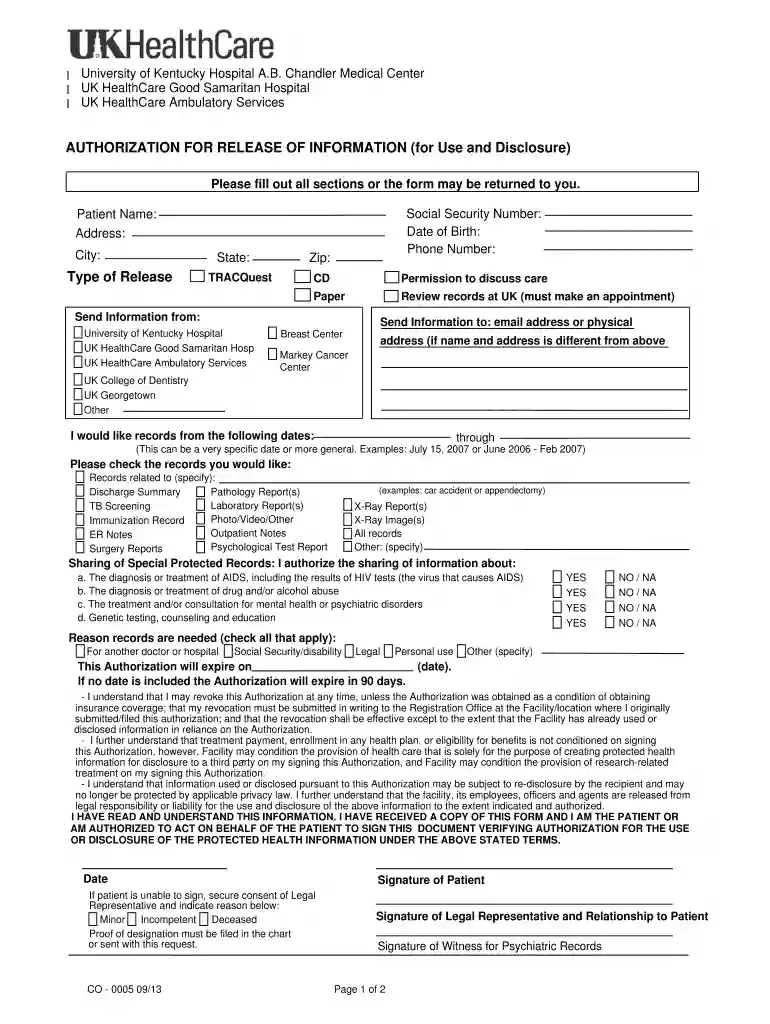
The "Authorization for Release of Information" form at UK Healthcare, affiliated with the University of Kentucky, is a legal document that enables patients to authorize the sharing of their medical records with designated third parties. This form is essential for medical privacy and complies with healthcare regulations to ensure that patient information is handled appropriately and confidentially.
Purpose of the Form
- Patient Consent: The form provides a legal framework for patients to consent to the release of their medical records.
- Information Sharing: It specifies the type of information being released and identifies the recipient party.
- Legal Compliance: It helps healthcare providers comply with privacy laws by documenting patient consent.
Use Cases
This form is typically used in scenarios such as transferring medical care to a new provider, facilitating insurance claims, or aiding in legal proceedings where medical history is pertinent.
How to Use the Authorization for Release of Information
To use this form effectively, patients and healthcare providers must ensure it is completed accurately and comprehensively. Here are the primary steps involved:
Initial Steps
- Obtain the Form: Retrieve the form from the UK Healthcare website or request a physical copy at the healthcare facility.
- Identify the Parties: Clearly specify the healthcare provider releasing the information and the recipient receiving it.
Details to Include
- Patient Information: Full name, date of birth, and contact details are required.
- Purpose of Release: Indicate why the information is being shared (e.g., continued treatment, insurance).
Signature and Date
- Authorization and Date: Patient must sign and date the form to validate it. In some cases, a witness or representative signature may also be required.
Steps to Complete the Authorization for Release of Information
Completing this form requires careful attention to detail, ensuring all necessary sections are filled out correctly.
Detailed Completion Guide
- Read Instructions Carefully: Before filling out the form, read the instructions provided to understand the requirements.
- Complete Patient Section: Input the patient’s personal details, ensuring accuracy to avoid processing delays.
- Specify Records to be Released: Clearly outline which parts of the medical record should be shared. This might include treatment dates, specific diagnoses, or types of tests.
- Indicate Receiving Party: Provide the name and address of the entity or individual receiving the information.
- State the Purpose: Write the reason for the release, ensuring it aligns with healthcare regulations.
- Sign and Date the Form: Only with the patient’s signature is the form considered valid. Include additional signatures if legally required.
Why Use the Authorization for Release of Information
The form is crucial for multiple reasons, including facilitating continuity of care, protecting patient privacy, and ensuring compliance with health regulations.
Assurance of Privacy
- Controlled Sharing: Enables patients to have control over their medical information, ensuring it only reaches intended parties.
- Legal Protection: Shields healthcare providers from legal liabilities by documenting patient consent.
Benefits for Patients
- Seamless Care Transitions: Simplifies transitions between healthcare providers by allowing new providers access to comprehensive medical histories.
- Streamlined Processes: Facilitates quicker processing for insurance and legal matters requiring medical documentation.
Who Typically Uses the Authorization for Release of Information
This form is predominantly used by patients, healthcare providers, and occasionally legal representatives.

Common Users
- Patients and Families: Direct users who authorize the release of their records, often for personal healthcare management.
- Healthcare Facilities: As part of routine procedures to ensure compliance and proper record-keeping.
- Legal and Insurance Agencies: Frequently where medical histories are detailed requirements within legal agreements or insurance policies.
Key Elements of the Authorization for Release of Information
Understanding the core components of the form is vital to its proper use.
Main Components
- Patient Identification: Ensures that the right individual’s information is shared, starting with patient demographics.
- Details of Information: Clearly identifies what specific medical information is authorized for release.
- Purpose and Validity: States the reason for the release and how long the authorization remains valid, typically limiting it to specific instances or periods.
Required Documents
To accompany this form, patients might require additional documentation to validate their identity or substantiate the release request.
Commonly Needed Papers
- ID Proof: Valid government-issued identification to verify the patient’s identity.
- Additional Authorizations: If the patient is a minor or under legal guardianship, supplementary power of attorney or guardianship documents may be necessary.
State-Specific Rules
Though the form follows a general federal framework, specific state regulations can influence its application.
Kentucky Regulations
- Local Compliance: The form adheres to Kentucky state laws governing medical information disclosure.
- State-specific Additions: There may be additional stipulations unique to Kentucky healthcare facilities.
Understanding these components ensures effective, compliant use of the "Authorization for Release of Information" form in the context of UK Healthcare.