
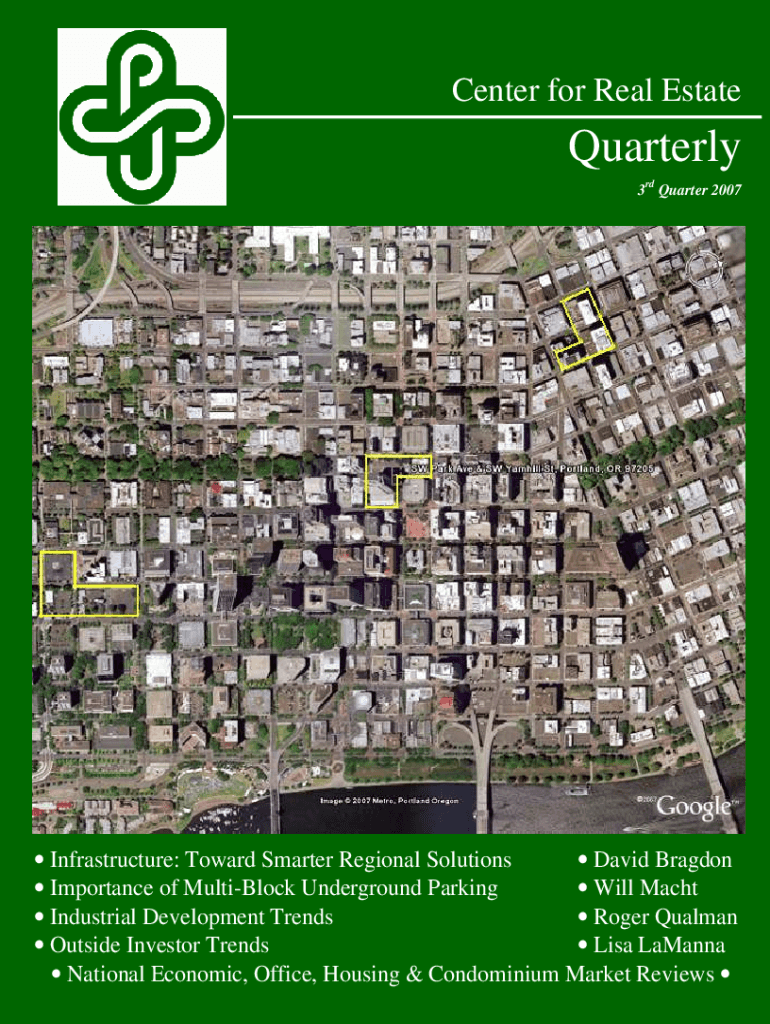







Definition & Purpose of the Center for Real Estate Quarterly
The Center for Real Estate Quarterly is a publication that provides in-depth analysis and reporting on key market trends, economic conditions, and infrastructure developments within the real estate sector. Specifically, it focuses on urban planning, housing market dynamics, and investment opportunities, all with a keen eye on developments in metropolitan areas like Portland. This resource serves as a vital tool for real estate professionals, investors, urban planners, and policymakers seeking to understand and navigate the complexities of the real estate market. Through comprehensive articles and research, the Center offers valuable insights on multiple facets of the industry, including the impact of globalization on industrial development and the strategies needed to address infrastructure needs.
How to Obtain the Center for Real Estate Quarterly
The Center for Real Estate Quarterly can often be accessed through academic institutions, professional organizations, or directly from the Center for Real Estate, if available. Subscribers may receive routine updates and issues delivered digitally or in print. Various universities and real estate bodies may also host archives of past issues, accessible to students or members. Typically, obtaining a copy involves visiting associated websites or libraries, where issues can be either downloaded as PDFs or viewed online.
Key Elements of the Center for Real Estate Quarterly
The content of each Center for Real Estate Quarterly issue typically includes several core elements:
- Market Analysis: A look at current real estate trends, including housing market performance and office space utilization.
- Economic Overview: Discussion of national and local economic conditions affecting the real estate sector.
- Urban Development: Insights into the challenges and opportunities in urban infrastructure, emphasizing sustainable and innovative approaches.
- Investment Trends: Examination of domestic and international investment patterns in the region's real estate market.
Important Terms Related to the Center for Real Estate Quarterly
Understanding the vocabulary frequently used within the Center for Real Estate Quarterly will enhance comprehension and application of its insights. Important terms include:
- Mixed-Use Developments: Real estate projects that integrate residential, commercial, and sometimes industrial spaces to promote convenience and reduce environmental impact.
- Downtown Condominium Sales: A focus point, particularly in urban areas, reflecting the health and appeal of city living spaces.
- Globalization: The process of interaction and integration among businesses worldwide, impacting local real estate demands and trends.
Legal Use and Compliance with the Center for Real Estate Quarterly
While the Center for Real Estate Quarterly primarily serves informational and analytical purposes, its insights can indirectly influence compliance with housing regulations and urban planning laws. Professionals and policymakers might use its findings to create or adapt strategies that align with legal standards and ensure responsible development and investment practices. Although the Quarterly itself is not a legal document, it supports evidence-based decision-making.
Examples of Using the Center for Real Estate Quarterly in Decision-Making
Professionals utilize the Quarterly to make informed decisions. For instance:
- A city planner may leverage articles on infrastructure needs to propose new public transportation projects.
- An investor might assess market conditions outlined in the Quarterly to decide on property acquisitions or sales.
- Developers could draw from trend analyses to design projects that meet evolving market demands, such as environmentally sustainable buildings.
State-Specific Rules Impacting Content
While the Quarterly provides a broad overview of trends across a region, specific real estate regulations and practices can vary significantly from state to state. For example:
- Zoning Laws: These dictate the acceptable developments in different areas, which can affect construction and investment plans.
- Tax Incentives: States may offer varying financial incentives for certain types of developments, impacting investment strategy outlined in the Quarterly. Understanding these variations is crucial for accurate application of the Quarterly's insights in real-world scenarios.
Business Types Benefitting from the Center for Real Estate Quarterly
Various business entities stand to gain from the comprehensive insights offered by the Center for Real Estate Quarterly. These include:
- Real Estate Agencies: Better understand market trends to advise clients effectively.
- Construction Firms: Align projects with current demand and urban development needs.
- Financial Institutions: Evaluate risks and opportunities associated with financing real estate ventures.
- Consultants and Analysts: Provide clients with data-driven advice based on thorough market analysis.
Key Takeaways from the Center for Real Estate Quarterly
The Center for Real Estate Quarterly remains a critical resource for understanding the complexities of the real estate market. Its comprehensive articles provide clarity on market dynamics, offer strategic insights for economic and real estate developments, and highlight important trends influencing urban planning. By keeping abreast of such in-depth analyses, professionals within the industry can make more informed decisions that align with current and future market conditions.




