
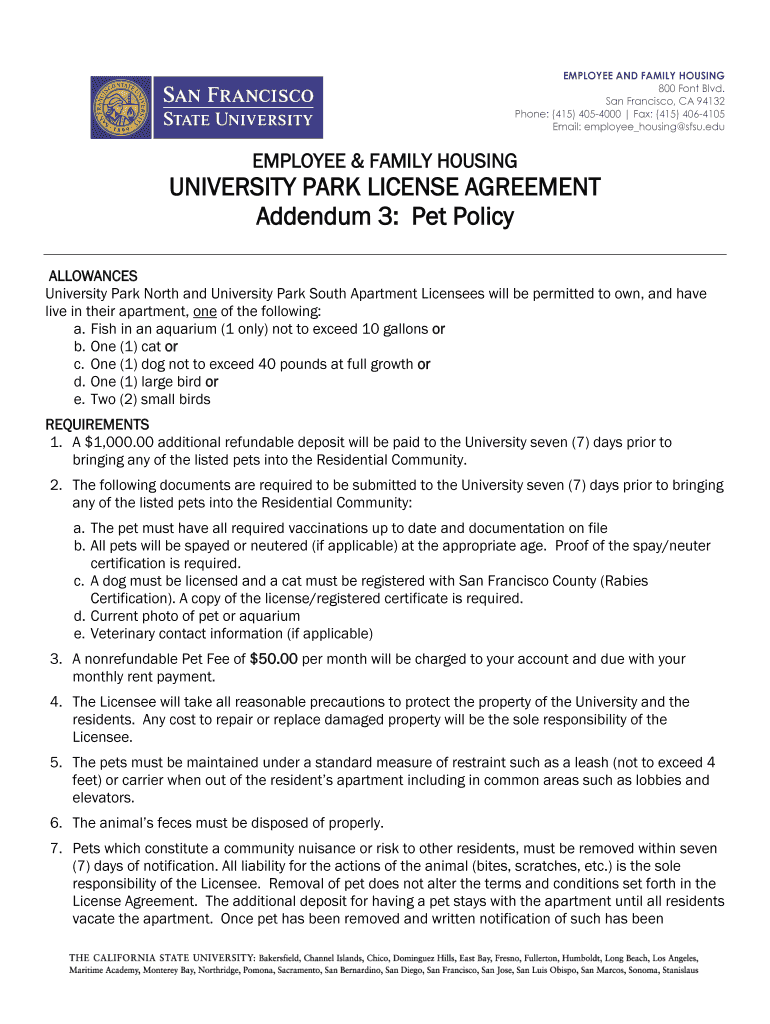







Definition and Purpose
The "Pet Policy - Employee and Family Housing - San Francisco State" is a comprehensive guide that outlines the rules and regulations regarding pet ownership for residents of university housing. This policy serves to ensure harmony and safety within the residential community by specifying acceptable types of pets, necessary documentation, and behavioral expectations. Compliance with these guidelines promotes responsible pet ownership and minimizes disturbances, ensuring a conducive living environment for all residents.
How to Use the Pet Policy Effectively
To effectively adhere to the "Pet Policy - Employee and Family Housing - San Francisco State," residents should first thoroughly read the document to understand the specific requirements and conditions. This includes familiarizing oneself with the types of pets allowed and the necessary steps to register a pet within university housing. By closely following each aspect of the policy, residents can ensure they meet all expectations and avoid any potential non-compliance issues.
Key Actions for Residents
- Identify Allowed Pets: Confirm whether your pet falls under the approved categories such as fish, cats, dogs, or birds.
- Review Documentation Requirements: Prepare necessary documents including vaccination records, licensing, and any required deposits.
- Understand Behavioral Standards: Be aware of the expected pet behavior and community interaction guidelines to prevent disturbances.
Steps to Complete and Comply with the Policy
Adhering to the policy involves a series of structured actions:
- Read the Entire Policy Document: Start by reviewing the policy in its entirety to grasp all conditions and requirements.
- Prepare Required Documentation: Gather all necessary paperwork, such as regulatory deposits, vaccination certificates, and licensing proof, critical for compliance.
- Register Your Pet: Follow the registration process as detailed in the policy, ensuring the pet is formally recognized by the university housing administration.
- Monitor Pet Behavior: Continuously observe your pet’s behavior to ensure alignment with the community standards outlined in the policy.
- Maintain Current Documentation: Keep all documents updated, particularly those related to health and licenses, to avoid policy breaches.
Key Elements of the Policy
Types of Permissible Pets
The policy distinctly specifies the categories of pets eligible to reside in university housing. These typically include domestic pets like fish, cats, dogs, and birds. Non-traditional pets or exotic animals often fall outside the scope of permissible pets, thereby ensuring safety and comfort in the shared living spaces.
Documentation and Compliance
Residents must provide specific documents to comply with the policy, ensuring all pets are legally and medically cleared:
- Pet License: Required for all pets, demonstrating legal ownership.
- Vaccination Records: Ensures pets are safe to interact in shared spaces.
- Deposit and Fees: Some pet types may incur additional fees for potential damages.
Legal Considerations and Compliance
Legal compliance is a critical component of the pet policy. Residents must adhere to all local, state, and university regulations regarding pet ownership. This includes maintaining up-to-date vaccination and licensing records. Moreover, understanding the legal ramifications of non-compliance can prevent potential penalties or housing issues.
Penalties for Non-Compliance
Failure to comply with the policy could result in various penalties, ranging from fines to potential eviction. Educating oneself about the legal expectations and consequences of non-compliance is essential to maintain residency in university housing.
Examples and Scenarios
Practical Applications
- Scenario 1: Pet Registration: A resident new to university housing with a small dog must complete the pet registration process, submit necessary documents, and meet the behavior expectations set by the policy.
- Scenario 2: Behavioral Issues: If a pet displays disruptive behavior, the owner might have to engage in correctional measures or risk fines.
Real-World Outcomes
Adherence to the policy not only secures the pet owner’s compliance but also enhances the overall community living experience by mitigating potential disputes and ensuring each resident's comfort and safety.
Required Documentation
Compliance with the "Pet Policy - Employee and Family Housing - San Francisco State" mandates a comprehensive set of documents:
- Registration Form: Completed and submitted to the housing office.
- License and Vaccination Records: Must be up to date, showcasing legal and health compliance.
- Pet Insurance (if applicable): Provides additional coverage for pet-related incidents.
Gathering and maintaining these documents is crucial for proving compliance and facilitating smooth interactions with university housing authorities.
Submission Methods
Residents can submit necessary documents for pet registration and compliance through several channels:
- Online Submission: Digital forms and documents can be uploaded through the university's housing portal.
- In-Person Delivery: Original documents can be delivered to the housing office during business hours.
- Mail Submission: Physical copies of documents may also be mailed to the designated address provided by the housing administration.




