
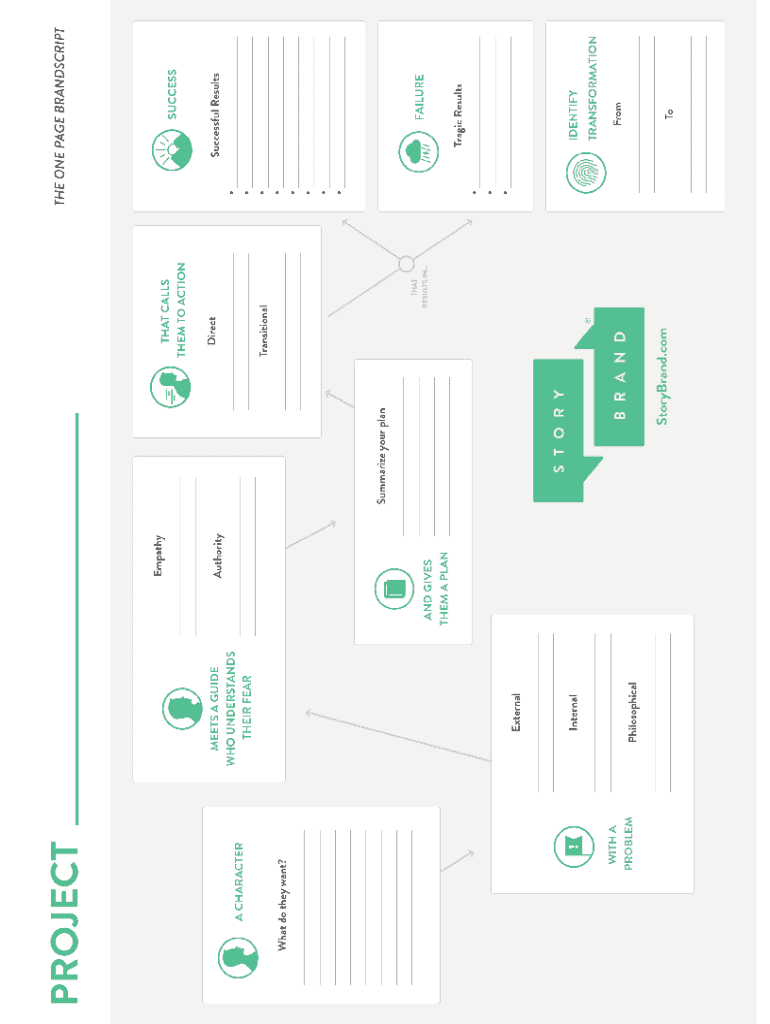







Definition and Purpose of the Storybrand Marketing Checklist Execution Workbook
The Storybrand Marketing Checklist Execution Workbook is a practical tool designed to assist businesses in developing clear and effective marketing strategies. Using the popular StoryBrand framework, it guides companies in creating concise and compelling messages tailored to their audience's needs. This workbook is particularly beneficial for businesses that wish to enhance their customer communication, ultimately aiding in brand awareness and increased conversion rates.
Primary Components of the Workbook
- One-Liner Development: Helps craft a succinct statement encapsulating the business's unique value proposition.
- Lead-Generating PDFs: Provides guidance on creating downloadable content that generates qualified leads.
- Landing Page Wireframing: Offers strategies for designing user-friendly and message-aligned landing pages.
Application and Importance
Utilizing this workbook allows businesses to clarify their messaging and ensure consistency across various marketing channels. This clarity can significantly improve customer engagement and retention by making the communication more relatable and impactful.
How to Use the Storybrand Marketing Checklist Execution Workbook
The workbook is structured to be both user-friendly and thorough, assisting users through a step-by-step process to develop strategic marketing components.
Step-by-Step Process
- Identify Core Messages: Begin by outlining the primary message you wish to convey to your audience.
- Audience Analysis: Understand your target audience's challenges and what solutions your product or service offers.
- Create the One-Liner: Use a concise sentence to articulate the specific problem your business solves and why it matters to the customer.
- Wireframe Landing Pages: Design pages that align with your messaging and effectively guide users to take desired actions.
- Draft Email Campaigns: Plan a series of emails that maintain consistent messaging and nurture leads.
- Develop Lead-Generating Content: Create valuable resources, such as PDFs or e-books, that resonate with your audience.
Tools and Methods
- Utilize brainstorming sessions to refine messaging.
- Implement feedback loops from team members or focus groups.
- Employ digital tools for drafting and designing to streamline workflow.
Key Elements of the Workbook
Several critical components aid in the effective execution of marketing strategies within the workbook.
Core Elements
- Clear Messaging: Ensures that all communication is direct and resonates with the target audience.
- Call-to-Action (CTA) Strategies: Guides the placement and phrasing of CTAs for maximum impact.
- Email Campaign Structures: Outlines how to construct email sequences that keep the audience engaged.
Additional Considerations
- Brand Consistency: Maintaining uniformity in tone and style across different channels.
- Customer Feedback Incorporation: Utilizing customer insights to refine and optimize marketing efforts continually.
Business Types That Benefit Most
While the workbook is versatile, certain types of businesses gain the most from its structured approach.
Beneficial Sectors
- Retail E-Commerce: Online stores looking to enhance user experience and conversion rates.
- Start-ups: New businesses needing to establish a clear brand identity and messaging strategy.
- Service-based Companies: Firms that benefit from explaining their unique value through personalized client engagement.
Real-World Examples
- Circuit E-Bikes: Uses the workbook to articulate the benefits of e-bikes, helping potential customers understand the value in reducing commute times and environmental impact.
Advantages of Using the Workbook
Adopting this marketing workbook yields several advantages for users, primarily related to clarity and consistency in communications.
Major Benefits
- Enhanced Clarity: Helps simplify complex ideas for easier audience understanding.
- Improved Team Alignment: Ensures all team members are on the same page regarding messaging and strategy.
- Increased Conversion Rates: Tailored messaging leads to higher engagement and action from the target audience.
Practical Outcomes
- Reduced Marketing Mistakes: By providing a systematic approach, the workbook reduces errors in messaging.
- Better Audience Engagement: Consistent messaging keeps the audience more interested and informed.
Steps to Complete the Workbook
Completing the workbook involves a structured approach that requires attention to detail and collaboration among team members.
Detailed Completion Guidelines
- Initial Review: Before filling out the workbook, review all sections to understand the requirements.
- Drafting Process: Use brainstorming and drafts to generate core content for each section.
- Revision and Feedback: Share initial drafts with key stakeholders to gather feedback and make necessary adjustments.
- Finalization: Consolidate all input, refine content, and ensure it aligns with the overall marketing objectives.
Common Pitfalls to Avoid
- Undervaluing Audience Insights: Not considering audience feedback can lead to ineffective messaging.
- Inconsistent Branding: Ensure all elements adhere to brand guidelines to avoid disjointed communication.
Who Typically Uses the Workbook
A wide range of users can benefit from the Storybrand Marketing Checklist Execution Workbook, but specific roles and sectors find it particularly useful.


Typical Users
- Marketing Professionals: Individuals responsible for crafting and executing marketing strategies.
- Business Owners: Entrepreneurs aiming to sharpen their company's value proposition and communications.
- Content Creators: Professionals specializing in producing content that requires message alignment with brand strategies.
Specific Use Cases
- Small Business Enterprises: Looking to establish a clear brand in a competitive market.
- Corporate Marketing Teams: Needing to streamline message development across campaigns and departments.
Digital Versus Paper Versions
The workbook is available in both digital and paper formats, offering flexibility based on user preferences and requirements.
Digital Format Advantages
- Real-Time Updates: Easily update content and collaborate with team members.
- Searchability and Accessibility: Quick access to specific sections and content on various devices.
Paper Format Attributes
- Tangible Reference: Beneficial for those who prefer physical materials for brainstorming and annotations.
- Ease of Note-Taking: Allows for jotting down immediate thoughts or ideas during meetings.
Both versions serve their purpose effectively, and the choice depends on individual needs and workflow preferences.




