
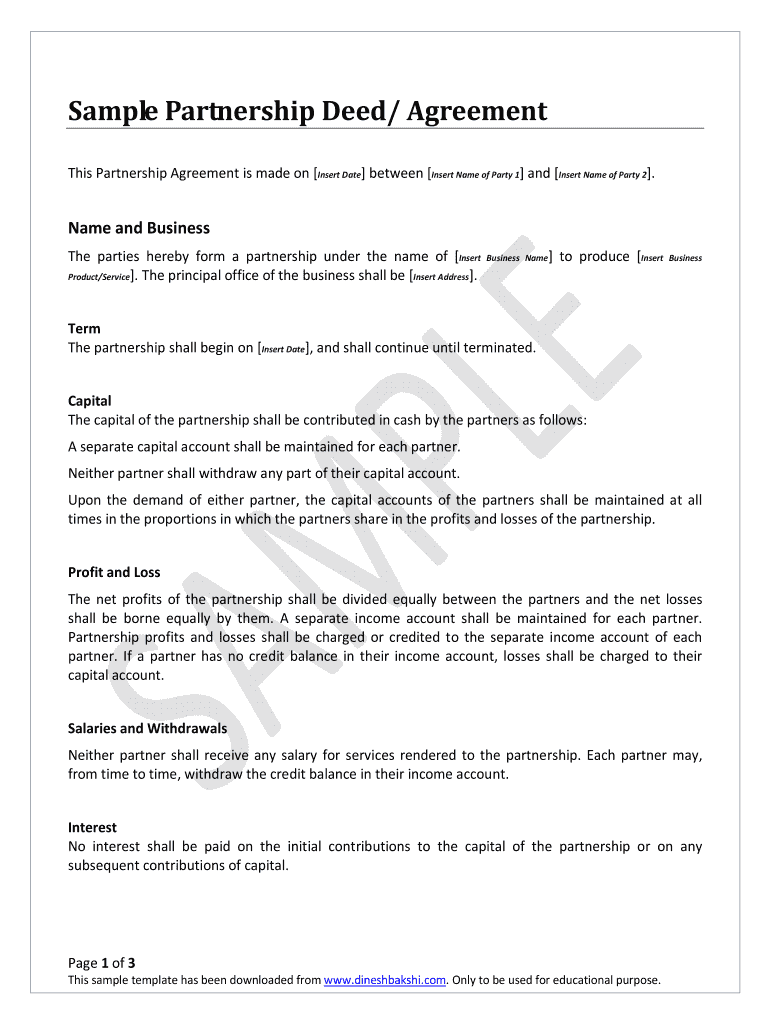







Definition & Meaning
A partnership deed is a formal legal document that outlines the roles, responsibilities, and rights of each partner involved in a business venture. It serves as the foundational agreement between partners, detailing the operational framework of the partnership. In the context of Kenya, a "partnership deed sample" can provide a template or example structure to guide individuals or businesses in creating their own partnership agreements, ensuring compliance with both local and international legal standards. This document helps prevent disputes by clearly delineating aspects like capital contributions, profit-sharing ratios, and management duties.
Key Elements of the Partnership Deed Sample Kenya
The partnership deed sample in Kenya typically covers several critical elements, ensuring a comprehensive understanding of each partner's obligations and rights. Key elements include:
- Business Name and Nature: Identifies the registered name of the partnership and its purpose or industry.
- Capital Contributions: Details the financial input of each partner, specifying initial investments and provisions for future contributions.
- Profit and Loss Sharing: Outlines how profits and losses will be distributed, emphasizing equal distribution or proportional based on capital contribution.
- Management and Decision-Making: Clarifies roles in decision-making processes and managerial duties.
- Withdrawal and Exit Clauses: Provides terms for voluntary termination or withdrawal of a partner, and conditions for the entry of new partners.
Steps to Complete the Partnership Deed Sample Kenya
Completing a partnership deed in Kenya involves several structured steps:
- Drafting Stage: Collaborate with all partners to outline the agreement's fundamental terms, ensuring clarity on each point.
- Legal Consultation: Engage a legal advisor familiar with Kenyan laws to review the draft, ensuring compliance and validity.
- Detail Financial Elements: Specify each partner's initial contribution, terms for additional contributions, and how profits and losses are shared.
- Define Management and Operational Duties: Clearly assign roles and responsibilities, ensuring smooth operation and management of the business.
- Dispute Resolution and Exit Clauses: Establish mechanisms for resolving disputes and outline procedures for partner exits or death scenarios.
- Execution and Notarization: Once agreed upon, have the document signed by all partners and notarized to ensure it is legally binding.
Legal Use of the Partnership Deed Sample Kenya
The legal use of a partnership deed in Kenya involves several aspects intended to protect the interests of all parties involved:
- Protection Against Disputes: By clearly defining roles, responsibilities, and profit-sharing agreements, the deed helps prevent conflicts.
- Legal Recognition: Once registered, the partnership deed provides the business with a legal identity, allowing it to engage in contracts and transactions.
- Arbitration Provisions: Specifies agreed-upon methods for resolving disputes that may arise among partners without resorting to court proceedings.
- Liability Limitations: Defines the extent of liability each partner bears regarding business debts and obligations, contributing to personal asset protection.
Important Terms Related to Partnership Deed Sample Kenya
Understanding key terms is crucial for anyone utilizing a partnership deed sample in Kenya. Some important terms include:
- Partner: An individual or entity actively participating in a partnership, contributing capital and sharing in profits and liabilities.
- General Partnership: A partnership structure where all partners manage the business and are personally liable for debts.
- Limited Partnership: Involves general and limited partners, where limited partners typically invest capital without participating in day-to-day management.
- Fiduciary Duty: The obligation partners have to act in the best interest of the partnership with honesty and good faith.
Examples of Using the Partnership Deed Sample Kenya
Several scenarios demonstrate the practical application of a partnership deed sample in Kenya:
- Startup Ventures: Entrepreneurs forming a new business can use the partnership deed sample as a template to establish a clear operational framework.
- Family Businesses: Ensures clarity in role definition and profit-sharing among family members involved in the business, avoiding potential future conflicts.
- Joint Business Ventures: Firms collaborating on a specific project can draft a partnership deed to clearly set expectations and responsibilities, facilitating smooth project execution.
State-Specific Rules for the Partnership Deed Sample Kenya
While many aspects of partnership deeds are universally applicable, there may be specific legal requirements or recommendations based on the region within Kenya:
- Local Business Registrations: Each region may have specific registration requirements or local business licenses that need to be secured.
- Tax Obligations and Benefits: Depending on the business location, various tax incentives or obligations may apply. It is critical to consult local tax laws during the deed drafting process.
- Cultural Considerations: Regional variations in business customs might impact how partnership agreements are traditionally structured or managed.
Who Typically Uses the Partnership Deed Sample Kenya
Various types of individuals and businesses might find a partnership deed sample in Kenya particularly useful:
- Small Business Owners: Entrepreneurs who wish to formalize their business relationships while retaining flexibility.
- Legal Professionals: Lawyers and legal advisors who assist clients in drafting and reviewing partnership agreements.
- Investors and Venture Capitalists: Individuals providing capital to start-ups usually require a clear understanding of how their investments will be managed.


Versions or Alternatives to the Partnership Deed Sample Kenya
In addition to the standard partnership deed sample, there are other versions and alternatives available:
- Custom Partnership Agreements: Tailored documents meeting specific business needs beyond standard templates.
- Online Legal Platforms: Offer dynamic tools to draft partnership deeds aligned with Kenyan law while offering digital efficiencies.
- Professional Legal Services: Hiring legal services for customized drafting can provide added assurance of the document’s defense in legal settings, should disputes arise.




