Definition and Meaning
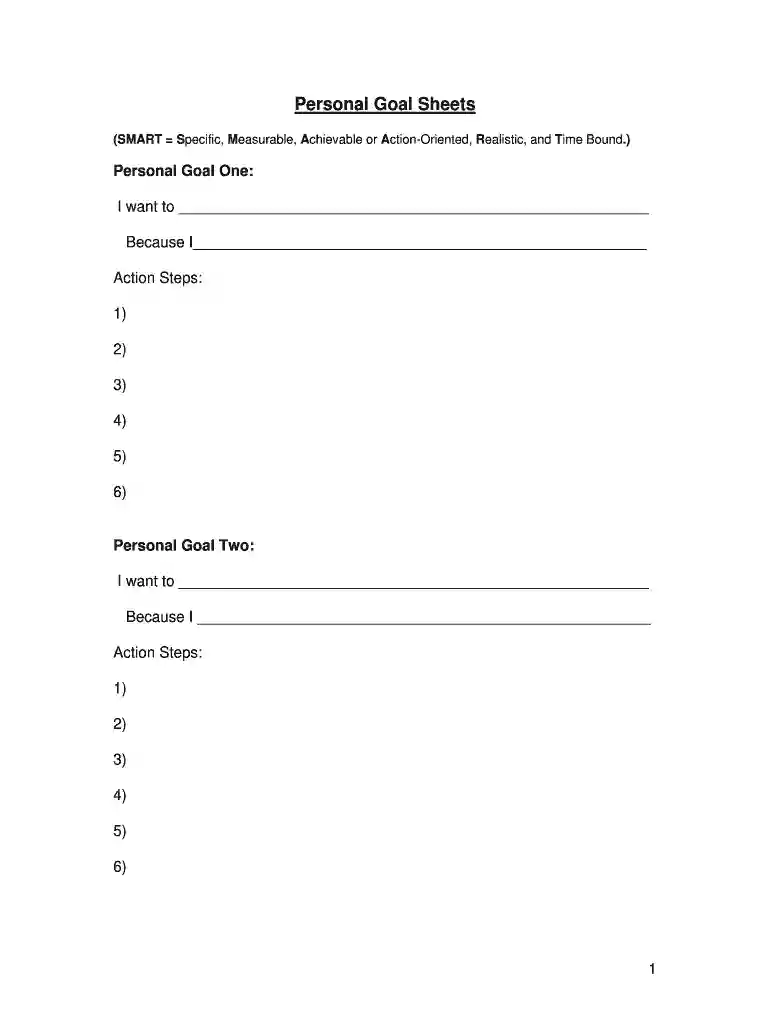
Personal Goal Sheets are structured templates designed to assist individuals in the systematic setting and achievement of personal and professional objectives. These documents utilize the SMART criteria (Specific, Measurable, Achievable, Realistic, Time Bound) to provide clarity and structure to goal-setting endeavors. By breaking down broad ambitions into manageable steps, the sheets help users maintain focus and track progress effectively.
SMART Criteria Explanation
- Specific: Goals need to be clearly defined and precise, leaving no room for ambiguity. For instance, instead of setting a goal to "get fit," a specific goal would be "run 30 minutes every day."
- Measurable: Quantifiable indicators are necessary to track progress. If a goal is to save money, specify the amount to be saved by a certain date.
- Achievable: The goal should be feasible given the resources and time available. Ambitious yet realistic is the balance to strike.
- Realistic: Goals should be relevant and anchored in practicality. An unrealistic goal might be to become fluent in a new language within a month.
- Time Bound: A deadline ensures focus and urgency. A time-bound goal specifies a completion date, motivating sustained progress.
How to Use the Personal Goal Sheets
Using Personal Goal Sheets involves a methodical approach, integrating personal aspirations with actionable steps outlined in the document. Users should begin by defining overarching goals in both personal and career areas. Following this, specific action steps should be delineated to guide progression.
Implementing Action Steps
- List specific activities required to achieve each goal.
- Set milestones that act as checkpoints to assess progress.
- Assign a timeline to each step ensuring that there is a sense of urgency and momentum.
Example: Career Advancement
- Goal: Obtain a managerial position within two years.
- Action Steps:
- Enroll in relevant leadership training programs.
- Seek out mentorship and feedback from current managers.
- Undertake projects that demonstrate managerial capabilities.
Key Elements of the Personal Goal Sheets
Personal Goal Sheets are composed of several integral elements, each intended to facilitate the goal-setting process. Essential components include sections for goal definition, strategy planning, resource identification, and progress measurement.
Detailed Breakdown of Elements
- Goal Definition Section: Articulate the primary objectives clearly and succinctly.
- Work/Life Balance Strategies: Offer methods to harmonize personal development with career advancement.
- Career Goals Outline: Set specific objectives related to career progression including skill enhancement, networking, and promotional targets.
- Action Steps: Break-down of activities interconnected to achieving each goal.
- Support Mechanisms: Identification of resources, mentors, and tools available to aid in goal achievement.
Steps to Complete the Personal Goal Sheets
Completion of Personal Goal Sheets requires careful consideration and follow-through. A step-by-step process can help maintain focus and ensure comprehensive goal setting.
Step-by-Step Procedure
- Begin with Self-Reflection: Analyze personal priorities and think deeply about what you truly wish to achieve.
- Draft Initial Goals: Write down several potential goals without worrying about their feasibility at first.
- Apply the SMART Criteria: Refine these goals using the SMART framework to ensure they are well-structured.
- Develop Actionable Steps: Create a detailed action plan, including immediate actions and long-term strategies.
- Include Monitoring Mechanisms: Decide on methods for tracking progress, such as monthly reviews or progress meetings.
- Gather Resources: List any additional resources — books, courses, mentors — that could support your goal achievement.
- Set Deadlines: Assign a specific deadline to each goal to help drive action and sustain motivation.
Practical Application Scenarios
- Individual Use: Self-improvement enthusiasts often use these sheets to map out life goals, like acquiring a new skill or achieving fitness milestones.
- Corporate Use: Companies may incorporate these sheets into employee development plans, aligning individual aspirations with organizational goals.
- Educational Institutions: Some academic settings utilize goal sheets to help students in career planning and personal development.
Why You Should Use Personal Goal Sheets
Personal Goal Sheets offer numerous benefits, providing a clear framework for goal setting, promoting organizational skills, and enhancing accountability. The structured nature of the sheets helps individuals maintain focus on their goals amidst daily distractions.
Benefits Overview
- Enhanced Clarity: Helps avoid the confusion of vague goals and unclear paths.
- Motivation and Focus: Provides a constant reminder of ambitions and strategies.
- Accountability: Facilitates regular check-ins and progress assessments.
- Stress Reduction: By breaking tasks into smaller, manageable steps, these sheets can reduce overwhelm related to large objectives.
Examples of Using the Personal Goal Sheets
Personal Goal Sheets have been used effectively across various fields, from personal development to professional growth and health aspirations. Providing examples can elucidate their practical application.
Real-World Examples
- Fitness Scenario: An individual sets a goal to reduce weight by eight pounds in three months by planning a diet and exercise regime and tracking weekly progress.
- Career Transition: A professional aiming to switch fields may use these sheets to outline required certifications, industry networking events, and skill development plans.
- Financial Management: Goal sheets assist individuals in outlining savings plans, identifying unnecessary expenses, and tracking monthly savings contributions.
Digital vs. Paper Versions
The choice between digital and paper Personal Goal Sheets depends on user preference and context. Each format offers unique advantages, ensuring users can select the method that best fits their workflow.
Comparing Formats
- Digital Version: Offers versatility and ease of updating, with options to integrate into applications like DocHub for real-time editing, collaboration, and cloud storage. It's ideal for those who frequently review and modify their goals.
- Paper Version: Provides a tactile, focused approach by minimizing digital distractions. This format works well for individuals who benefit from physically writing and reviewing on paper to solidify objectives.