Foods lab planning sheet 2026

Get Form
cooking lab planning sheet Preview on Page 1

Here's how it works

01. Edit your cooking lab planning sheet online
Type text, add images, blackout confidential details, add comments, highlights and more.

02. Sign it in a few clicks
Draw your signature, type it, upload its image, or use your mobile device as a signature pad.

03. Share your form with others
Send foods lab planning sheet via email, link, or fax. You can also download it, export it or print it out.

Definition and Meaning

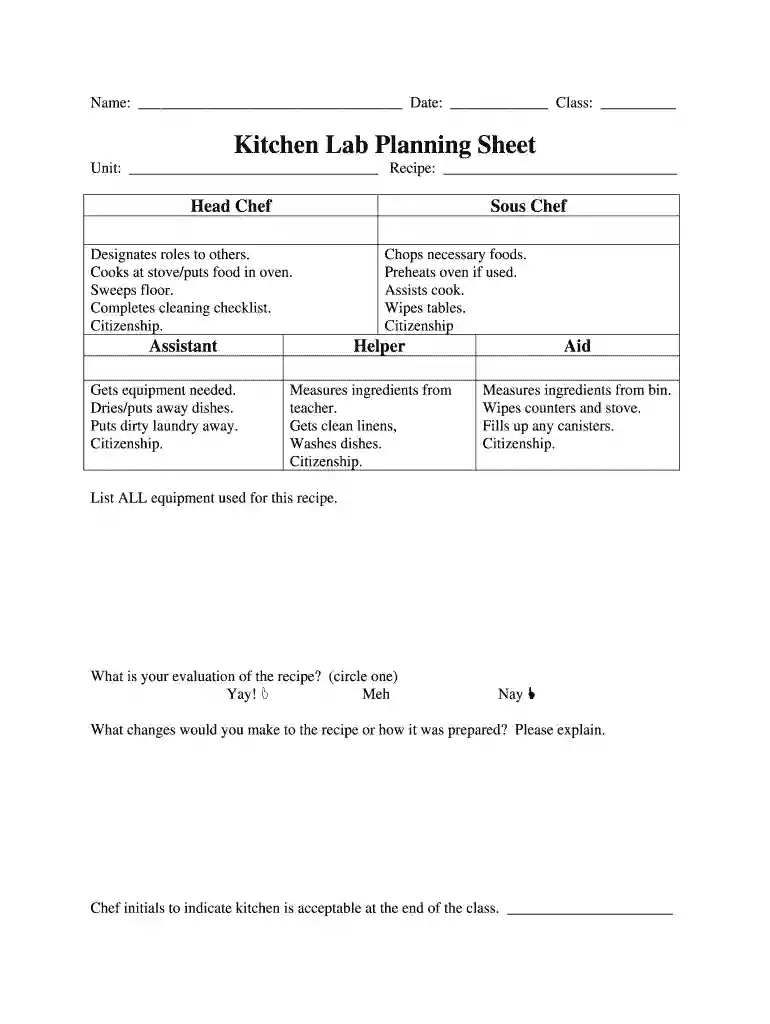
The foods lab planning sheet is a structured organizational tool used in cooking classes to coordinate roles and tasks among participants. It typically includes sections for assigning responsibilities and evaluating outcomes, making it an essential resource for educational settings focused on culinary skills.

Key Elements

  • Roles and Responsibilities: Identifies positions such as Head Chef, Assistant, Helper, and Aid, detailing specific duties for each participant.
  • Equipment List: Allows users to itemize kitchen tools and appliances needed during the cooking session.
  • Recipe Evaluation: Provides space for participants to assess the recipe, suggest improvements, and make notes about the cooking process.

How to Use the Foods Lab Planning Sheet

To effectively utilize the foods lab planning sheet, instructors follow specific steps, ensuring all participants are aligned and informed.

Step-by-Step Instructions

  1. Assign Roles: Teachers assign the Head Chef, Assistant, Helper, and Aid roles based on participants' strengths and experience levels.
  2. List Equipment: Write down all required kitchen equipment to ensure smooth workflow and preparedness.
  3. Outline Process: Head Chef leads a discussion on the recipe, outlining steps and distributing tasks for efficient execution.

Steps to Complete the Foods Lab Planning Sheet

Completing the foods lab planning sheet involves meticulous attention to detail to capture all necessary information for the cooking session.

Detailed Process

  • Detail Roles: Write specific tasks under each assigned role, covering preparation, cooking, and cleanup duties.
  • Equipment Inventory: Exhaustively list available and needed equipment, cross-checking with the recipe requirements.
  • Initial and Final Checks: Participants initial the sheet to confirm their understanding of roles and involvement in maintaining cleanliness.

Importance of the Foods Lab Planning Sheet

The sheet is crucial not only for organizational purposes but also for enhancing the educational experience in culinary classes.

Benefits

  • Improves Coordination: Clearly defined roles prevent overlap and maximize efficiency.
  • Enhances Learning: Participants gain a hands-on experience that mirrors professional kitchen environments.
  • Ensures Accountability: By documenting tasks and responsibilities, the sheet promotes a sense of ownership among participants.

Who Typically Uses the Foods Lab Planning Sheet

Primarily used within educational contexts, this tool is invaluable for several user groups.

decoration image ratings of Dochub

Common Users

  • Culinary Instructors and Educators: Employ the sheet to structure classes efficiently.
  • Students and Trainees: Use the sheet to understand and fulfill assigned culinary tasks.
  • Educational Institutions: Integrate the sheet within curriculums to standardize practical cooking sessions.
decoration image

Key Elements of the Foods Lab Planning Sheet

Several critical components are necessary to make the most of the foods lab planning sheet.

Essential Components

  • Task Assignment: Ensures all cooking and cleaning duties are evenly distributed among participants.
  • Collaborative Evaluation: Involves the team in evaluating recipes, fostering a learning environment through feedback and adjustments.
  • Safety Protocol: Includes reminders and checks to adhere to kitchen safety standards.

Examples of Using the Foods Lab Planning Sheet

Real-world scenarios demonstrate the utility and adaptability of the foods lab planning sheet.

Case Studies

  • High School Culinary Classes: Facilitate student engagement and teamwork by using the sheet to assign daily tasks, fostering an environment of collaboration and accountability.
  • Cooking Workshops: Professional chefs use the form to organize workshops, ensuring all participants have a role and understand their contributions to the group effort.

Software Compatibility and Digital vs. Paper Version

Understanding the options available for using the foods lab planning sheet enhances its practical application.

Digital vs. Paper

  • Digital Forms: Allow for easy updates and distribution via platforms like Google Drive or DocHub, increasing accessibility and efficiency, especially in online learning environments.
  • Paper Forms: Still prevalent in traditional classroom settings where physical documentation is preferred for hands-on activities.

Software Integration

  • Compatibility: Forms can be integrated with educational software to automate tasks and streamline data collection, creating efficiency in tracking and assessing student performance over time.
be ready to get more

Complete this form in 5 minutes or less

Get form

Security and compliance

At DocHub, your data security is our priority. We follow HIPAA, SOC2, GDPR, and other standards, so you can work on your documents with confidence.
Learn more
ccpa2
pci-dss
gdpr-compliance
hipaa
soc-compliance
be ready to get more

Complete this form in 5 minutes or less

Get form