







Definition & Meaning
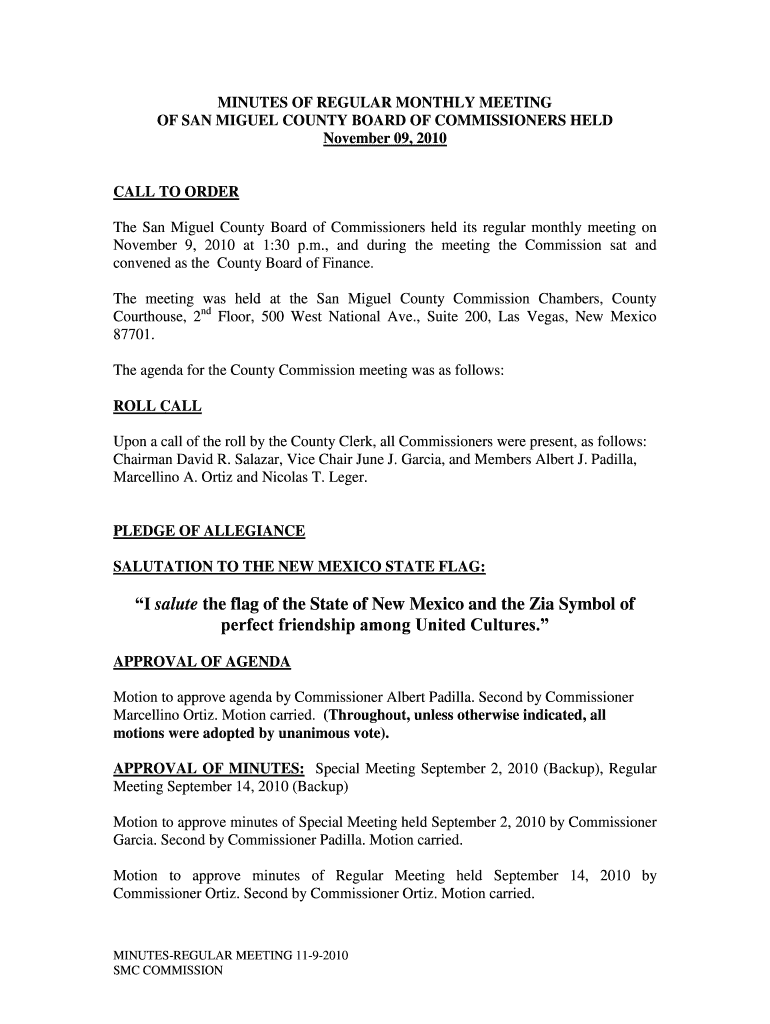
The regular meeting held on November 9, 2010, by the San Miguel County Board of Commissioners serves as an official gathering to discuss and deliberate on various county matters. This meeting included activities such as reviewing and approving previous meeting minutes, examining financial updates, and addressing new business initiatives such as proposed ordinances and budget adjustments. Moments like these are significant as they set the framework for governance and decision-making within the county, demonstrating transparency and accountability to the public.
Key Elements of the Meeting
During the regular meeting on November 9, 2010, key agendas were addressed which included:
- Call to Order and Roll Call: This ensures all necessary participants are present and the meeting can proceed officially.
- Approval of Agenda and Minutes: Review and confirm the proposed schedule and validate the minutes from the previous meeting to ensure the correctness of recorded discussions.
- Financial Reports and Indigent Claims: Presentation and approval of financial reports provide insights into the county’s economic health, while discussions on indigent claims focus on assisting residents in need.
- New Business Discussions: Consideration of prospective developments such as a proposed wind energy facility ordinance and related budget adjustments, which are crucial for the county's growth and sustainability.
- Personnel Actions: Includes introduction of new employees and any changes in staffing, impacting county operations.
Legal Use of Meeting Records
The minutes recorded from the San Miguel County Board of Commissioners' meeting on November 9, 2010, legally provide a documented trail of the proceedings. These are critical for several reasons:
- Public Record: These records ensure transparency, providing residents with insights into county operations and decisions.
- Accountability: Minutes serve as binding records for decisions made and actions to be taken, holding the board accountable for their resolutions.
- Historical Documentation: They form a historical archive that can be referenced for future decisions and policy developments.
Steps to Access Meeting Minutes
To access the minutes of the San Miguel County meeting held on November 9, 2010, follow these steps:
- Visit the Official County Website: Start by navigating to San Miguel County's official site to search for past meeting records.
- Access the Meeting Archive: Locate the section dedicated to public records or board of commissioners which usually contains archives of past meetings.
- Search by Date: Filter or search the archives by date to find the specific record for November 9, 2010.
- Download or Request Copies: Depending on availability, download the minutes directly or request them from the county clerk’s office if they are not immediately accessible.
Who Typically Uses Meeting Records
The records from the San Miguel County meeting are typically utilized by:
- County Officials and Staff: For reference and to verify compliance with decisions and policies discussed during the meeting.
- Local Residents: Interested in staying informed about county developments and decisions impacting their community.
- Researchers and Historians: Individuals studying regional governance and historical decision-making patterns.
- Media and Advocacy Groups: Those focusing on transparency and accountability, often analyzing the extent to which public officials are responsive to community needs.
Examples of Using Meeting Minutes
The minutes from the November 9, 2010, meeting can be employed in various scenarios:
- Community Advocacy: Residents can use these records to advocate for or against specific county decisions based on documented board deliberations.
- Policy Development: Officials and planners might reference past discussions to guide current projects and policy proposals.
- Legal Proceedings: In case of disputes or challenges, meeting minutes can be critical evidence to determine the intent behind policies or actions undertaken by the board.
State-Specific Rules for Public Meetings
In the United States, public meetings are governed by regulations that ensure transparency and public involvement, including:
- Open Meetings Laws: These laws mandate that meetings of governing bodies must be conducted openly, with the public given notice of the time and place.
- Record Keeping: States require precise recording and retention of minutes to ensure a complete and legal record of the proceedings and decisions.
- Public Participation: Many states stipulate periods during public meetings for citizen commentary on issues being discussed to encourage civic engagement.
Filing Deadlines and Access Times
Access to the minutes for the meeting on November 9, 2010, typically falls under set guidelines:
- Availability Timeline: Public meeting minutes are usually made available within a specific period post-meeting once they are approved by the board.
- Access Deadlines: There might be deadlines for submitting requests for copies of the minutes if accessing them through official channels, ensuring orderly processing and dissemination of public records.




