







Definition and Meaning
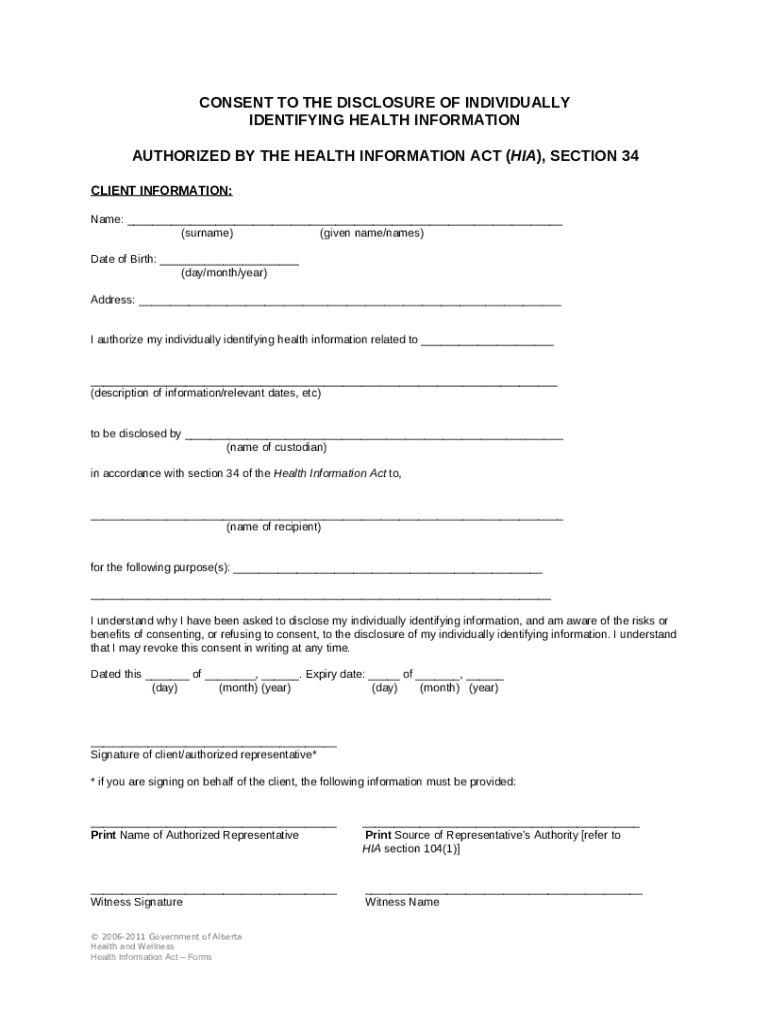
Consent to the disclosure of individually identifiable information is a legal authorization given by a person or entity to allow the release of their personal data. This consent is critical in various contexts, especially concerning health information, legal matters, and privacy considerations, wherein individuals must explicitly agree to have their information shared with specified parties. The scope of consent can include the type of information disclosed, the parties involved, and the purpose of the disclosure, ensuring both the individual's privacy rights and the legal responsibilities of the custodian and recipient of the information are maintained.
Key Elements of the Form
The form primarily consists of several critical sections that ensure clear communication and understanding between the parties involved. These include:
- Client Information: Basic personal details of the individual granting consent, such as name, contact information, and any unique identifiers relevant to the context.
- Information to be Disclosed: A detailed description of the specific data being released, ensuring clarity on what information will be shared.
- Custodian and Recipient Details: Identification of both the entity providing the information and the one receiving it, ensuring accountability and traceability.
- Purpose of Disclosure: A clear explanation of why the information is being shared, which helps prevent misuse or unauthorized use.
- Acknowledgment and Revocation: This section allows the individual to affirm their understanding of the consent being granted and outlines their right to revoke consent at any time, ensuring they maintain control over their information.
How to Use the Consent Form
Utilizing the consent form involves several essential steps:
- Review and Understand: Begin by thoroughly reading through the form to understand what disclosure of information entails and the rights and obligations involved.
- Complete Required Sections: Fill out all mandatory areas with accurate and complete information.
- Clarify Doubts: If any section or term is unclear, seek clarification from a legal expert or the organization requesting the consent.
- Sign and Date: After ensuring all information is correct and you fully comprehend it, sign and date the form to formalize your consent.
- Retain a Copy: Keep a signed copy for your records, providing reference in case of future queries or disputes.
Steps to Complete the Form
When completing the CONSENT TO THE DISCLOSURE OF INDIVIDUALLY form, follow these steps:
- Gather Necessary Documents: Collect any documentation needed to fill out the form accurately, such as identification or existing records related to the information being disclosed.
- Fill in Personal Information: Accurately enter your details in the personal information section.
- Specify Data for Disclosure: Clearly describe the data to be disclosed, including any specific documents or records.
- Identify Parties Involved: List the name and contact information of both the data custodian and recipient.
- Indicate Purpose: Clearly state the reason for the disclosure, ensuring all parties understand its intended use.
- Review and Verify: Double-check all entries for accuracy and completeness before finalizing the form.
- Submit: Return the completed form via the specified method, whether online, by mail, or in person.
Why Consent is Important
Granting consent for the disclosure of individual information is vital for protecting personal privacy while enabling necessary communication and data exchange among relevant parties. This form provides individuals with the power to control how and with whom their information is shared, safeguarding their legal and ethical privacy rights. It also ensures that organizations and entities handling this data can operate transparently and lawfully, fostering trust and security in their interactions.
Legal Use of Consent Forms
Consent forms are an integral part of compliance with legal standards such as the Health Insurance Portability and Accountability Act (HIPAA) in the United States, which governs the protection and proper disclosure of personal health information. By utilizing these forms, organizations adhere to legal obligations while respecting individuals' rights to privacy and confidentiality. Proper completion and use of these forms help prevent unauthorized data sharing and misuse, which can lead to legal consequences and breaches of trust.
State-Specific Rules
State regulations regarding consent to disclosure forms may vary, reflecting specific legal requirements and protections in place within individual jurisdictions. These differences can affect how consent is obtained, the type of information that can be disclosed, and the rights of individuals in revoking their consent. It is crucial for both individuals and organizations to be aware of and comply with their state's specific legal mandates to ensure valid and enforceable consent processes.
Practical Scenarios and Examples
Understanding how these consent forms function in real-world situations can provide clarity and ensure adherence to best practices. For example:
- Healthcare: A hospital requires patient consent to share medical records with a specialist for further treatment.
- Education: A school requests parental consent to disclose a student's progress report to a tutoring service.
- Financial Institutions: A bank seeks a client's permission to provide account details to a financial advisor for portfolio management purposes.
In each case, the consent form plays a crucial role in maintaining clear, explicit agreements between parties, ensuring that data handling is both respectful of privacy and compliant with applicable laws.




