
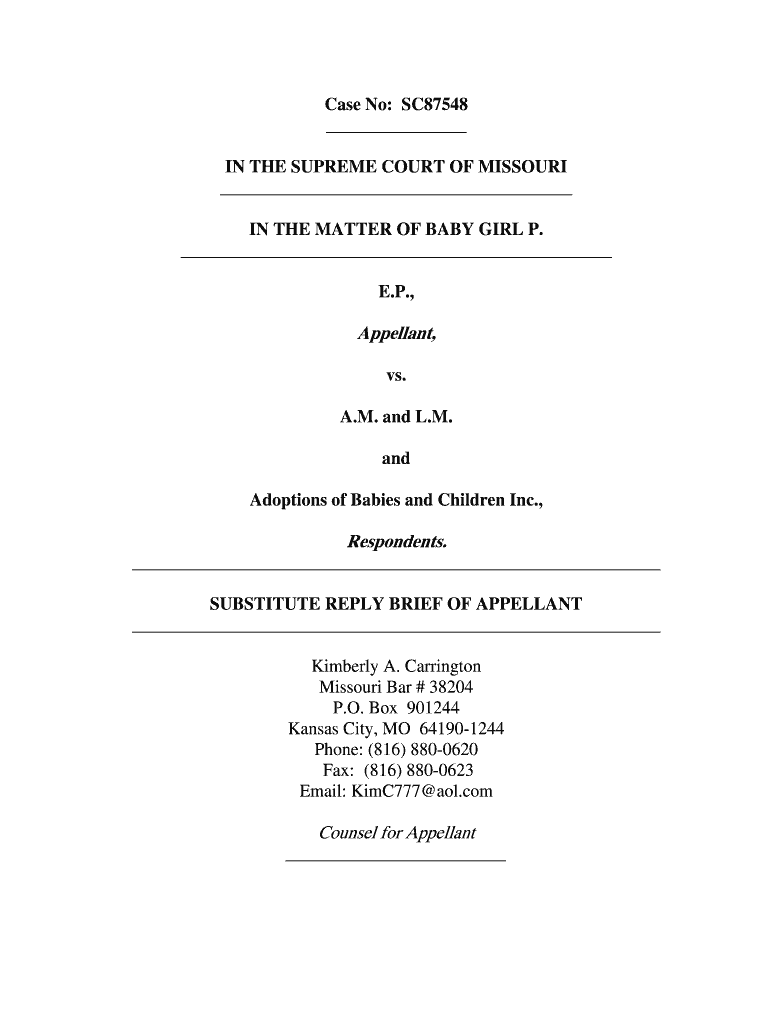







Definition & Meaning
"Appellant, Respondents Counsel for Appellant - courts mo" typically refers to a legal context involving an appellate case in Missouri courts where the appellant is challenging a decision. The appellant is the party that is appealing the court's decision, and the respondents are those opposing the appeal. The term also implies the involvement of counsel or legal representation for the appellant. This is crucial in understanding the roles of the parties involved in an appellate case.
Appellant in Legal Context
- The appellant is the party who initiates an appeal in a higher court, seeking review and reversal of a lower court's decision.
- In the Missouri court system, the appellant believes there has been a legal error affecting the case's outcome.
Respondents Counsel
- The respondents' counsel represents those who wish to uphold the lower court's decision.
- They are responsible for defending the ruling against the arguments presented by the appellant.
How to Use the Form
Understanding how to utilize the "Appellant, Respondents Counsel for Appellant - courts mo" form is essential for preparing a legal appeal in Missouri courts. Here are some practical steps and considerations for effective use:
Preparing Your Case
- Collect all relevant documentation from the trial court, including transcripts and evidence, to support your appeal.
- Analyze the trial court's decision to identify legal errors or points of contention that can be challenged.
Engaging Legal Counsel
- It's critical to have an attorney with appellate experience to guide you through the process. They will help draft your appeal and represent your interests effectively.
- The attorney will also ensure compliance with Missouri court procedures and deadlines.
How to Obtain the Form
Securing the necessary forms is the initial step in filing an appeal. Here’s how you can procure the "Appellant, Respondents Counsel for Appellant - courts mo" forms:
Missouri Courts Online Resources
- Visit the official website of the Missouri Judiciary for downloadable forms related to appellate procedures.
- You may also contact the county clerk's office of the court where your original case was heard to request specific forms.
From Your Attorney
- Your legal counsel will have access to all required forms and will ensure that they are completed in accordance with Missouri rules.
Steps to Complete the Form
Completing the "Appellant, Respondents Counsel for Appellant - courts mo" form correctly is crucial. Here are the steps you should follow:
-
Review Instructions: Begin by reading all instructions provided with the form to understand requirements and procedural rules.
-
Fill in Basic Information: Include the case name, docket number, and details about the trial court's decision.
-
Appellant’s Statement of Issues: Clearly outline each legal error or point you wish to challenge on appeal.
-
Argument Sections: Provide a structured argument for each issue, backed by legal precedents and evidence from the trial.
-
Finalize and Review: Ensure all fields are completed accurately and that your arguments are concise and compelling. Double-check all documents for accuracy.
Legal Use of the Form
Understanding the legal implications of using this form is vital for the appellant and their counsel:
Adhering to Jurisdictional Requirements
- The form must comply with Missouri state laws and procedural regulations.
- It is used to formally request reconsideration of a court's decision based on legal grounds.
Importance in Legal Proceedings
- This form serves as the cornerstone of your appeal and sets the stage for how the appellate court will review the case.
State-specific Rules for the Form
Differentiating Missouri-specific guidelines is important for proper handling of this form:
Missouri Appellate Court Procedures
- Familiarize yourself with the state-specific rules, such as filing timelines and the format for submissions.
- Missouri courts have stringent requirements that must be strictly followed to avoid dismissal of the appeal.
Key Elements of the Form
Recognizing the essential parts of this form helps in filling it out effectively:
Information to Include
- Appellant's and respondent's contact information
- Identification of the trial court's decision being appealed
- Clearly defined issues and arguments for the appeal process
Supporting Documents
- Attach all necessary documents, such as trial court orders and evidence, to substantiate your appeal.
Examples of Using the Form
Practical illustrations of how this form is used in real-world scenarios can provide valuable insight:
Common Scenarios
- Child Custody Cases: Here, a parent might appeal a decision, arguing procedural errors affected the best interests of the child.
- Criminal Convictions: A defendant may challenge their conviction, claiming improper legal interpretation or insufficient evidence.
Penalties for Non-Compliance
Avoiding penalties is crucial for a successful appeal process. Here’s what to consider:
Consequences of Errors
- Filing the form late or with incorrect information can lead to the appeal being dismissed.
- Ensure all procedural rules are followed to avoid penalties and ensure your appeal is heard.




