




01. Edit your form online
Type text, add images, blackout confidential details, add comments, highlights and more.

Type text, add images, blackout confidential details, add comments, highlights and more.

Draw your signature, type it, upload its image, or use your mobile device as a signature pad.

Send it via email, link, or fax. You can also download it, export it or print it out.
The term "form online" refers to the digital version of a document or questionnaire that can be completed and submitted through the internet. Utilizing online forms streamlines processes, reducing the need for physical paperwork and expediting data compilation. These forms can be used across various sectors, including finance, education, and healthcare, to collect information efficiently and securely. By converting traditional paper forms into digital equivalents, organizations can enhance accessibility and provide users the convenience of completing forms from any device with internet access.
To use a form online, start by accessing the form through a designated platform such as DocHub. Sign in or create an account if required. Once logged in, you can upload or select the form you wish to complete. The digital form typically provides interactive fields like text boxes and checkboxes that you can fill directly on the platform. Follow the instructions provided for each field, ensuring all necessary information is accurately entered. After completing the form, review it for any errors or omissions, then submit it by clicking the appropriate button for submission.
Completing forms online offers numerous advantages. It enhances efficiency by reducing the time spent on manual input and eliminates the risk of data loss associated with physical forms. Online forms are environmentally friendly, decreasing the dependency on paper. They are also accessible from anywhere, allowing users to complete and manage forms remotely. Moreover, many platforms provide real-time updates and progress tracking, which aids users in keeping organized and informed.
Legal compliance is essential when using forms online, particularly regarding data protection and privacy laws. Ensure online forms adhere to regulations like the Electronic Signatures in Global and National Commerce Act (ESIGN Act), which validates electronic signatures and records. Additionally, forms that store or process personal data must comply with regulations such as the General Data Protection Regulation (GDPR) in applicable regions. It is crucial for the form to include a privacy policy or terms of service that informs users about how their data will be managed.
State regulations can impact the use of forms online, as different states may have varying requirements for data protection and electronic transactions. For instance, some states require specific wording or disclaimers for digital signatures, while others might mandate that forms be stored for a particular period. Users should verify that the form complies with the legal requirements of their specific state to avoid potential issues. Consult local laws or legal counsel to ensure full compliance.
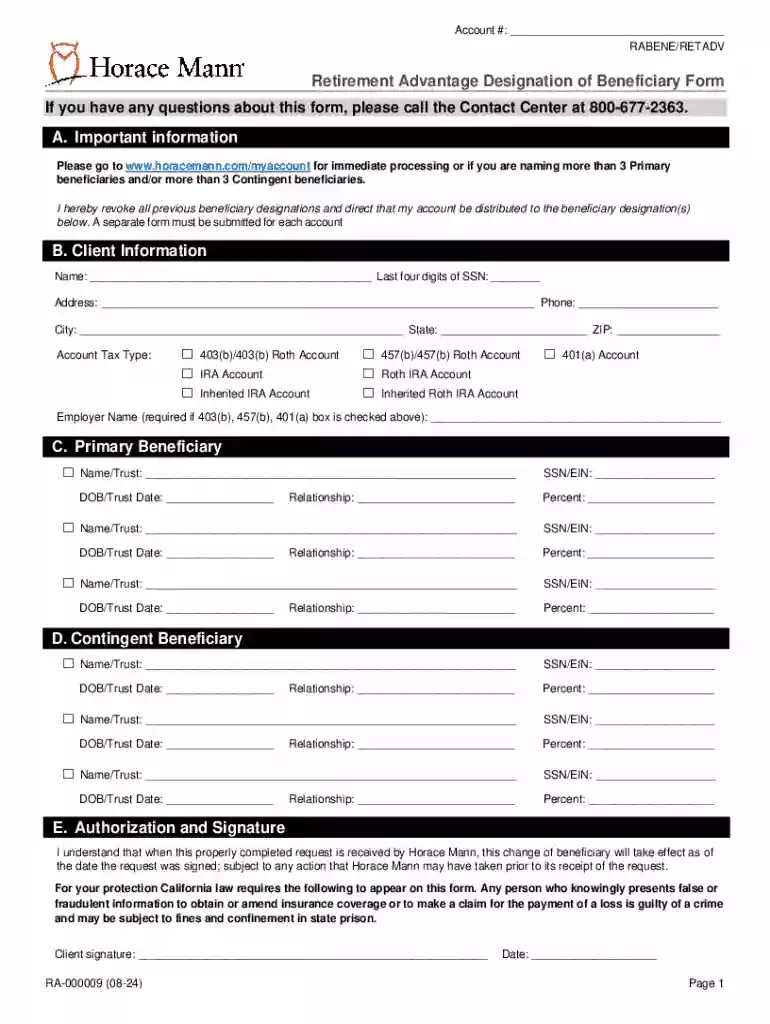
We've got more versions of the Retirement Advantage Designation of Beneficiary Form form. Select the right Retirement Advantage Designation of Beneficiary Form version from the list and start editing it straight away!
At DocHub, your data security is our priority. We follow HIPAA, SOC2, GDPR, and other standards, so you can work on your documents with confidence.

OPMs contractor uses the information on this form to pay life insurance benefits. your disability retirement benefits, Retirement and Insurance Records system
If you are a Board of Regents member and have KPERS service credit, this form designates beneficiaries for KPERS benefits, not your Board of Regents benefits.


