Understanding the Vehicle Release Form
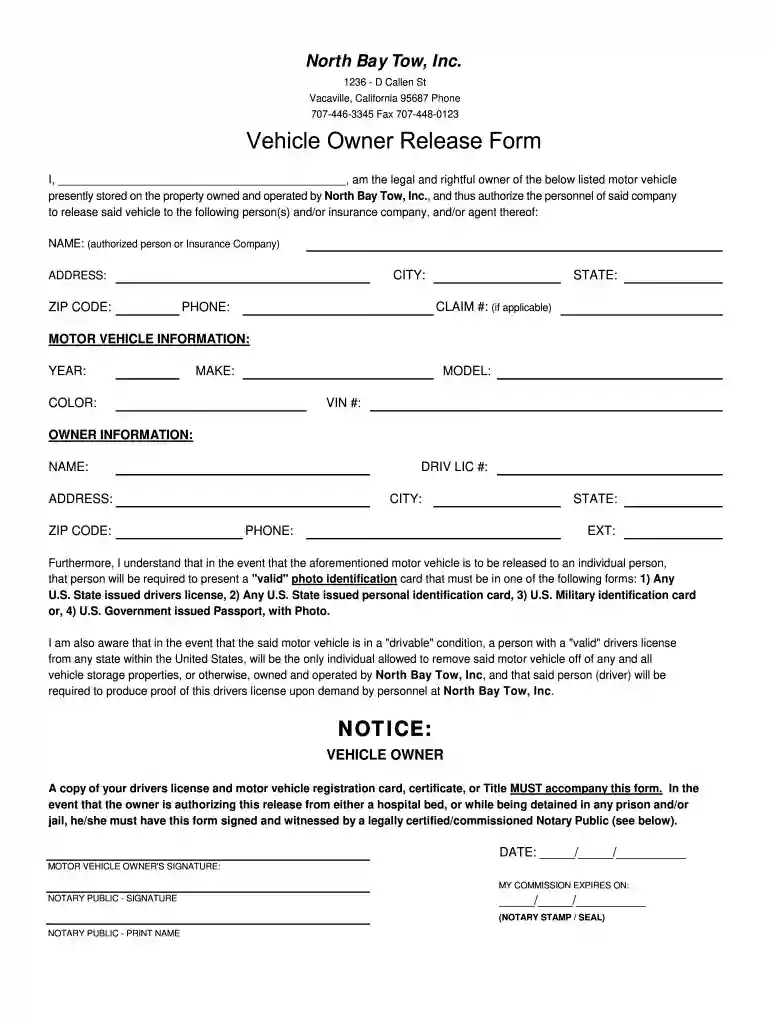
The vehicle release form is a crucial document that legally enables the owner of a motor vehicle to authorize the release of their vehicle to another individual or an organization, such as an insurance company or towing service. This document needs to clearly outline the necessary details to ensure that the transfer of custody is handled efficiently and lawfully.
Essential Components of a Vehicle Release Form
A well-structured vehicle release form typically includes the following key elements:
- Owner Information: This includes the full name, address, and contact details of the vehicle’s owner, establishing authority over the vehicle.
- Vehicle Details: Important details such as the make, model, year, VIN (Vehicle Identification Number), and license plate number are vital for identifying the specific vehicle being released.
- Authorized Individual: The name and identification of the person or entity authorized to take possession of the vehicle, ensuring that the release is directed correctly.
- Conditions for Release: Terms under which the vehicle can be released, including any requirements for valid identification from the authorized person.
- Signature and Date: The owner’s signature is necessary for authenticity, along with the date of signing to verify when the authorization was granted.
Steps to Fill Out a Vehicle Release Form
Completing a vehicle release form involves several essential steps to ensure compliance and legitimacy:
- Obtain the Form: Access the vehicle release form from a reputable source, such as a legal document website or the relevant DMV. Look for templates that comply with state-specific legal requirements.
- Fill in Owner Information: Enter the owner’s full name, address, and phone number accurately.
- Provide Vehicle Details: Include comprehensive information about the vehicle, referencing its make, model, year, VIN, and license plate number.
- Identify the Authorized Individual: Clearly state the name and contact information of the person who will collect the vehicle.
- Specify Release Conditions: Articulate any special conditions that must be met, such as a requirement for photo identification.
- Signature: The vehicle owner must sign and date the form to finalize the release authority.
- Notarization (if applicable): Depending on the state or specific circumstances, it may be prudent to have the document notarized for added authenticity.
Common Use Cases for Vehicle Release Forms
Vehicle release forms are commonly utilized in various scenarios, including:
- Towing Services: When vehicles are towed for violations or breakdowns, the owner must provide the towing service with a vehicle release form to reclaim their property.
- Insurance Claims: An insured individual may need to authorize an insurance company to pick up a damaged vehicle.
- Family Transfers: Family members may authorize each other to take possession of vehicles during transfers, sales, or long-term loans.
Legal Requirements and Compliance
It is vital for users of vehicle release forms to be aware of any legal requirements that apply within their state. Here are some key considerations:
- State Specificity: Each state may have different regulations regarding the vehicle release process, which may include specific wording or structure in the form.
- Proof of Ownership: The document must demonstrate that the person releasing the vehicle has legal ownership to prevent unauthorized transactions.
- Notarization Requirements: Certain situations might mandate notarization, particularly if the form must be used in a court setting.
Variations and Optional Additions
Different variations of the vehicle release form exist, depending on specific needs:
- Vehicle Release Form for Towing: Tailored forms for towing services may include additional clauses relating to any fees involved or conditions surrounding the towing.
- State-Specific Templates: Some states offer their own templates which may include additional information required by local laws.
- Affidavit to Release Vehicle: In certain situations, a sworn affidavit may be necessary to protect against claims of unauthorized release.
Digital vs. Paper Versions of the Form
In today's digital age, vehicle release forms can be handled both physically and electronically:
- Digital Forms: Many providers offer editable PDFs that can be filled out online, saved, and emailed, allowing for seamless electronic processing and storage.
- Paper Forms: Traditional paper versions are still widely accepted, especially in cases requiring notarization or in jurisdictions with strict regulations.
Understanding the nuances and proper usage of a vehicle release form ensures that owners can manage their vehicle's custody effectively while adhering to legal standards.