







Definition and Meaning
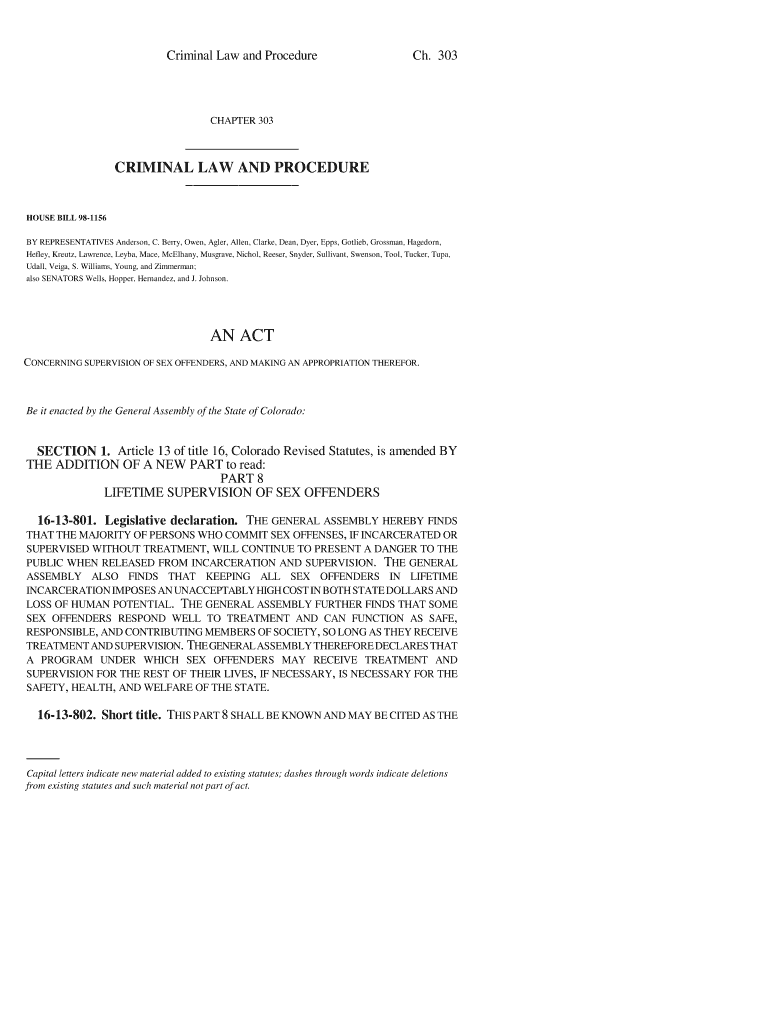
The "Criminal Law and Procedure Ch - state co" likely pertains to a chapter or section within the broader framework of criminal law and procedure specific to the state of Colorado. This involves a comprehensive set of laws and regulations guiding how criminal offenses are handled, including the processes for arrest, trial, sentencing, and appeals. Criminal law encompasses statutes that define conduct considered to be offenses against the state, whereas criminal procedure outlines the methodology by which these statutes are enforced.
How to Use the Criminal Law and Procedure Ch - state co
Utilizing the "Criminal Law and Procedure Ch - state co" requires familiarity with both legal frameworks and procedural guidelines. Lawyers, law students, and law enforcement officers typically reference this chapter to understand the procedural requirements for prosecuting or defending criminal cases in Colorado. It involves reviewing statutory language, following prescribed procedural steps, and ensuring compliance with specific court rules. Utilizing this chapter effectively means being able to apply legal principles in real-world situations, ensuring that the correct legal processes are followed.
Steps to Complete "Criminal Law and Procedure Ch - state co"
-
Research Statutory Requirements:
- Begin by thoroughly reviewing the text of the relevant chapter to understand the requirements and limitations of state law.
-
Identify Key Procedures:
- Determine the procedural steps that must be followed for specific offenses and ensure comprehension of any forms or applications needed.
-
Draft Documentation:
- Prepare any petitions, motions, or other legal documents necessary for compliance with this chapter’s procedural rules.
-
Adhere to Filing Deadlines:
- Ascertain and adhere to specific filing deadlines required by the chapter to ensure legal proceedings are not dismissed or delayed.
-
Engage in Court Protocol:
- Follow courtroom procedures for trials, hearings, and appeals as outlined in the chapter to maintain protocol and decorum.
Key Elements of the Criminal Law and Procedure Ch - state co
-
Statutory Definitions:
- Interpret legal definitions and classifications of criminal offenses as per the Colorado statutes.
-
Procedural Guidelines:
- Detailed steps for each phase of criminal prosecution, from arrest to post-conviction processes.
-
Rights of the Accused:
- Clear articulation of the rights afforded to the accused, including due process and fair trial requirements.
-
Sentencing Standards:
- Guidelines on sentencing practices, including considerations for indeterminate sentencing under certain circumstances.
Legal Use of the Criminal Law and Procedure Ch - state co
Legal professionals rely on the chapter for guidance in criminal proceedings, ensuring their actions adhere to established legal standards. It is used to argue cases, file necessary paperwork, and claim defenses or exceptions based on state legislature. Interpreting the language precisely is crucial for leveraging any legal advantages or defending clients vigorously, ensuring due process, and protecting the rights of defendants and victims alike within the state's legal framework.
Important Terms Related to Criminal Law and Procedure Ch - state co
-
Jurisdiction: Refers to the court's authority to hear and decide a case within certain geographical locations or over certain types of actions.
-
Indictment: A formal charge or accusation of a serious crime; crucial in initiating criminal proceedings.
-
Probable Cause: The legal standard by which an officer or agent of the law has the grounds to make an arrest or obtain a warrant for arrest.
-
Appeal: A request for a higher court to review and change the outcome of a court decision.
State-Specific Rules for the Criminal Law and Procedure Ch - state co
Colorado may have unique statutory provisions and procedural rules that differ from other states. This includes specific rules around evidence admissibility, particular defenses available under Colorado law, and special sentencing guidelines like those set by the Colorado Sex Offender Lifetime Supervision Act. Lawyers practicing within the state must be aware of these nuances to effectively represent their clients.
Examples of Using the Criminal Law and Procedure Ch - state co
-
Case Studies:
- Examining past landmark cases in Colorado that hinged on specific procedural elements within this chapter can offer insights into effective legal strategies.
-
Practical Scenarios:
- Simulated legal practice scenarios involving mock trials or plea bargains where this chapter serves as the key legal reference guide.
-
Comparative Analysis:
- Contrasting similar legal proceedings in different states can showcase how Colorado’s unique rules impact case outcomes.
Penalties for Non-Compliance
Failure to adhere to the procedures outlined in this chapter can result in severe consequences, including case dismissals, sanctions for legal counsel, or even legal penalties for obstruction of justice. Non-compliance can undermine the integrity of legal proceedings and result in justice being delayed or denied.




