
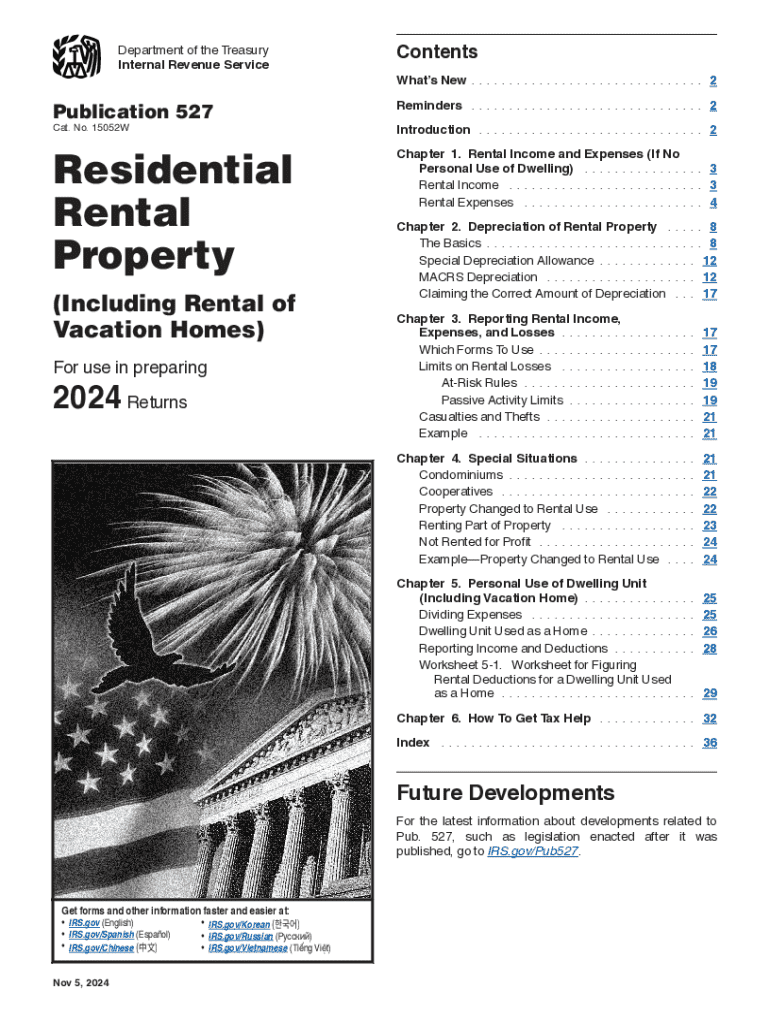







Definition & Meaning
IRS Publication 527, also known as an informational guide, provides detailed guidelines regarding the tax obligations associated with residential rental property. It serves as a crucial resource for individuals who own rental properties in the United States, encompassing various tax-related aspects such as reporting rental income and expenses, depreciation methods, and the nuances of handling personal use of rental properties. By understanding the provisions within this publication, property owners can ensure compliance with federal tax laws and optimize their tax reporting practices.
Key Elements of IRS Publication 527
Publication 527 outlines several key elements critical to managing the tax aspects of residential rental property. These elements include:
- Types of Rental Income: Detailed instructions on reporting different kinds of rental income, including advance rent, security deposits, and payment for lease cancellation.
- Deductions and Credits: Identification of allowable deductions, such as mortgage interest, property taxes, operating expenses, depreciation, and repairs.
- Depreciation Rules: Guidelines on how to depreciate rental property, with explanations on determining the correct depreciation method and using different recovery periods.
- Personal Use and Vacation Homes: Rules regarding personal use of rental properties and how it affects tax obligations.
Understanding these elements enables taxpayers to accurately report income and claim eligible deductions, reducing the risk of audit and penalties.
Taxpayer Scenarios
Various taxpayer scenarios illustrate how IRS Publication 527 applies to different property owners:
- First-Time Landlords: Those new to property rental can use the publication to understand their tax obligations and learn how to track income and expenses.
- Multiple Property Owners: Individuals managing several rental properties benefit from the guidelines on organizing information and adhering to federal tax laws for complex situations.
- Vacation Home Renters: Owners who rent out vacation homes will find specific regulations concerning personal use and the tax implications during their rental periods.
By reviewing these scenarios, taxpayers can better anticipate their particular circumstances and apply the guidelines effectively.


Steps to Use IRS Publication 527
To effectively utilize IRS Publication 527, taxpayers should follow these steps:
- Review: Start by reviewing the publication thoroughly to understand the full spectrum of guidance it offers on rental property taxation.
- Identify Applicable Sections: Determine which sections of the publication are most relevant to your property type and ownership situation.
- Calculate Income and Expenses: Use the document to accurately calculate rental income and eligible expense deductions, ensuring compliance with regulatory standards.
- Apply Depreciation: Follow the detailed steps provided for depreciating property, selecting appropriate methods and periods.
- File Taxes: Ensure all reported figures align with the guidelines before filing your tax return.
Adhering to these steps will help ensure accuracy in tax reporting.
Important Terms Related to IRS Publication 527
Several important terms are frequently referenced in IRS Publication 527:
- Passive Activity: A business or trade activity in which the taxpayer does not materially participate, with rental activity generally considered passive.
- Adjusted Basis: The property's asset value for tax purposes, adjusted for improvements, depreciation, and other factors.
- Fair Rental Value: The going rate for renting out a property in its current condition and location.
- At-Risk Rules: Tax rules determining deductible losses based on the amount a taxpayer has at risk in the investment.
Understanding these terms is crucial for accurately interpreting and applying the publication's guidelines.
Legal Use of IRS Publication 527
Publication 527 offers legally binding guidelines that must be adhered to for federal tax compliance regarding rental properties. Taxpayers must use this publication to align with IRS requirements, ensuring that all reported income, deductions, and credits are justified and documented properly. The publication serves as a standard reference for audit purposes, helping to substantiate tax returns involving rental property.
Penalties for Non-Compliance
Failing to comply with the guidelines set forth in IRS Publication 527 can result in severe penalties. These penalties include underpayment interests, accuracy-related fines, and potential audits. Taxpayers must maintain and organize all records of income and expenses, apply court rulings and IRS positions correctly, and uphold earned and passive income declarations to avoid such consequences.
By understanding and adhering to the guidelines within Publication 527, taxpayers can effectively manage their rental property taxes and mitigate the risk of penalties.
Filing Deadlines / Important Dates
Taxpayers must meet specific filing deadlines to remain compliant with IRS guidelines. The due dates for filing taxes, including those associated with rental property income, are typically on April 15 of the fiscal year, unless it falls on a weekend or holiday. Extensions might be available but should be requested beforehand. Accurate and timely submission of required forms helps ensure compliance and smooth relations with tax authorities.
Who Typically Uses IRS Publication 527
IRS Publication 527 is primarily used by property owners who are engaged in renting residential properties. This includes individual landlords, real estate investors, and companies with residential rental units in their portfolios. Tax professionals also rely on the publication when assisting clients with tax planning and compliance for rental properties, ensuring that all parties involved are well-informed of the necessary tax obligations and opportunities for savings.




